
The Best Boat Covers for Trailering, Outdoor Storage, and Mooring
 By Lance Greiner — General Manager, Boater's World · Former Platform GM, Travelcamp RV· June 12, 2026· 1 min read
Lance Greiner is a career marine and automotive retail professional with more than 15 years of dealership management experience. He currently serves as General Manager at Boater's World in Florida, overseeing full mar…
Why trust us
Every article on TopBoatGear is independently researched by the Searchshop Editorial team using manufacturer documentation, independent marine industry sources, and verified owner reviews from boaters across the US. We earn a small commission on qualifying purchases through affiliate links, which never influences our recommendations.
The Rankings

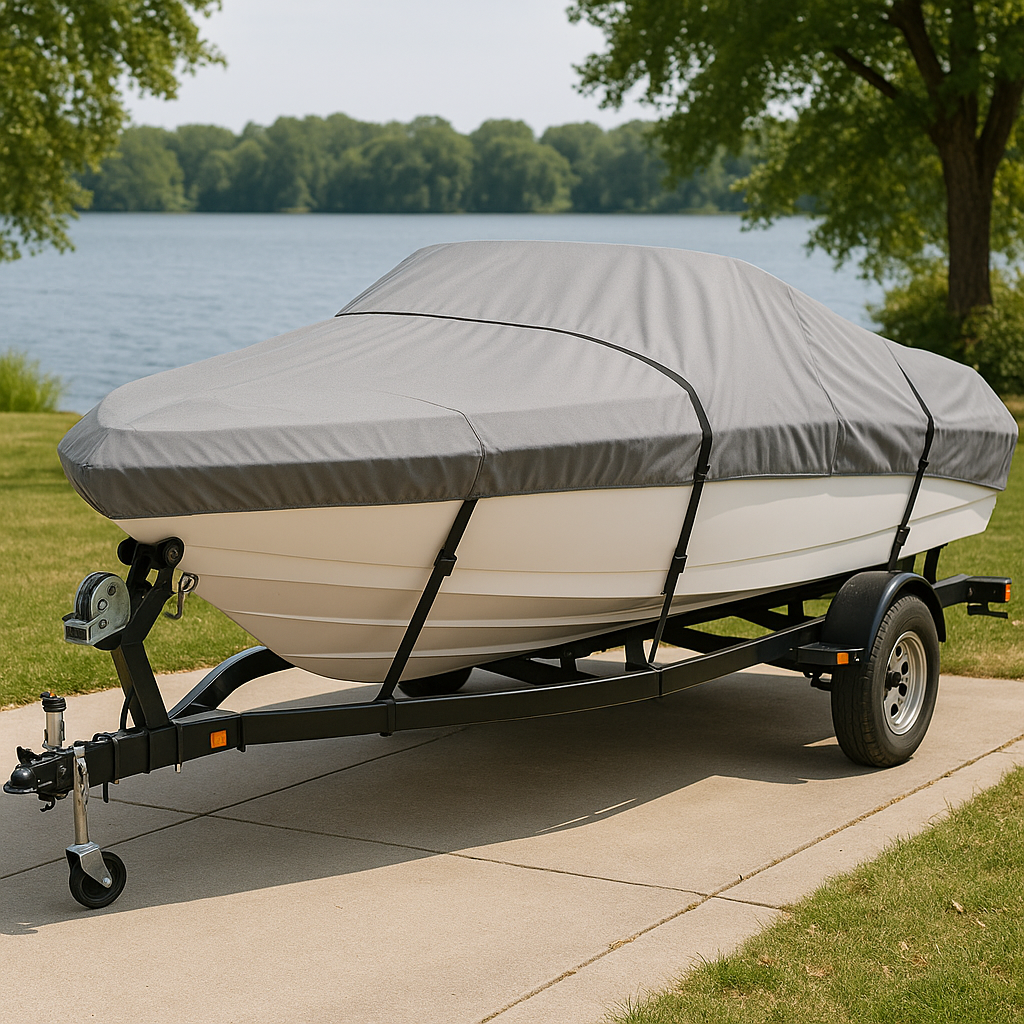
Attwood's trailerable series uses heavier solution-dyed polyester than most competitors and fits tighter on bow and stern, which matters enormously at highway speed. Solution-dyed fabric holds color far longer than surface-dyed equivalents in UV-intense environments. The sewn-in tie-down loops hold at 70 mph without requiring buckle adjustments every trip.
| Fit | Semi-custom |
| Material | Solution-dyed polyester |
| UV | 1200-hour rated |

Carver is the standard for console and windshield accommodation. The cover arrives with integrated support poles that lift the fabric over the console to eliminate pooling and mildew. Poly-Guard is a polyester-acrylic blend that splits the difference between polyester's water resistance and acrylic's UV stability. Best semi-custom option for 18–22 foot center consoles.
| Fit | Styled-to-fit |
| Material | Poly-Guard |
| Hardware | Integrated windshield poles |

Classic Accessories makes acceptable universal covers that fit reasonably well on standard bow-rider and runabout hulls. The fit is never as tight as semi-custom, which means more flapping in highway wind, but for a boat that lives in a garage 10 months a year and only needs occasional outdoor storage cover, this is perfectly adequate.
| Fit | Universal |
| Material | Polyester ripstop |
| Sizes | Multiple fits |

Mooring covers are not designed for high-speed trailering — they're for boats stored at the dock that need rain and sun protection. Taylor Made's Deluxe series uses 600-denier polyester with mooring ring pass-throughs that let you cover the boat while still secured at the dock. The correct cover for marina-stored boats.
| Type | Mooring / dock cover |
| Material | 600D polyester |
| Extras | Mooring ring integration |

Bass boat hulls are low, wide, and have no windshield — a generic cover fits terribly. Seachoice's bass boat series is cut specifically for the low-profile deck layout and includes bow pocket accommodation and transom tie-downs configured for tournament trailer strapping.
| Fit | Semi-custom bass boat |
| Material | Polyester |
| Trailer | Trailerable at 65+ mph |
Solution-Dyed vs Surface-Dyed Fabric
Surface-dyed fabric has color applied to the finished textile — it fades visibly within 2–3 Florida seasons. Solution-dyed fabric has pigment incorporated into the polymer during fiber manufacture, making it colorfast at a molecular level. Solution-dyed fabrics cost more but outlast surface-dyed products by 3–5x in UV-intensive environments. If a manufacturer doesn't specify, assume surface-dyed.
Trailering vs Storage vs Mooring Covers

Trailering covers are designed to stay on at highway speeds and use snug straps, sewn-in tie-downs, and low-profile designs. Storage covers prioritize waterproofing and UV protection for stationary use — they may be heavier and harder to put on alone. Mooring covers allow the boat to remain secured at a dock, with pass-throughs for mooring lines. Using the wrong type leads to either highway damage or dock-use damage.
Support System Essentials
Any cover on a boat with a console, bimini frame, or T-top needs a support system — either integrated poles or aftermarket support bows. Without supports, the cover sags into every cavity, pools rainwater, and transfers that weight load to snaps and tie-downs. A single pooled gallon of rain weighs 8.3 pounds. After three days of Florida afternoon thunderstorms, cover failure is inevitable without proper support.
Snap Systems vs Integrated Straps
Snap systems provide a tighter fit and don't require threading under the hull, but snaps corrode in saltwater and need annual replacement. Integrated strap systems thread under the hull and cinch with buckles — they don't corrode but require adjustment after each use. For trailerable boats, straps are more practical. For mooring covers, snaps are more common because they secure to fittings that are already on the hull.