Best Boat Propellers to Boost Speed and Fuel Economy (2026)

Salem Hassan founded Travelcamp RV and brings 30+ years of hands-on RV, marine, and powersports retail experience to every review.
✎ Reviewed by Salem Hassan — Founder, Travelcamp RV · 30+ years in RV, marine, and powersports retail
Why trust us
TopBoatGear articles are researched by the Searchshop Editorial team using manufacturer specs, marine industry sources, and feedback from hands-on boaters. Our standard is saltwater first — if a product is not rated or proven for marine environments, we say so. We may earn a commission on qualifying purchases; it does not change what we recommend. If a product fails in saltwater, the article changes.
How We Evaluated
We researched the top options, comparing them across key factors including performance, value, ease of use, and reliability. Our recommendations are based on editorial evaluation of verified specifications, owner-reported real-world performance, and domain expertise.
Best Boat Propellers to Boost Speed and Fuel Economy
If you are searching for the best boat propeller upgrade speed gains without wasting fuel, the right prop can make a dramatic difference. We researched the leading boat propeller options for fishing boats, pontoons, runabouts, and offshore setups to find upgrades that improve hole shot, raise cruising efficiency, and help engines run in their ideal RPM range. In this guide, we compare top propeller styles, explain how pitch and diameter affect performance, and show how to choose the best prop for your boat, motor, and typical load.
Key Takeaways
- A propeller upgrade can improve acceleration, top speed, fuel economy, and handling.
- Stainless-steel props usually offer better performance and durability than aluminum, but cost more.
- The right pitch is critical: too much pitch can lug the engine, while too little can over-rev it.
- Three-blade props often favor speed, while four-blade props can improve grip, hole shot, and rough-water handling.
- Always match your final prop choice to your engine manufacturer’s recommended wide-open-throttle RPM range.
All Picks & Comparison

| # | Product | Best For | Price | Rating | ||
|---|---|---|---|---|---|---|
| #1 |  |
13 x 17Replace OEM#48-8M8026590 Upgrade Aluminum Boat Propeller for Mercury Engines 40 50 60 70 75 80 90 100 115 125 140 150HP 13Dia x 17Pitch Hub Kits Included 15Spline Tooth RH |
— | $119.99 | (34) | Check Price on Amazon → |
| #2 |  |
Boat Propeller, Propeller Plastic Drill Propeller with Fine Workmanship for Electric Thruster |
— | $18.04 | (1) | Check Price on Amazon → |
| #3 | 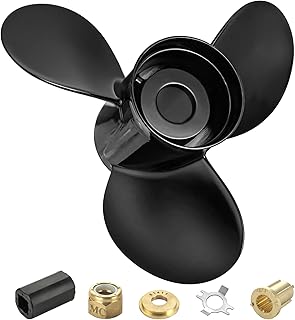 |
OEM Upgrade 13'' x 19'' Aluminum Outboard Boat Propeller fit Motos 40-140 HP Parts NO.48-77346A45|15Spline Tooth,RH-Boost Your Boat Speed! |
— | $129.99 | (34) | Check Price on Amazon → |
| #4 |  |
Quicksilver Nemesis 4-Blade Aluminum Propeller for Mercury and MerCruiser Engines |
— | $181.71 | (771) | Check Price on Amazon → |
Comparison Table: Best Boat Propeller Options
| Propeller | Best For | Material | Blade Count | Main Strengths | Possible Drawbacks |
|---|---|---|---|---|---|
| Mercury Enertia Eco | Fuel economy and cruising efficiency | Stainless steel | 3 | Excellent efficiency, refined handling, strong midrange | Premium price |
| Mercury Spitfire X7 | Fast hole shot and all-around performance | Stainless steel alloy | 4 | Great grip, strong acceleration, good stern lift | Slightly less top-end than some 3-blades |
| Yamaha Reliance SDS | Offshore and larger outboards | Stainless steel | 3 | Smooth shifting, efficient cruise, good bow lift | Best fit for Yamaha applications |
| Yamaha Talon GP | Performance-oriented bass and bay boats | Stainless steel | 3 | Strong top speed potential, crisp response | Can be less forgiving on heavy loads |
| Solas Amita 3 | Budget-friendly replacement/upgrade | Aluminum | 3 | Affordable, widely available, solid general use | Less durable and less precise than stainless |
| Solas Lexor | Speed-focused stainless upgrade | Stainless steel | 3 | Good top-end value, reduced flex, better bite than aluminum | Setup-sensitive on some hulls |
| PowerTech OFS4 | Heavy loads and offshore control | Stainless steel | 4 | Excellent bite, lift, and rough-water stability | May trade a little top speed |
| Turning Point Hustler | Value upgrade for everyday boaters | Aluminum | 3 | Good price, broad fitment, easy to repitch/replace | Not ideal for maximum performance |
Why a Propeller Upgrade Matters

Many boat owners focus on horsepower first, but the propeller is what translates engine power into real-world performance. A poor match can leave speed on the table, hurt fuel economy, and make the boat feel sluggish with passengers or gear onboard.
We recommend thinking of a propeller as a tuning tool. The right model can help you:
- Get on plane faster
- Hold plane at lower speeds
- Improve midrange efficiency
- Increase top-end speed
- Reduce ventilation and slip in turns
- Better match heavy loads, watersports, or offshore use
A quality prop upgrade is often one of the most cost-effective changes you can make.
Our Top Picks Reviewed
1. Mercury Enertia Eco
The Mercury Enertia Eco is one of the strongest choices for boaters who want better fuel economy without giving up useful speed. Its stainless-steel construction reduces flex compared with aluminum, helping the prop hold its designed pitch under load. That usually translates to more efficient power transfer and stronger overall performance.
We recommend this prop for center consoles, bay boats, and multispecies fishing rigs that spend a lot of time cruising at midrange speeds. It is particularly appealing for owners who want to stretch fuel range during long runs.
Pros
- Excellent cruising efficiency
- Durable stainless-steel construction
- Strong midrange performance
- Good balance of speed and handling
Cons
- More expensive than entry-level props
- Not the cheapest way to experiment with pitch changes
2. Mercury Spitfire X7
The Spitfire X7 is a four-blade stainless-alloy prop aimed at boaters who want stronger hole shot, better grip in turns, and dependable performance with heavier loads. Four-blade props often help boats stay hooked up when trimmed aggressively or running in choppy water, and this model is a standout for all-around use.
We researched it as a strong option for pontoons, fish-and-ski boats, and family runabouts where acceleration and control matter as much as top speed.
Pros
- Fast acceleration and improved hole shot
- Better grip and reduced ventilation in turns
- Strong choice for towing and heavy loads
- Durable premium alloy construction
Cons
- May sacrifice a little top-end speed versus some 3-blade designs
- Higher cost than aluminum alternatives
3. Yamaha Reliance SDS
The Yamaha Reliance SDS is a popular stainless-steel prop for modern Yamaha outboards. Its Shift Dampener System is designed to reduce clunk during shifting, which many boaters appreciate in everyday use. Beyond comfort, it is also known for efficient cruise performance and solid lift on larger boats.
We recommend it for offshore-capable center consoles and larger bay boats powered by midrange to larger Yamaha outboards.
Pros
- Smooth, refined shifting feel
- Good fuel efficiency at cruise
- Strong lift and stable handling
- Excellent OEM-style fit for Yamaha owners
Cons
- Best suited to Yamaha-specific setups
- Premium pricing compared with generic alternatives
4. Yamaha Talon GP
The Talon GP is more performance-focused than many general-purpose props. It is built for fast response, higher-speed applications, and dialed-in setups where top-end gains matter. Bass boat and bay boat owners often look at this style of prop when they want to optimize engine height, trim, and RPM.
We researched it as a compelling option for experienced owners chasing more speed from compatible Yamaha-powered hulls.
Pros
- Strong top-speed potential
- Responsive handling and acceleration
- High-performance stainless design
- Good fit for lighter, faster hulls
Cons
- Less forgiving for heavy loads or casual setups
- Requires careful sizing to get the best results
5. Solas Amita 3
For boaters who want a practical and affordable upgrade from a damaged stock prop, the Solas Amita 3 remains a smart value pick. It is an aluminum three-blade prop that fits a wide range of outboards and sterndrives, making it a common choice for everyday recreational use.
It will not deliver the same crispness or reduced flex of a stainless prop, but for many owners it offers a worthwhile improvement at a manageable price.
Pros
- Budget-friendly option
- Broad fitment availability
- Good general-purpose performance
- Easy entry point for pitch changes
Cons
- Aluminum flex reduces high-performance potential
- Less durable around impacts than stainless steel
6. Solas Lexor
The Solas Lexor is a stainless-steel propeller often chosen by boaters stepping up from aluminum and looking for better speed and efficiency. It typically provides stronger bite, less flex, and better top-end performance than many stock props.
We recommend it for owners who want stainless performance without jumping to the highest-priced OEM models.
Pros
- Good value in stainless steel
- Better speed potential than many aluminum props
- Improved bite and efficiency
- Strong upgrade path from stock props
Cons
- Not every hull responds the same way
- Can require trial-and-error on pitch selection
7. PowerTech OFS4
The PowerTech OFS4 is a proven four-blade stainless option for offshore boats, heavy fishing loads, and applications where grip matters more than chasing the last mile per hour. It is often chosen by owners who want dependable lift, clean acceleration, and rough-water control.
For larger center consoles and workhorse rigs, this prop style can make the boat easier to run in real-world conditions.
Pros
- Excellent grip and load-carrying ability
- Strong rough-water handling
- Better stern lift and control
- Great for heavy or offshore setups
Cons
- Usually not the fastest top-end option
- Premium stainless pricing
8. Turning Point Hustler
The Turning Point Hustler is a value-focused aluminum propeller line that suits many recreational boaters. It is widely available and often used as an affordable upgrade or backup prop. For pontoons, runabouts, and smaller fishing boats, it can be a practical way to fine-tune RPM and performance.
Pros
- Affordable and easy to source
- Good all-around recreational performance
- Broad fitment support
- Useful as a spare or tuning prop
Cons
- Aluminum limits ultimate performance
- Not the best choice for maximum durability or speed
How to Choose the Best Boat Propeller
Match the Prop to Your Boating Style
Before buying, we recommend being honest about how you use your boat most often.
Choose a speed-focused prop if you:
- Run light loads
- Prioritize top-end performance
- Own a bass boat, bay boat, or performance hull
- Want to maximize RPM efficiency at wide-open throttle
Choose an economy or all-around prop if you:
- Cruise long distances
- Want better fuel range
- Carry mixed passenger loads
- Need dependable everyday performance
Choose a load-carrying or four-blade prop if you:
- Pull tubes or skiers
- Run offshore in chop
- Carry full livewells, coolers, and gear
- Need stronger hole shot and grip
Understand Pitch, Diameter, and Blade Count
Pitch
Pitch is the theoretical distance a propeller moves in one revolution. In simple terms:
- Higher pitch usually means more potential top speed, but lower RPM
- Lower pitch usually means faster acceleration and higher RPM
A common rule of thumb is that a 1-inch pitch change may alter engine speed by roughly 150 to 200 RPM, though real results vary by hull and setup.
Diameter
Diameter affects how much water the prop can move. Larger-diameter props often help with heavier boats and lower-speed thrust, while smaller-diameter props may suit lighter, faster applications.
Blade Count
- 3-blade props: Often best for top speed and general recreational use
- 4-blade props: Often better for hole shot, grip, stern lift, and rough-water stability
Aluminum vs. Stainless Steel
Aluminum Props
Best for:
- Budget-conscious buyers
- Casual recreational use
- Spare props
- Lower horsepower applications
Benefits:
- Lower cost
- Easy to replace
- Good for experimenting with pitch
Tradeoffs:
- More flex under load
- Less durable around impacts
- Usually less efficient and precise than stainless
Stainless-Steel Props
Best for:
- Performance upgrades
- Frequent boaters
- Higher horsepower engines
- Owners seeking better speed and efficiency
Benefits:
- Reduced flex
- Better bite and acceleration
- Improved durability
- More precise performance
Tradeoffs:
- Higher upfront cost
- Impact damage can be more expensive if repairs are needed
Signs You Need a Propeller Upgrade
You may benefit from a new prop if your boat:
- Struggles to reach recommended WOT RPM
- Over-revs too easily
- Feels slow getting on plane
- Ventilates in turns
- Burns more fuel than expected at cruise
- Carries heavy loads poorly
- Has a damaged or bent prop
Even a slightly damaged prop can reduce performance and efficiency more than many owners realize.
How to Size a Boat Propeller Correctly
We recommend starting with your engine manufacturer’s recommended wide-open-throttle RPM range. Then compare your current prop’s actual performance.
Basic sizing approach
- Check your current prop size stamped on the hub or barrel.
- Run the boat at wide-open throttle with a typical load.
- Note maximum RPM, GPS speed, hole shot, and handling.
- Compare your RPM to the manufacturer’s recommended range.
- Adjust pitch based on whether the engine is under-revving or over-revving.
General sizing guidance
- If the engine is below recommended RPM, consider less pitch.
- If the engine is above recommended RPM, consider more pitch.
- If you want better hole shot for towing or heavy loads, a 4-blade or slightly lower pitch may help.
- If you want more top speed and your setup allows it, a 3-blade stainless prop may be the better fit.
How to Replace a Boat Propeller
Upgrading a propeller is usually straightforward, but safety matters. Follow your engine manufacturer’s instructions first.
Safety notes before you begin
- Turn the engine off completely and remove the key.
- Disconnect the battery switch if your boat has one.
- Shift into gear only as directed by the manufacturer to help hold the prop shaft.
- Wear gloves because prop blades can be sharp.
- Never work on a propeller with the engine able to start unexpectedly.
Numbered steps
Secure the boat and engine. Make sure the boat is stable on the trailer or lift. Trim the engine to a comfortable working height.
Remove the prop nut retainer. Depending on your setup, this may be a cotter pin, tab washer, or locking retainer.
Loosen and remove the prop nut. Use the correct socket or prop wrench. Keep track of washers, spacers, and thrust components in order.
Slide off the old propeller. If it is stuck, do not hammer on the blades. Apply penetrating lubricant and work it free carefully.
Inspect the prop shaft. Check for fishing line behind the prop, damaged seals, corrosion, or wear. Remove debris thoroughly.
Apply marine grease to the prop shaft. Use a suitable waterproof marine grease to help prevent corrosion and ease future removal.
Install the new prop with the correct hub components. Confirm that thrust washers, hubs, and spacers match the prop and engine requirements.
Reinstall and torque the prop nut properly. Tighten to the manufacturer’s torque specification. Do not guess.
Install the locking retainer or cotter pin. This is a critical safety step that helps keep the prop nut secure.
Perform a careful water trial. Check shifting, acceleration, WOT RPM, vibration, and handling before deciding the prop is the right fit.
Common Propeller Buying Mistakes
Choosing by top speed alone
A prop that adds 1 or 2 mph may be the wrong choice if it hurts hole shot, fuel economy, or handling with your normal load.
Ignoring WOT RPM range
This is one of the most important measurements. Running outside the recommended range can hurt both performance and engine longevity.
Assuming stainless is always best
Stainless often performs better, but aluminum can be the smarter choice for budget buyers, rocky waters, or spare-prop duty.
Forgetting load and elevation
Passenger count, gear, fuel level, and even altitude can change prop performance significantly.
Buying without verifying hub compatibility
Not every prop fits every engine. Always confirm hub kit, shaft spline, and application details.
Which Propeller Is Best for Your Boat Type?
Bass boats and bay boats
We often recommend a performance-oriented 3-blade stainless prop for speed and crisp response, such as the Yamaha Talon GP or Solas Lexor, depending on engine compatibility.
Pontoons
A 4-blade option like the Mercury Spitfire X7 can improve hole shot, holding power, and everyday usability, especially with family loads.
Center consoles and offshore fishing boats
The Mercury Enertia Eco, Yamaha Reliance SDS, or PowerTech OFS4 are strong choices depending on whether you prioritize fuel range, smoothness, or rough-water control.
Runabouts and family boats
A flexible all-around option like the Spitfire X7, Solas Amita 3, or Turning Point Hustler can make the most sense for mixed recreational use.
FAQ
1. What propeller gives the best speed increase on a boat?
In many cases, a stainless-steel 3-blade prop offers the best top-speed potential because it flexes less and runs more efficiently than aluminum. The exact result depends on your hull, engine height, load, and pitch selection.
2. Will a new propeller improve fuel economy?
Yes, if the new prop helps your engine operate in its proper RPM range and reduces slip. Many boaters see the best efficiency gains at cruising speeds rather than only at full throttle.
3. Is a 4-blade prop better than a 3-blade?
Not always. A 4-blade often improves hole shot, grip, and handling, while a 3-blade often favors top speed. The better choice depends on how you use your boat.
4. How do I know if my prop pitch is wrong?
If your engine cannot reach recommended WOT RPM, pitch may be too high. If it exceeds recommended RPM too easily, pitch may be too low. Slow planing, poor fuel economy, and weak handling can also be clues.
5. Should I choose aluminum or stainless steel?
We recommend aluminum for budget-friendly everyday use and stainless steel for serious performance, durability, and efficiency gains. Stainless is usually the better upgrade if your budget allows.
Get your free Get Our Free Boat Gear Checklist
The essential marine gear list every boater should have before hitting the water.
Final Verdict
The best propeller upgrade depends on how you boat, but a well-matched prop can absolutely improve both speed and fuel economy. If we were narrowing the field, we would point most efficiency-focused buyers toward the Mercury Enertia Eco, all-around performance seekers toward the Mercury Spitfire X7, Yamaha owners toward the Reliance SDS, and budget-minded shoppers toward the Solas Amita 3 or Turning Point Hustler.
Our biggest recommendation is simple: do not buy a prop based on hype alone. Start with your current RPM, load, and boating style, then choose a design that solves your real performance problem. That approach gives you the best chance of finding the right propeller upgrade the first time.