
The Best Inflatable Boats and RIBs for Fishing, Diving, and Recreation
 By Lance Greiner — General Manager, Boater's World · Former Platform GM, Travelcamp RV· June 12, 2026· 1 min read
Lance Greiner is a career marine and automotive retail professional with more than 15 years of dealership management experience. He currently serves as General Manager at Boater's World in Florida, overseeing full mar…
Why trust us
Every article on TopBoatGear is independently researched by the Searchshop Editorial team using manufacturer documentation, independent marine industry sources, and verified owner reviews from boaters across the US. We earn a small commission on qualifying purchases through affiliate links, which never influences our recommendations.
The Rankings


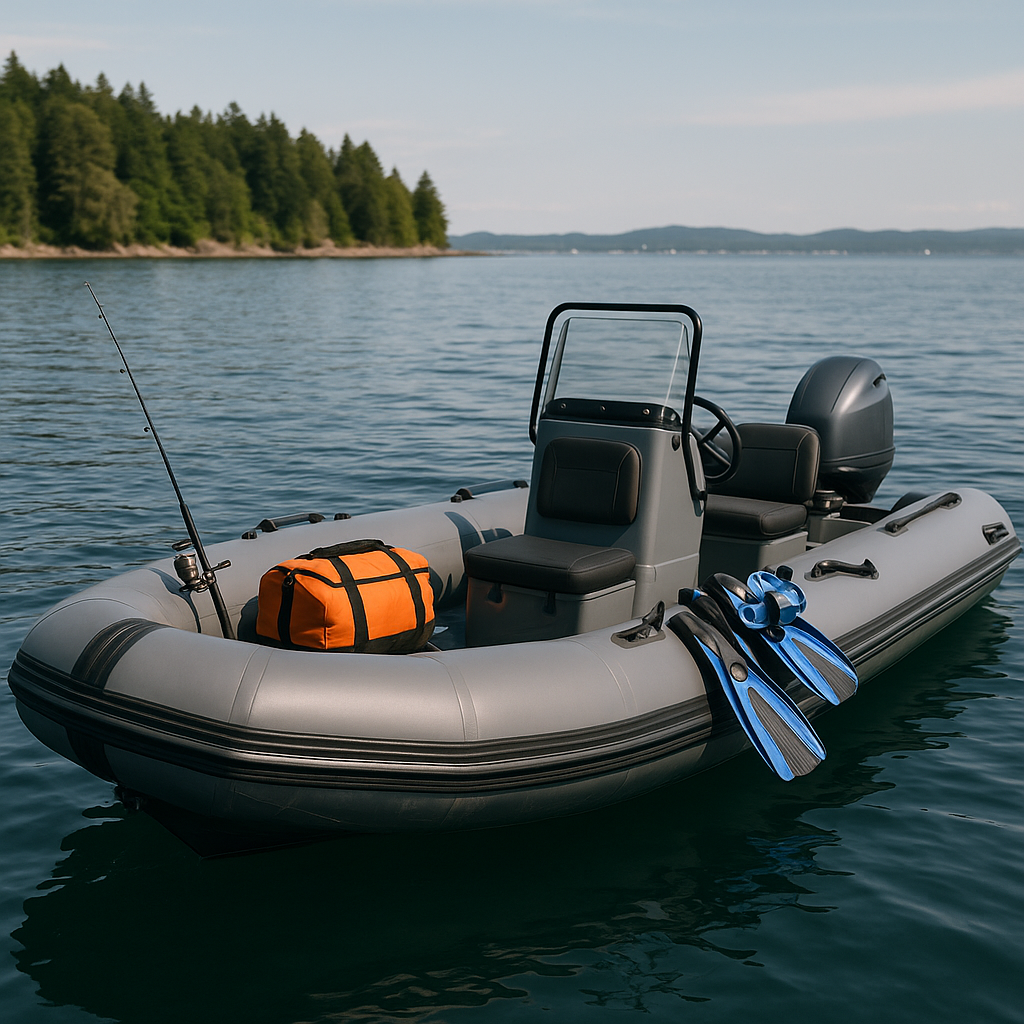
Sea Eagle's SE9 is the best-documented inflatable boat under $1,000. The drop-stitch inflatable floor provides a rigid walking surface that doesn't flex under load, and the dual-chamber sides maintain buoyancy if one chamber is punctured. Compatible with outboards up to 5hp or optional electric transom mount. Used by Florida dive operators as tenders for charter boats.
| Length | 9 feet |
| Capacity | 3 persons / 650 lb |
| Floor | Drop-stitch |

For calm freshwater and light coastal use, the Intex Mariner 4 is functional, affordable, and genuinely hard to sink. The Boston valve system inflates in under 10 minutes, and the 4-person capacity handles a family fishing trip on a lake. Not suitable for offshore use, significant waves, or motor speeds above 5 mph.
| Length | 10'2" inflated |
| Capacity | 4 persons |
| Includes | Oars, hand pump |

Designed specifically for river and bay fishing with multiple rod holder mounts, gear attachment points, and a self-bailing floor option. The 380X tracks straighter than any other inflatable kayak in its class — you lose almost nothing to the hull-speed penalty that plagues most inflatable designs. Folds into a 37-pound bag.
| Length | 12'6" |
| Capacity | 2 persons + gear |
| Floor | Rigid drop-stitch |

Saturn's SK396 hybrid kayak/boat design handles open water with better tracking than full inflatables and better portability than hard RIBs. Used by dive shops in the Keys as a transfer vessel from mooring ball to shore. The rigid skeg improves tracking in current and chop, and the 15hp motor capacity provides adequate speed for diving and snorkeling operations.
| Length | 13 feet |
| Capacity | 5 persons |
| Motor | Up to 15hp |

For the boater who wants to keep a packable kayak aboard a larger vessel as a shore-access tender, the Challenger K1 packs into a 23-pound bag and inflates in 5 minutes. Not performance-oriented, but completely functional for getting from an anchored boat to a beach or dock in calm water.
| Length | 9 feet |
| Capacity | 1 person |
| Packed weight | 13 lb |
Drop-Stitch vs I-Beam vs Single Chamber Floors
Drop-stitch inflatable floors use thousands of internal threads connecting the top and bottom sheets — when inflated to 8–10 PSI, they become genuinely rigid enough to walk on without deflection. I-beam floors use rows of internal tubes for partial rigidity — firmer than single chamber but not as solid as drop-stitch. Single chamber floors are just the hull fabric — they flex dramatically under load and make walking difficult. Always buy drop-stitch if you plan to stand in the boat.
Fabric Construction: PVC vs Hypalon

PVC (polyvinyl chloride) fabric is the standard for recreational inflatables — lighter, cheaper, and perfectly adequate for 5–10 years of use. Hypalon (CSPE rubber) is used in commercial and military RIBs — it handles UV, fuel, and oil exposure without degradation, can be repaired in the field with hand tools, and lasts 20+ years. Zodiac, AB, and Achilles use Hypalon in their professional lines. For recreational use, high-quality PVC is completely acceptable.
Valve Types and Their Maintenance
Boston valves (common on Intex and budget brands) inflate and deflate quickly but tend to leak slowly over months. Halkey-Roberts valves use a spring-loaded pin and are more reliable long-term. Bravo valves (common on better Italian and Asian brands) are the most air-tight and easiest to inflate with a pump. Check all valves at the start of each season — a $3 valve core replacement is far less expensive than discovering a slow leak offshore.
Outboard Motor Compatibility
Inflatables have a motor rating on the transom (e.g., "Max 5 HP") that must be respected. Overpowering an inflatable transom causes structural failure, capsizing risk, and immediate voiding of any warranty. The motor rating is also linked to the transom material — aluminum transoms can handle outboards, inflatable transoms cannot. For boats intended for consistent motoring rather than rowing, buy a model with an aluminum or fiberglass transom rated for at least the motor you intend to use.