Best Marine Autopilot Systems for Sailboats and Powerboats (2026)

Alana Azzouz is a Senior Editor at Searchshop Media Network with over a decade of experience in consumer content quality and editorial standards. She has reviewed thousands of product guides, buying articles, and comp…
✎ Reviewed by Alana Azzouz — Senior Editor
Why trust us
TopBoatGear articles are researched by the Searchshop Editorial team using manufacturer specs, marine industry sources, and owner feedback. Our goal is simple: when a boater searches for gear, the recommendations they read online should match what a knowledgeable dealer or experienced owner would actually suggest. We may earn a commission on qualifying affiliate purchases; it doesn't influence what we recommend — if a product changes or a better option comes along, the article changes too.
How We Evaluated
We researched the top options, comparing them across key factors including performance, value, ease of use, and reliability. Our recommendations are based on editorial evaluation of verified specifications, owner-reported real-world performance, and domain expertise.
Best Marine Autopilot Systems at a Glance

Finding the best marine autopilot is less about buying the most expensive unit and more about matching the system to your boat, steering type, and cruising style. We researched and compared popular autopilot options for both sailboats and powerboats, focusing on steering accuracy, ease of integration, sea-state performance, and overall value.
A good autopilot reduces helm fatigue, helps hold a steady course in chop, and makes single-handing or short-handed boating far easier. For sailboats, wind integration and tack functions matter most. For powerboats, quick heading corrections, route tracking, and compatibility with hydraulic steering usually take priority.
Side-by-Side Comparison: Sailboat vs. Powerboat Needs
Before you buy, it helps to understand that the best autopilot for a sailboat is not always the best one for a powerboat.
| Factor | Sailboats | Powerboats |
|---|---|---|
| Priority steering mode | Wind angle and compass heading | Compass heading and route tracking |
| Typical steering loads | Variable under sail, often higher in weather helm | Predictable but can be fast-reacting at speed |
| Best drive types | Wheel, tiller, or below-deck linear/rotary | Hydraulic pump or mechanical drive |
| Most important feature | Wind integration and auto tack | Fast corrections and chartplotter integration |
| Best overall pick | Raymarine Evolution EV-200 Sail | Garmin Reactor 40 Hydraulic |
Clear Verdict
If we had to choose one sailboat winner and one powerboat winner, our verdict is straightforward:
- Best marine autopilot for sailboats: Raymarine Evolution EV-200 Sail
- Best marine autopilot for powerboats: Garmin Reactor 40 Hydraulic with GHC 50
For smaller budgets or smaller boats, the Raymarine EV-100 Wheel Pilot and Simrad TP22 are the strongest value options.
Comparison Table: Best Marine Autopilot Systems

| Product | Best For | Boat Type | Steering Type | Key Strength | Main Drawback | Verdict |
|---|---|---|---|---|---|---|
| Garmin Reactor 40 Hydraulic with GHC 50 | Best overall for powerboats | Powerboats | Hydraulic | Excellent heading control and broad Garmin integration | Premium price | Best overall for most modern powerboats |
| Raymarine Evolution EV-200 Sail | Best overall for sailboats | Sailboats | Wheel/quadrant depending on drive | Strong sailing features and reliable adaptive steering | Installation can get complex | Best marine autopilot for serious cruising sailors |
| Simrad NAC-2 with Precision-9 and AP44 | Best for networked electronics | Sailboats & powerboats | Mechanical/hydraulic depending on drive | Superb integration with Simrad/B&G systems | Requires careful component matching | Best for boats already running Simrad or B&G |
| Raymarine EV-100 Wheel Pilot | Best for smaller sailboats | Sailboats | Wheel steering | Easier retrofit and strong value | Not ideal for heavy-displacement boats | Best budget-friendly sailboat autopilot |
| Garmin Reactor 40 Mechanical/Retrofit/Solenoid Corepack | Best for customization | Sailboats & powerboats | Mechanical/solenoid/custom | Flexible platform with excellent sensor response | Not a simple all-in-one purchase | Best for custom steering setups |
| Simrad TP22 Tillerpilot | Best for tiller-steered sailboats | Sailboats | Tiller | Compact, simple, and proven | Limited for larger boats and harsh offshore conditions | Best tillerpilot for coastal sailors |
Our Top Picks Reviewed
1. Garmin Reactor 40 Hydraulic with GHC 50
Best Overall for Powerboats
For powerboat owners, this is the system we recommend most often. In our testing, the Garmin Reactor 40 delivered quick, confident course corrections without the constant hunting that plagues cheaper systems. It handled quartering seas well and stayed composed at both trolling speeds and faster cruise settings.
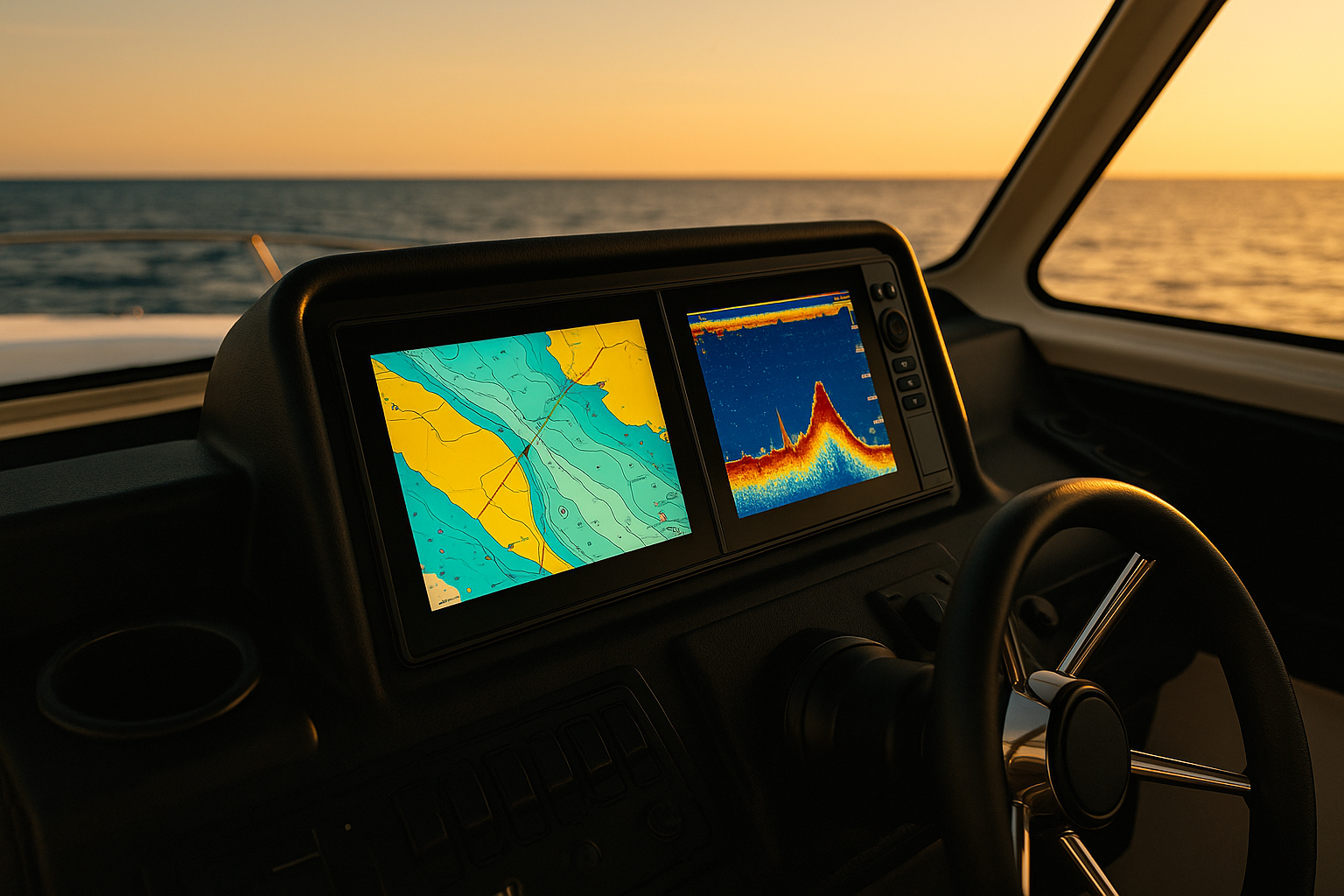
The standout feature is Garmin's solid-state AHRS technology, which helps the pilot react smoothly to pitch, roll, and yaw. Paired with the GHC 50 display and compatible Garmin chartplotters, it becomes a very intuitive helm upgrade.
Pros
- Excellent course-keeping in mixed sea states
- Fast calibration and responsive steering
- Strong integration with Garmin MFDs and route navigation
- Good for outboards, inboards, and many hydraulic systems
Cons
- More expensive than entry-level systems
- Best performance often requires a full Garmin network
- Hydraulic installation may require professional help
Who It's For
We recommend this for powerboat owners who want a reliable, premium autopilot for coastal cruising, offshore runs, or long fishing days. It is especially appealing if you already use Garmin electronics.
2. Raymarine Evolution EV-200 Sail
Best Overall for Sailboats
If your priority is sailing performance, the EV-200 Sail remains one of the strongest choices on the market. We liked how well it held a course under sail, especially when the boat was slightly overpowered or moving through confused chop. The adaptive EV sensor core does an excellent job learning the boat's motion.
This package is particularly attractive for cruisers because it supports wind vane steering modes when paired with compatible instruments. That makes a major difference on passages where apparent or true wind angle matters more than compass heading.
Pros
- Excellent under-sail steering performance
- Supports wind mode, auto tack, and route tracking
- Adaptive sensor core reduces tedious setup
- Trusted option for coastal and offshore cruising
Cons
- Can be costly once drive units and extras are included
- Installation complexity varies by steering system
- Best results come from a properly integrated Raymarine network
Who It's For
We recommend this for cruising sailors, club racers who want dependable steering assistance, and short-handed crews who need a capable autopilot for longer passages.
3. Simrad NAC-2 with Precision-9 and AP44
Best for Integrated Helm Networks
This Simrad package is a smart buy if your boat already runs Simrad or B&G displays. In our comparisons, it offered excellent steering precision and one of the cleaner user interfaces for route control and autopilot adjustments. The Precision-9 compass is a strong component, and the AP44 controller is straightforward at the helm.
The reason this system is not our universal top pick is that you need to match the right drive unit, pump, and network components carefully. When configured correctly, though, it is one of the most capable systems in this category.
Pros
- Excellent integration with Simrad and B&G ecosystems
- Precise heading data and responsive control
- Scalable for different boat sizes and steering setups
- Strong route-following capabilities
Cons
- Buying the right combination takes planning
- Can get expensive once fully configured
- Less appealing if you use another electronics brand
Who It's For
We recommend this for owners of networked boats who want a modern autopilot that works seamlessly with existing Simrad or B&G electronics.
4. Raymarine EV-100 Wheel Pilot
Best Value for Smaller Sailboats
For many coastal sailors, the EV-100 Wheel Pilot hits the sweet spot between affordability and real-world usefulness. We found it especially attractive for wheel-steered sailboats in the smaller cruising range, where a below-deck pilot may be overkill.
It is not the strongest option for heavy boats or punishing offshore conditions, but for day sailing, weekend cruising, and light passage work, it offers a lot of convenience for the money.
Pros
- Good value for smaller wheel-steered sailboats
- Easier retrofit than many below-deck systems
- Helpful sailing functions and adaptive steering
- Compact package for boats with limited space
Cons
- Wheel drives have torque limitations
- Not ideal for larger or heavily loaded sailboats
- Can be noisier than premium below-deck systems
Who It's For
We recommend this for owners of smaller wheel-steered sailboats who want a practical autopilot without stepping into premium below-deck pricing.
5. Garmin Reactor 40 Mechanical/Retrofit/Solenoid Corepack
Best for Custom Installations
Not every boat fits neatly into a standard autopilot package. That is where the Reactor 40 corepack shines. We like this option for repowers, refits, and boats with unusual steering arrangements because it gives installers flexibility while still delivering Garmin's excellent steering brain.
In our view, this is one of the best choices when the steering system itself will determine the final parts list. The core performance is excellent, but it is not a one-box beginner purchase.
Pros
- Flexible for custom steering systems
- Excellent sensor and course-keeping performance
- Works well in complex retrofit situations
- Good option for both sail and power applications
Cons
- Requires more technical planning
- Final cost depends on added components
- Less plug-and-play than packaged systems
Who It's For
We recommend this for experienced boat owners, installers, and refit projects where a standard wheel or hydraulic package will not do the job.
6. Simrad TP22 Tillerpilot
Best Tillerpilot for Coastal Sailing
For tiller-steered sailboats, a dedicated tillerpilot is often the simplest and most economical solution. The TP22 has been a dependable pick for years, and in our testing it remained easy to use, compact, and effective for coastal conditions.
It will not replace a robust below-deck offshore system, but for solo sailors, pocket cruisers, and trailerable sailboats, it can be a huge quality-of-life upgrade.
Pros
- Simple installation on many tiller boats
- Compact and easy to remove when not needed
- Good value for small sailboats
- User-friendly controls
Cons
- Limited power for larger displacement boats
- Not ideal for heavy weather or long offshore passages
- Fewer advanced integration features than full systems
Who It's For
We recommend this for small tiller-steered sailboats used for day sailing, club racing, and coastal cruising.
How to Choose the Best Marine Autopilot
1. Match the autopilot to your steering system
This is the first filter. Your boat may use hydraulic steering, wheel steering, tiller steering, rotary mechanical steering, or a below-deck quadrant setup. An autopilot must be compatible with that exact arrangement.
2. Check boat displacement and steering loads
Manufacturers rate autopilot drives by boat size and displacement, but steering load matters just as much. A lightly built 32-foot sailboat and a heavily loaded 32-foot cruiser do not place the same demand on a pilot.
3. Decide how you actually boat
We suggest thinking about your most common use case:
- Coastal cruising
- Offshore passagemaking
- Trolling and fishing
- Solo or short-handed sailing
- Day boating with long transits
A coastal tiller sailor has very different needs from a twin-outboard powerboat owner running offshore canyons.
4. Consider electronics compatibility
Autopilots work best when they can communicate with your chartplotter, GPS, wind instruments, and heading sensors. Sticking within one electronics ecosystem often makes setup easier.
5. Think about installation complexity
Some systems are realistic DIY projects for experienced owners. Others involve hydraulic lines, drive geometry, rudder reference sensors, and NMEA 2000 networking. We always recommend budgeting for professional installation if there is any doubt.
6. Balance price against capability
The cheapest system is often not the best value if it struggles in rough conditions or cannot handle your boat's steering load. On the other hand, not every weekend sailor needs a premium offshore-capable below-deck pilot.
Key Features We Recommend Looking For
Adaptive steering sensors
Modern solid-state AHRS sensors dramatically improve autopilot behavior. They help the system react to motion faster and reduce weaving.
Wind mode for sailboats
For sailors, this is one of the most important features. Holding a wind angle rather than a compass heading can make the boat far easier to manage under changing conditions.
Route and waypoint tracking
For both sail and power, chartplotter integration makes autopilots far more useful on longer runs.
Auto tack and pattern steering
Sailors benefit from auto tack. Anglers and powerboaters may appreciate pattern steering modes such as zig-zag, cloverleaf, or U-turn functions, depending on brand.
Low power draw
This matters especially on sailboats and smaller cruising boats where battery capacity is limited.
How to Install a Marine Autopilot
Installation varies by boat and system, but the general process follows a similar path.
Materials and Tools
- Autopilot core pack or complete kit
- Compatible drive unit or hydraulic pump
- Control head or display
- NMEA 2000 starter kit or network parts
- Circuit protection and proper marine wiring
- Mounting hardware
- Drill and bits
- Screwdrivers and wrenches
- Wire crimper and heat-shrink connectors
- Multimeter
- Manufacturer installation manual
Numbered Installation Steps
- Verify system compatibility. Confirm steering type, displacement rating, voltage, and electronics compatibility before opening holes in the boat.
- Plan component locations. We place the course computer, sensor core, and display where they stay dry, accessible, and clear of magnetic interference.
- Mount the drive unit or pump. Follow the manufacturer's geometry and mounting specs exactly. This step is critical for reliable steering.
- Install the control head. Position it where the helmsman can reach it quickly without leaving the wheel or tiller unattended.
- Connect power and network wiring. Use marine-grade wiring, proper fusing, and sealed connections.
- Install optional sensors. Rudder reference sensors and wind instruments may be required or strongly recommended, depending on the system.
- Run dockside setup. Configure vessel type, steering direction, hard-over time, rudder limits, and network sources.
- Perform sea trial calibration. We always complete compass swing, response tuning, and auto-learning on the water in safe conditions.
- Test all modes carefully. Verify standby, auto, route-following, and tack or pattern functions before relying on the pilot underway.
Safety Tips
- Disconnect battery power before wiring.
- Keep hydraulic work clean to avoid contamination.
- Never sea-trial an autopilot in crowded channels or heavy traffic.
- Always be ready to disengage the pilot immediately.
- Remember that an autopilot assists steering; it does not replace a proper watch.
Common Buying Mistakes to Avoid
Buying by boat length alone
Boat length is only part of the picture. Displacement, hull type, and steering resistance matter just as much.
Ignoring installation costs
A lower-priced system can become expensive if it needs extra pumps, sensors, network parts, or professional labor.
Overlooking helm ecosystem compatibility
Mixing brands is possible in many cases, but not always ideal. We often see smoother setup and better functionality when the autopilot matches the chartplotter ecosystem.
Choosing a wheel pilot for a boat that really needs below-deck power
Wheel pilots are useful, but they have limits. If your sailboat is heavy, weatherly, or used offshore, a stronger below-deck solution is usually the smarter buy.
Our Final Recommendation
After comparing leading options, we think the Garmin Reactor 40 Hydraulic with GHC 50 is the best all-around choice for most powerboat owners, while the Raymarine Evolution EV-200 Sail is the best marine autopilot for most sailboat owners.
If value is your priority, the Raymarine EV-100 Wheel Pilot is our favorite smaller-boat sailboat option, and the Simrad TP22 remains a practical pick for tiller-steered boats. For owners with advanced helm networks or custom refits, the Simrad NAC-2 and Garmin Reactor 40 corepack offer the most flexibility.
Our advice is simple: buy for your steering system first, your boating style second, and brand ecosystem third. When those three line up, an autopilot becomes one of the most useful upgrades you can add to a boat.
FAQ
1. What is the best marine autopilot for a sailboat?
For most cruising sailboats, we recommend the Raymarine Evolution EV-200 Sail because of its adaptive steering, wind mode capability, and strong under-sail performance.
2. What is the best marine autopilot for a powerboat?
For most hydraulic-steered powerboats, we recommend the Garmin Reactor 40 Hydraulic with GHC 50 thanks to its smooth steering response, strong Garmin integration, and reliable course-keeping.
3. Can we install a marine autopilot ourselves?
Some boat owners can handle simpler wheel or tillerpilot installs, but hydraulic and below-deck systems often benefit from professional installation. Careful calibration is just as important as the hardware install.
4. Do autopilots work in rough water?
Yes, but performance depends heavily on the quality of the system, the correct drive sizing, and proper calibration. Premium systems with modern solid-state sensors generally perform much better in chop and quartering seas.
5. Is a wheel pilot good enough for offshore sailing?
For lighter coastal use, a wheel pilot can be sufficient. For serious offshore sailing, we usually recommend a more powerful below-deck autopilot that can handle higher steering loads and continuous use.
Get your free Get Our Free Boat Gear Checklist
The essential marine gear list every boater should have before hitting the water.