
The Best Marine Stereos and Head Units for Saltwater Boats
 By Lance Greiner — General Manager, Boater's World · Former Platform GM, Travelcamp RV· June 12, 2026· 1 min read
Lance Greiner is a career marine and automotive retail professional with more than 15 years of dealership management experience. He currently serves as General Manager at Boater's World in Florida, overseeing full mar…
Why trust us
Every article on TopBoatGear is independently researched by the Searchshop Editorial team using manufacturer documentation, independent marine industry sources, and verified owner reviews from boaters across the US. We earn a small commission on qualifying purchases through affiliate links, which never influences our recommendations.
The Rankings


Fusion is the marine audio standard for serious boaters. The RA770 handles 4 independent audio zones, integrates with Garmin and Navionics chartplotters via NMEA 2000, and the full-color touchscreen is readable in direct Florida sun. Bluetooth pairs first time every time and holds at 60+ feet. The reference choice for center consoles and express cruisers.
| Zones | 4-zone |
| Connectivity | Bluetooth + NMEA 2000 |
| Display | Color touchscreen |

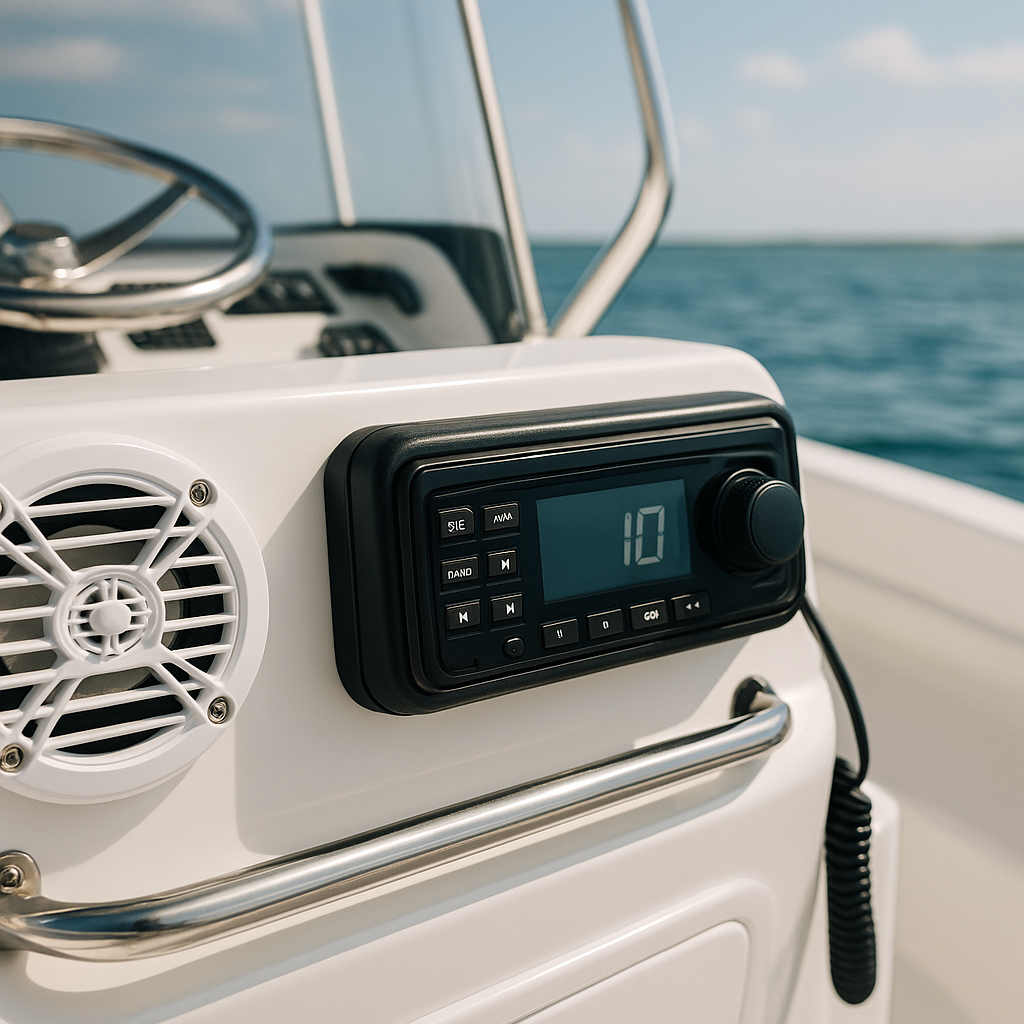
Sony's MEXM100BT is what most fishing guides install on their center consoles. IPX5 water resistance handles spray and rinse-down well. Bluetooth with NFC makes pairing instant. Sound output at 4 x 45W is adequate for most open-air boat applications without an amplifier.
| Zones | 2-zone |
| Connectivity | Bluetooth 4.1 + NFC |
| IPX | IPX5 |

The most common entry-level install on aluminum fishing boats and bass boats. IPX6 means it handles a direct hose-down. The sound quality is mediocre but completely adequate at fishing speeds and engine noise levels. If it gets stolen or salt-corroded in three years, you've spent $89.
| Zones | 1-zone |
| Connectivity | Bluetooth 4.0 |
| IPX | IPX6 |

Kenwood's Bluetooth stack is more reliable than Sony's for Android phones — especially older Samsung and Google devices that struggle to reconnect to Sony units after a disconnection. Built-in weather band with NOAA alerts is genuinely useful offshore. Solid build, great warranty support.
| Zones | 1-zone |
| Connectivity | Bluetooth 4.2 |
| Weather Band | Yes |

The BB300 mounts hidden in a locker and is controlled entirely from your chartplotter or a satellite remote. The correct solution for express cruisers and larger vessels where a head unit cutout in the dash doesn't make aesthetic sense. Ethernet-based zones deliver lossless audio quality throughout the boat.
| Zones | 4-zone |
| Connectivity | Ethernet + NMEA 2000 |
| Form Factor | Hidden black box |
Marine vs Car Head Units: Why It Matters
Car stereos are not waterproof. Even IPX4-rated units that handle splashes will corrode within one season of saltwater use because the internal circuitry, potentiometers, and circuit board traces aren't sealed or coated for salt exposure. A car stereo in a boat application typically fails within 18 months. Marine-rated units use conformal-coated boards, sealed knobs, and UV-stabilized bezels. Buy marine-rated only.
Zone Audio for Larger Boats

A 2-zone system sends independent audio to helm vs cockpit (or bow vs stern). A 4-zone system adds cabin and swim platform zones. If you need a Pandora station at the cockpit while the helm plays AIS radio over the speakers up front, you need multi-zone. Single-zone systems are perfectly adequate for boats under 24 feet where everyone hears the same thing.
NMEA 2000 Integration
Marine stereos with NMEA 2000 can be controlled from chartplotters and multifunction displays from Garmin, Furuno, Simrad, and Raymarine. If your helm already runs NMEA 2000, paying extra for a stereo with a network connection eliminates a separate head-unit remote and lets the chartplotter manage zone switching. Fusion's integration with Garmin is the tightest — both use the same parent company (Garmin acquired Fusion in 2014).
Installation Tips
Use only marine-grade (tinned) wire for all connections — untinned automotive wire corrodes in 2–3 years in a saltwater environment. Apply dielectric grease to all connectors. Run power directly from the battery with an inline fuse — never splice into an existing 12V circuit that serves other loads. Mount the unit out of direct sun when possible; even marine-rated displays fade noticeably after 5 Florida summers in direct sunlight.