
The Best Saltwater Trolling Motors of 2026
 By Lance Greiner — General Manager, Boater's World · Former Platform GM, Travelcamp RV· November 1, 2025· 1 min read· Updated Nov 8, 2025
Lance Greiner is a career marine and automotive retail professional with more than 15 years of dealership management experience. He currently serves as General Manager at Boater's World in Florida, overseeing full mar…
Why trust us
Every article on TopBoatGear is independently researched by the Searchshop Editorial team using manufacturer documentation, independent marine industry sources, and verified owner reviews from boaters across the US. We earn a small commission on qualifying purchases through affiliate links, which never influences our recommendations.

A modern saltwater trolling motor is a small boat in its own right. It has its own GPS, its own autopilot, its own propulsion system, and its own software ecosystem. The category has been transformed by brushless motors, integrated chartplotter networking, and spot-lock anchoring that holds position better than any anchor.
Bolting a trolling motor to the bow of a saltwater skiff is a $3,000–$6,000 decision that will define how you fish for the next decade. Here is how to spend the money.
The Rankings

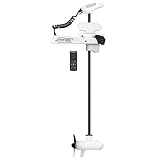
The Quest is the first ground-up redesign of the Minn Kota saltwater line in a decade. Brushless motor, optional 24V or 36V operation, One-Boat Network integration with Humminbird, and a wave-cancelling spot-lock that is the new benchmark for the category. If you fish saltwater seriously, this is the motor.
| Thrust | 90 / 115 lbs |
| Voltage | 24V / 36V |
| Network | One-Boat Network |
| Spot-lock | Wave-cancel |
- Best spot-lock in the category
- Brushless = quieter, cooler, more efficient
- Deep Humminbird integration
- Premium price
- Heavy at 60+ lbs

The Force Kraken is the only trolling motor with true vector thrust control via Garmin's anchor lock and full integration with LiveScope. If you run a Garmin chartplotter system, this is the motor that talks fluently to it.
| Thrust | 100 lbs |
| Voltage | 36V |
| Network | Garmin Marine Network |
| Brushless | Yes |
- Best LiveScope integration
- Quietest motor under tension
- Beautiful, well-designed remote
- Only one thrust option
- Requires 36V system
The Xi5 is the value play in the category. It lacks brushless construction and the deepest networking, but its Pinpoint GPS holds position within five feet and the build quality is excellent for the price. Wireless foot pedal is best-in-class.
| Thrust | 80 / 105 lbs |
| Voltage | 24V / 36V |
| Spot-lock | Pinpoint GPS |
- Best wireless pedal
- Half the price of Quest/Kraken
- Proven Pinpoint GPS
- Brushed motor — less efficient
- Limited networking
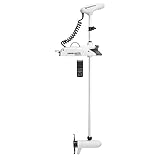
The classic Terrova platform with full saltwater protection. Mechanical foot pedal, i-Pilot Link, and proven reliability. The right choice for skiffs where simplicity beats integration.
| Thrust | 55 / 80 lbs |
| Voltage | 12V / 24V |
| Spot-lock | i-Pilot Link |
- Proven, simple, reliable
- Lighter than Quest
- Mechanical foot pedal works always
- No brushless option
- i-Pilot Link is showing its age

The Force Compact crams real spot-lock and Garmin networking into a smaller, lighter package for boats where a full Force won't fit. The right answer for tunnel skiffs and bay boats under 18 feet.
| Thrust | 50 / 57 lbs |
| Voltage | 24V |
| Network | Garmin Marine |
- Compact footprint
- Real Garmin networking
- Less thrust than larger Force
What's Changed in 2026
Three things separate a 2026 trolling motor from a 2020 motor: brushless motors that run cooler and use 30% less power, full integration with chartplotters via Ethernet or wireless networking, and refined spot-lock algorithms that hold position within a 3-foot circle even in current.
Brushed vs Brushless

Brushless motors are quieter, run cooler, last longer, and use 25–30% less battery for the same thrust. Brushed motors are cheaper, simpler, and have decades of field-proven reliability. In 2026 the right answer is brushless if your budget allows; brushed remains a perfectly good answer at the lower price points.
Thrust, Voltage, and Shaft Length
Thrust rules: 2 lbs of thrust per 100 lbs of boat weight, minimum. Voltage rules: 12V for boats under 16 feet, 24V for 16–22 feet, 36V for 22+ feet. Shaft length rules: measure from the top of the bow mount to the waterline, then add 16 inches. Wrong shaft length = motor cavitating on every wake.
Battery and Charging
A modern trolling motor needs a modern battery. Lithium iron phosphate (LiFePO4) batteries weigh half as much as lead-acid and deliver consistent voltage to the last 5% of charge. Plan for a 100Ah Li battery per 12V — so a 36V Quest with all-day inshore use wants 3× 100Ah Li batteries. The upfront cost is $2,400–$3,600 but the weight savings transform a small skiff.
Top Picks & Comparison
| # | Product | Price | Rating | ||
|---|---|---|---|---|---|
| #1 | |
Minn Kota Quest 90/115 |
$4,499 | — | View on Amazon |
| #2 | |
Garmin Force Kraken |
$4,299 | — | View on Amazon |
| #3 | M |
MotorGuide Xi5 Saltwater |
$2,499 | — | View on Amazon |
| #4 | |
Minn Kota Riptide Terrova |
$2,299 | — | View on Amazon |
| #5 | |
Garmin Force Compact |
$2,999 | — | View on Amazon |