Best VHF Marine Radios for Safety and Offshore Communication (2026)

Salem Hassan founded Travelcamp RV and brings 30+ years of hands-on RV, marine, and powersports retail experience to every review.
✎ Reviewed by Salem Hassan — Founder, Travelcamp RV · 30+ years in RV, marine, and powersports retail
Why trust us
TopBoatGear articles are researched by the Searchshop Editorial team using manufacturer specs, marine industry sources, and feedback from hands-on boaters. Our standard is saltwater first — if a product is not rated or proven for marine environments, we say so. We may earn a commission on qualifying purchases; it does not change what we recommend. If a product fails in saltwater, the article changes.
How We Evaluated
We researched the top options, comparing them across key factors including performance, value, ease of use, and reliability. Our recommendations are based on editorial evaluation of verified specifications, owner-reported real-world performance, and domain expertise.
Best VHF Marine Radios for Safety and Offshore Communication
When boaters search for the best vhf marine radio handheld, they usually want one thing above all: dependable communication when conditions turn rough. We researched the leading handheld and fixed-mount VHF marine radios to help you find the right model for coastal cruising, offshore runs, fishing trips, and emergency preparedness. Whether you need a compact backup radio or a full-featured primary communication system, the right VHF can be one of the most important safety tools on board.
All Picks & Comparison

| # | Product | Best For | Price | Rating | ||
|---|---|---|---|---|---|---|
| #1 |  |
Cobra MR F77W GPS Fixed Mount VHF Marine Radio – 25 Watt VHF, Built-In GPS Receiver, Submersible, LCD Display, Noise Cancelling Mic, NOAA Weather, Signal Strength Meter, Scan Channels, White |
— | $229.95 | (258) | Check Price on Amazon → |
| #2 |  |
Cobra BlueBound 350 VHF Handheld Marine Radio – Black – 6-Watt, Floating, Long Range, NOAA Weather Alerts, International Functionality, IPX7 Waterproof, USB-C, Submersible, LCD Screen, Belt Clip |
— | $119.95 | (61) | Check Price on Amazon → |
| #3 |  |
Icom M25EVO Blue Marine VHF Radio | Floating | Waterproof | USB Charging | Lightweight | Long Battery Life | Boating Essentials |
— | $171.90 | (8) | Check Price on Amazon → |
| #4 |  |
Icom M94D 21 USA VHF Marine Transceiver with DSC & AIS Receiver |
— | $399.95 | (148) | Check Price on Amazon → |
Best VHF Marine Radios Comparison Table
| Product | Type | Power | GPS/DSC | Waterproof/Float | Best For |
|---|---|---|---|---|---|
| Standard Horizon HX890 | Handheld | 6W | Built-in GPS, DSC | Floating, waterproof | Best overall handheld |
| Icom M94D |
Handheld | 6W | GPS, DSC, AIS receive | Floating, waterproof | Advanced offshore handheld |
| Cobra MR HH600 | Handheld | 6W | GPS, DSC | Floating, waterproof | Value-packed handheld |
| Uniden Atlantis 275 | Handheld | 6W | No DSC/GPS | Floating, waterproof | Budget backup radio |
| Standard Horizon GX1850 | Fixed-mount | 25W | GPS, DSC | Water-resistant chassis | Best value fixed-mount |
| Garmin VHF 215 | Fixed-mount | 25W | DSC, GPS via network/external setup | Fixed-mount marine build | Best for Garmin users |
| Icom M510 | Fixed-mount | 25W | GPS, DSC, app control | Marine-rated fixed unit | Premium offshore fixed-mount |
Key Takeaways

Quick Summary
- A VHF marine radio is a core safety device for coastal and offshore boating.
- Handheld VHFs are ideal as backups, for small boats, tenders, kayaks, and emergency grab bags.
- Fixed-mount VHFs offer better range, stronger transmit power, and easier integration with onboard electronics.
- We recommend prioritizing DSC distress calling, GPS, waterproofing, battery life, and floatability.
- For offshore use, many boaters should carry both a fixed-mount VHF and a handheld backup.
Why a VHF Marine Radio Matters
Cell phones can be helpful near shore, but they are not a substitute for marine VHF communication. A proper VHF radio lets you contact nearby vessels, marinas, bridges, tow services, and the Coast Guard on established marine channels. In a real emergency, features like DSC distress alerts and built-in GPS can dramatically improve response time.
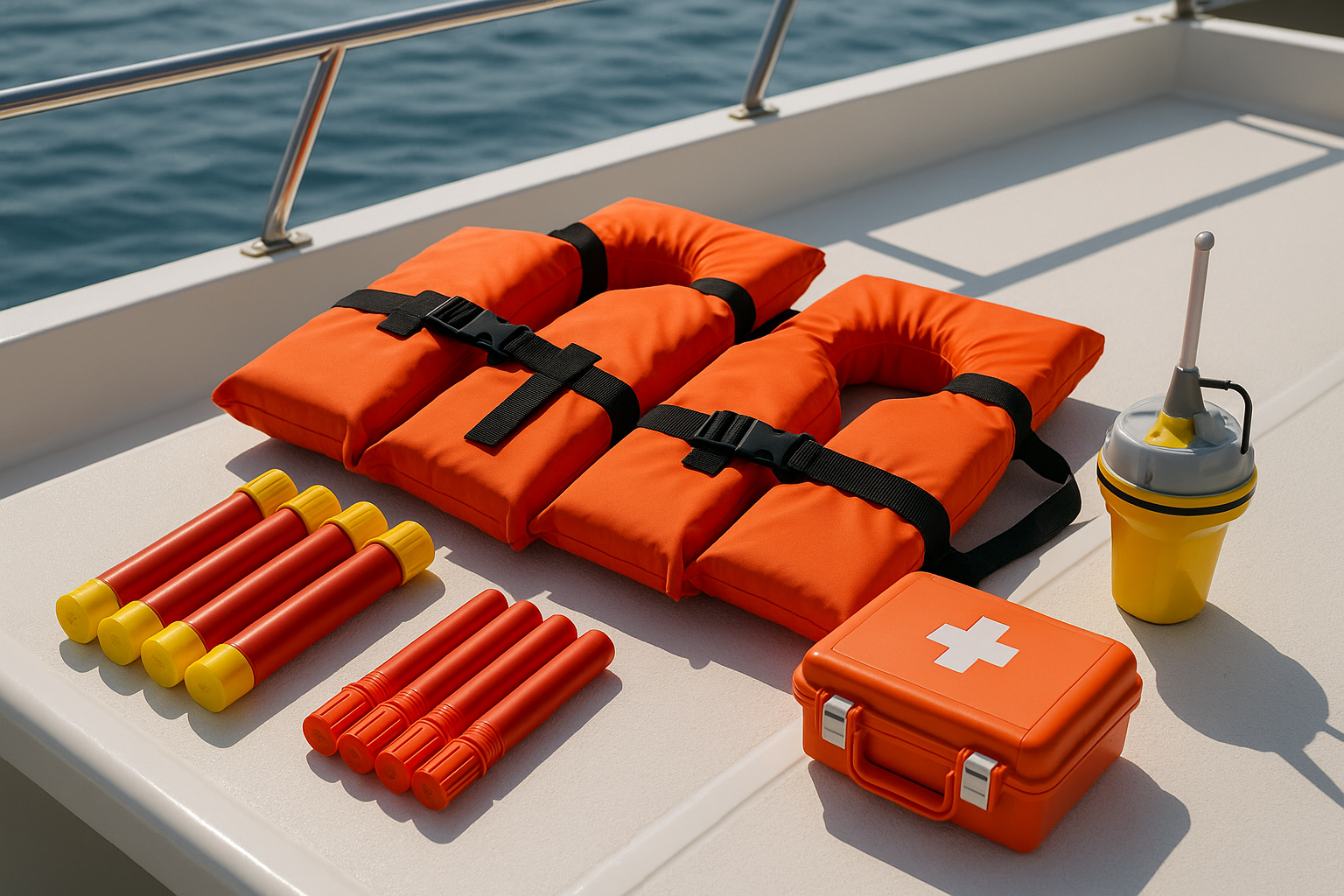
We recommend thinking of a VHF radio as part of your core safety kit, alongside life jackets, flares, navigation lights, and an EPIRB or PLB for serious offshore passages.
Handheld vs. Fixed-Mount VHF Radios
Before choosing a model, it helps to decide which type fits your boating style.
Handheld VHF Radios
Handheld units are portable, battery-powered, and easy to store in a ditch bag or console compartment. They are especially useful for:
- Small center consoles and skiffs
- Kayaks, paddle craft, and tenders
- Backup communication on larger boats
- Crew moving between vessel and dock
- Emergency abandon-ship situations
Their main tradeoff is range. A handheld usually transmits at lower power than a fixed radio and uses a smaller antenna.
Fixed-Mount VHF Radios
Fixed-mount radios install at the helm and connect to the boat’s power system and an external antenna. They are usually the better primary choice for:
- Offshore fishing boats
- Cruisers and sailboats
- Boats that routinely travel beyond nearshore waters
- Owners who want maximum range and DSC functionality
A fixed-mount unit typically delivers stronger performance, better audio, and easier long-range communication.
Our Top Picks
1. Standard Horizon HX890
The Standard Horizon HX890 stands out as one of the strongest choices for boaters who want the best vhf marine radio handheld for safety, features, and offshore readiness. It combines 6 watts of transmit power with built-in GPS and DSC distress calling, which is exactly what we like to see in a serious handheld.
It also floats, is waterproof, and includes a water-activated emergency strobe. For offshore anglers, cruisers, and anyone carrying a ditch bag, that combination is hard to beat.
Pros
- Built-in GPS and DSC distress capability
- Floating waterproof design
- Strong 6W transmit power
- Water-activated strobe for emergencies
- Good reputation for reliability and audio clarity
Cons
- Bulkier than basic handheld models
- More expensive than entry-level options
- Menu system may take time for first-time users
Best For
Boaters who want a true primary handheld or a serious offshore backup radio.
2. Icom M94D
The Icom M94D is a premium handheld built for boaters who want more situational awareness. Its standout feature is AIS receive capability, which can help you identify nearby AIS-equipped vessels. For crowded waterways, low visibility, or offshore passages, that can be a meaningful advantage.
It also includes GPS and DSC, making it a highly capable safety radio. We recommend it for experienced boaters who want top-tier handheld functionality and are willing to pay for it.
Pros
- Built-in AIS receiver adds traffic awareness
- GPS and DSC included
- Floating, waterproof construction
- Strong brand reputation in marine electronics
- Excellent choice for offshore and passagemaking backup
Cons
- Premium price point
- More advanced interface than basic users may need
- Battery and accessory costs can be higher
Best For
Offshore boaters and sailors who want a high-end handheld with AIS support.
3. Cobra MR HH600
The Cobra MR HH600 offers an appealing feature set for the money. It includes GPS, DSC, Bluetooth connectivity, floating waterproof construction, and 6W transmit power. For many recreational boaters, it hits a useful sweet spot between affordability and emergency readiness.
We like it for owners who want more than a basic backup radio without stepping into premium pricing.
Pros
- GPS and DSC at a competitive price
- Floating and waterproof
- Bluetooth features add convenience
- 6W transmit power
- Good value for recreational use
Cons
- Audio quality may not match premium brands
- Interface is less refined than top-tier models
- Long-term durability reputation is more mixed
Best For
Budget-conscious buyers who still want GPS and DSC in a handheld unit.
4. Uniden Atlantis 275
If you need a simple, affordable handheld VHF for nearshore boating or backup duty, the Uniden Atlantis 275 is worth a look. It does not offer DSC or built-in GPS, so it is not our first choice for offshore emergency planning, but it covers the basics well.
For small-boat owners, occasional boaters, or anyone wanting a secondary radio in the glove box or dry bag, it offers solid value.
Pros
- Affordable and easy to use
- Floating waterproof design
- Compact and straightforward controls
- Good option for backup or nearshore use
Cons
- No DSC distress calling
- No built-in GPS
- Less ideal for offshore emergencies
Best For
Casual boaters who need a low-cost backup or nearshore handheld radio.
5. Standard Horizon GX1850
The Standard Horizon GX1850 is one of the best fixed-mount values on the market. It delivers 25 watts of transmit power, integrated GPS, DSC functionality, and a compact footprint that fits many helm layouts.
For boaters moving beyond protected inland waters, a fixed-mount like this is often the smarter primary communication choice. We recommend it for owners who want strong capability without paying premium flagship prices.
Pros
- 25W transmit power for better range
- Built-in GPS and DSC
- Compact and helm-friendly
- Excellent value for a fixed-mount unit
- Strong safety feature set for coastal and offshore use
Cons
- Requires installation and antenna setup
- Not portable like a handheld
- Interface is functional rather than flashy
Best For
Boaters who want an affordable but capable primary VHF for coastal and offshore trips.
6. Garmin VHF 215
The Garmin VHF 215 is a strong option for boaters already using Garmin chartplotters and marine electronics. It is known for clear operation, dependable communication, and easy integration within a Garmin-centric helm.
While integration benefits depend on your system setup, it remains a solid fixed-mount choice for serious boating use.
Pros
- Strong brand ecosystem integration
- 25W fixed-mount performance
- DSC capability
- Clear interface and dependable operation
- Great fit for Garmin-equipped boats
Cons
- Best features may depend on compatible Garmin electronics
- Installation adds total cost
- Not as feature-rich standalone as some rivals
Best For
Garmin owners who want a matching VHF for an integrated helm.
7. Icom M510
The Icom M510 is a premium fixed-mount VHF aimed at boaters who want advanced communication features and polished usability. It offers DSC, GPS capability, modern controls, and app-based functionality that can extend convenience around the boat.
For offshore anglers, cruisers, and larger center consoles, it is a compelling upgrade pick.
Pros
- Premium feature set and interface
- 25W output for strong communication range
- DSC and GPS support
- App control adds flexibility
- Excellent fit and finish
Cons
- Higher price than midrange fixed-mount radios
- Installation and setup can be more involved
- Some users may not need all advanced features
Best For
Boaters seeking a premium fixed-mount VHF for regular offshore use.
How to Choose the Right VHF Marine Radio
Not every boater needs the same radio. We recommend focusing on the features that directly affect safety and real-world usability.
1. DSC Distress Calling
Digital Selective Calling lets you send an emergency distress message with your vessel information and, when connected to GPS, your position. This is one of the most important safety upgrades in modern marine radios.
If you boat offshore or in open coastal waters, we strongly recommend DSC.
2. Built-In GPS
A handheld or fixed radio with built-in GPS simplifies emergency use because it does not rely on external wiring or another device for position data. In a distress situation, simplicity matters.
3. Transmit Power
Handheld radios usually offer 1W, 2.5W, or 5-6W settings. Fixed-mount radios commonly transmit at up to 25W. More power can improve communication range, especially when paired with a quality antenna.
4. Waterproofing and Floatation
For handhelds, this is essential. A floating waterproof radio is much easier to recover if dropped overboard, and it is more likely to remain usable after exposure to spray or rain.
5. Battery Life
A handheld VHF is only useful if it has charge when you need it. Look for long battery life, battery-saving modes, and charging options that fit your boating routine.
6. Ease of Use
In rough weather or an emergency, complicated controls become a liability. We recommend choosing a radio with clear buttons, intuitive menus, and a readable display.
7. Antenna Quality
For fixed-mount radios, the antenna often matters as much as the radio itself. A well-mounted, quality antenna can significantly improve range and reliability.
Handheld or Fixed-Mount: What Do We Recommend?
For serious coastal and offshore boating, we usually recommend this setup:
- Primary radio: a fixed-mount 25W VHF with DSC
- Backup radio: a floating handheld VHF with GPS and DSC
That combination gives you stronger everyday communication at the helm and a portable emergency option if you lose power, leave the vessel, or need communication away from the console.
If you run a kayak, dinghy, paddleboard support boat, or very small skiff, a handheld may be your primary radio, but it should still be a quality model with strong safety features.
How to Use a VHF Marine Radio Safely
A good radio only helps if you know how to use it correctly. We recommend every boater practice basic operation before heading offshore.
Step-by-Step Setup and Use
Register for an MMSI number if your radio supports DSC.
This number links your radio to your vessel identity for distress and calling functions.Program the MMSI into the radio correctly.
Double-check the number before saving it. On many radios, changing it later may require factory service.Connect or confirm GPS position data.
If your radio has built-in GPS, ensure it has a position fix. If it relies on external GPS, verify the connection before departure.Learn the key channels.
Channel 16 is the primary hailing and distress channel in many regions. Know your local working, weather, and marina channels as well.Perform a radio check properly.
Use approved methods or designated channels where permitted. Avoid unnecessary traffic on Channel 16.Keep the handheld charged and accessible.
Store it where it can be reached quickly, not buried under gear.Use the distress function only for real emergencies.
DSC distress alerts are powerful tools and should never be used casually.Speak clearly and briefly.
Use standard marine communication practices, identify your vessel, and keep messages concise.
Safety Notes
- Never rely on a VHF radio as your only emergency device offshore. Carry additional signaling and emergency equipment.
- Keep handheld radios attached with a lanyard when practical. This reduces the chance of loss overboard.
- Check battery charge before every trip. A dead handheld is a false sense of security.
- Do not make routine conversation on distress channels. Keep emergency channels clear.
- Review local regulations and licensing requirements. Rules can vary by country and voyage type.
Common Mistakes to Avoid
Buying a Basic Handheld for Offshore Use
A low-cost handheld without GPS or DSC may be fine near shore, but it is not ideal as your main offshore safety radio.
Ignoring the Antenna on Fixed-Mount Systems
A premium radio paired with a poor antenna may underperform. We recommend budgeting for the full communication system, not just the radio body.
Forgetting to Program the MMSI
Many owners buy DSC-capable radios and never complete setup. That leaves one of the most important safety features unused.
Storing the Handheld Out of Reach
A backup radio should be accessible in seconds, especially if there is flooding, fire, or electrical failure.
Our Final Recommendations
If you want the best all-around handheld choice, we recommend the Standard Horizon HX890. It offers the strongest balance of GPS, DSC, waterproofing, floatability, and offshore-ready safety features.
If you want a premium handheld with advanced capability, the Icom M94D is an excellent pick, especially for boaters who value AIS receive.
If you want the best budget-friendly handheld with strong features, the Cobra MR HH600 is a smart value.
For a primary installed radio, the Standard Horizon GX1850 stands out as an excellent fixed-mount value, while the Icom M510 is a great premium upgrade for offshore communication.
In many cases, the smartest answer is not choosing handheld versus fixed-mount. It is carrying both.
FAQ
What is the best VHF marine radio handheld for offshore safety?
For many boaters, we recommend the Standard Horizon HX890 because it combines floating waterproof construction, built-in GPS, DSC distress calling, and reliable 6W performance in a proven handheld design.
Is a handheld VHF enough for offshore boating?
A handheld can be an important backup, but for most offshore boating, we recommend a fixed-mount 25W VHF as the primary radio and a handheld as secondary emergency communication.
Do I need GPS on a handheld VHF radio?
We strongly recommend it if you boat beyond protected inland waters. GPS makes DSC distress alerts far more useful by transmitting your position during an emergency.
What does DSC mean on a marine radio?
DSC stands for Digital Selective Calling. It allows distress alerts and direct vessel-to-vessel calling, especially when the radio is programmed with an MMSI and connected to GPS data.
Are floating handheld VHF radios worth it?
Yes. For most recreational boaters, a floating handheld is well worth it because accidental drops overboard are common, and floatability can prevent the loss of a critical safety device.
Get your free Get Our Free Boat Gear Checklist
The essential marine gear list every boater should have before hitting the water.