How Marine Autopilot Works: A Beginner's Guide

Salem Hassan founded Travelcamp RV and brings 30+ years of hands-on RV, marine, and powersports retail experience to every review.
✎ Reviewed by Salem Hassan — Founder, Travelcamp RV · 30+ years in RV, marine, and powersports retail
Why trust us
TopBoatGear articles are researched by the Searchshop Editorial team using manufacturer specs, marine industry sources, and feedback from hands-on boaters. Our standard is saltwater first — if a product is not rated or proven for marine environments, we say so. We may earn a commission on qualifying purchases; it does not change what we recommend. If a product fails in saltwater, the article changes.
How Marine Autopilot Works: A Beginner's Guide
If you've ever wondered how does marine autopilot work, the short answer is this: it uses sensors, a control computer, and a steering drive to keep your boat on a chosen heading or route with minimal steering input from the operator. For many boaters, autopilot can reduce fatigue, improve course-keeping, and make long runs more manageable. We researched the core technology, common system types, and practical buying considerations to help beginners understand what autopilot can—and cannot—do on the water.
Key Takeaways
- Marine autopilot steers a boat automatically using heading data, steering feedback, and a drive unit.
- Most systems include a heading sensor, course computer, control head, rudder reference or steering feedback, and a drive mechanism.
- Autopilot can hold a heading or follow a GPS route, but it does not replace a watchful operator.
- Correct sizing, boat type compatibility, and integration with chartplotters matter more than flashy features.
- We recommend prioritizing reliability, ease of control, and support from major marine electronics brands.
Comparison Table: Popular Marine Autopilot Systems

| Product | Best For | Steering Type | Key Features | Pros | Cons |
|---|---|---|---|---|---|
| Garmin Reactor 40 Hydraulic | Powerboats with hydraulic steering | Hydraulic | Solid-state AHRS, chartplotter integration, responsive course control | Smooth steering, strong brand support, good integration with Garmin displays | Higher total cost, installation may require professional help |
| Raymarine Evolution EV-100 Wheel | Sailboats and wheel-steered boats | Mechanical wheel drive | Easy mode control, adaptive steering algorithms, network compatibility | Popular for small sailboats, relatively accessible entry point | Best for lighter applications, wheel drive not ideal for every vessel |
| Simrad NAC-2 with Outboard Pilot | Small to midsize outboards | Hydraulic/outboard systems | Integrated heading sensor options, route control, display compatibility | Good fit for modern outboard setups, strong integration with Simrad/Lowrance | Configuration can be technical, pricing varies by package |
| Furuno NavPilot 300 | Cruisers and serious offshore users | Multiple drive options | Advanced steering modes, proven marine electronics ecosystem, customizable response | Excellent reputation, strong feature set | Premium pricing, can be more than beginners need |
What Is a Marine Autopilot?
A marine autopilot is an onboard steering system that automatically keeps a vessel on a selected heading or along a programmed route. Instead of constantly turning the wheel or tiller to correct for wind, waves, and current, the autopilot makes those small steering adjustments for you.
In practical terms, the system continuously compares where the boat is pointing with where you want it to go. If the bow drifts off course, the autopilot tells the steering system to correct it.
This can be especially useful for:
- Long coastal runs
- Offshore passages
- Trolling or slow-speed fishing patterns
- Single-operator workload reduction
- Fuel-efficient course holding in changing conditions
How Does Marine Autopilot Work?

At its core, a marine autopilot works through a simple loop:
- It senses the boat's current heading and movement.
- It compares that data to a target heading or route.
- It calculates the correction needed.
- It activates the steering system.
- It repeats this process constantly.
The Main Components of a Marine Autopilot
Understanding the parts makes the whole system easier to grasp.
1. Heading Sensor or Compass
This is the autopilot's sense of direction. Modern systems use a fluxgate compass, solid-state sensor, or AHRS (Attitude Heading Reference System) to detect heading changes.
These sensors help the autopilot understand:
- Which way the boat is pointing
- How quickly it is turning
- In advanced systems, pitch, roll, and yaw
2. Course Computer
The course computer is the brain of the system. It receives data from the heading sensor, GPS, and sometimes wind or rudder sensors. Then it calculates how much steering correction is needed.
A good course computer is what separates smooth, accurate steering from constant overcorrection.
3. Control Head or Display
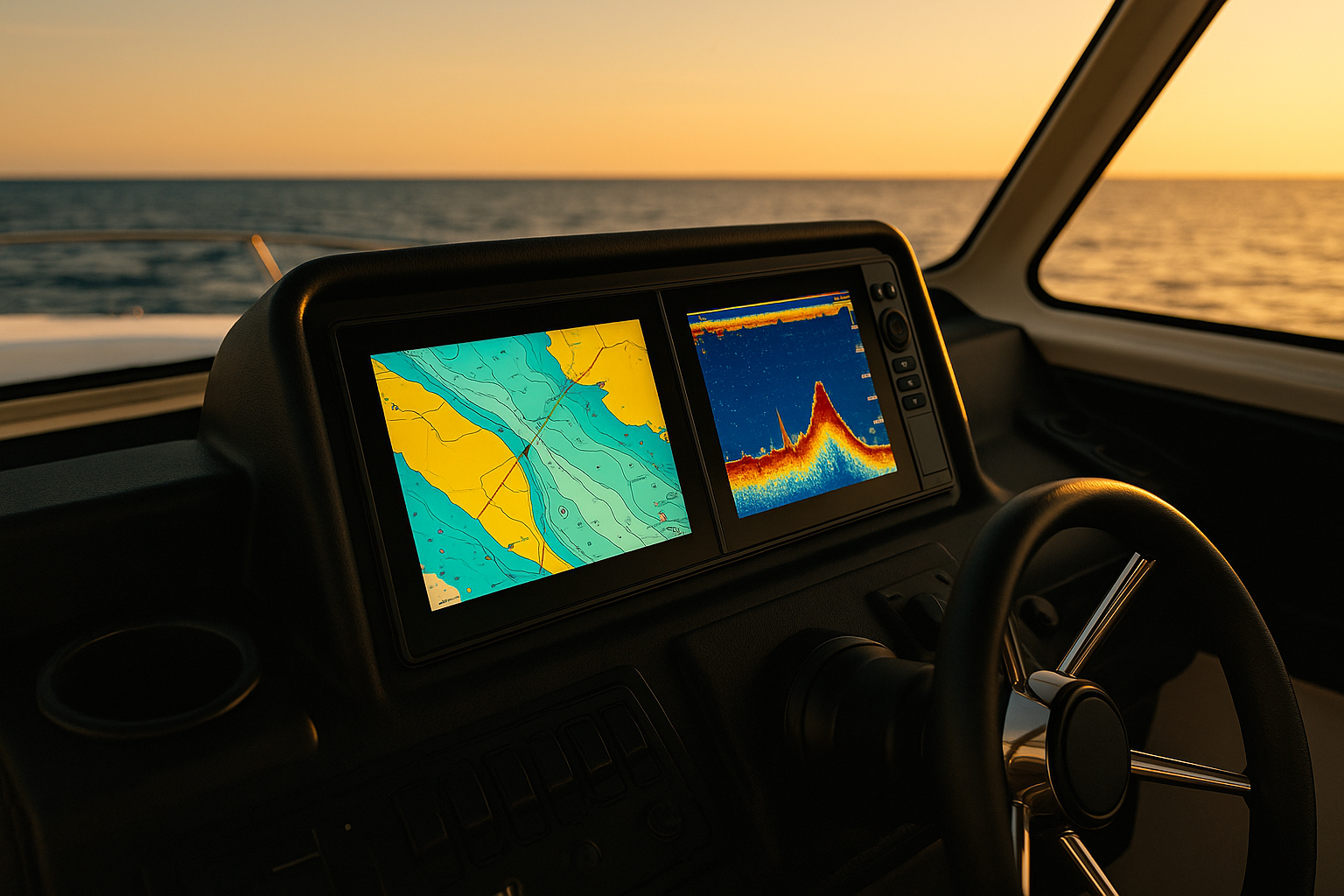
This is the interface the operator uses to engage the autopilot, adjust heading, switch modes, or follow a route from a chartplotter.
Common controls include:
- Auto/standby
- +1° / -1° heading changes
- +10° / -10° heading changes
- Route or track mode
- Dodge or temporary course change functions
4. Drive Unit
The drive unit physically moves the steering system. Depending on the boat, this may be:
- Hydraulic pump
- Mechanical rotary drive
- Linear drive
- Tiller drive
- Outboard steering actuator
This is the component that actually turns the rudder or engine.
5. Rudder Reference or Steering Feedback Sensor
Some systems use a rudder reference sensor to tell the autopilot exactly where the rudder is positioned. Others estimate steering movement electronically.
This feedback helps improve accuracy and reduces unnecessary steering corrections.
Heading Hold vs Route Following
Most marine autopilots operate in one or both of these modes.
Heading Hold
The autopilot maintains a compass heading, such as 090°. If wind or current pushes the boat off line, the system steers back to that heading.
This is ideal when:
- Running open water
- Maintaining a general course
- Reducing fatigue on long passages
Route or Track Mode
When connected to a GPS/chartplotter, the autopilot can follow a route made of waypoints. In this mode, it doesn't just hold a heading—it adjusts course to stay on the intended track.
This is useful for:
- Coastal navigation
- Repeating common routes
- More precise point-to-point travel
Even in route mode, the operator must confirm waypoint changes on many systems for safety.
What Inputs Affect Autopilot Performance?
Autopilot performance depends on more than electronics. Real-world conditions matter.
Sea State
In calm water, the autopilot makes small, infrequent corrections. In rough water, it must react more aggressively to waves and yaw.
Boat Speed
A boat often handles differently at displacement speed, planing speed, or trolling speed. Many autopilots let you adjust response levels for these conditions.
Boat Type
Autopilot behavior differs between:
- Center consoles
- Sailboats
- Trawlers
- Sportfishing boats
- Pontoon boats
Hull shape, steering system, and displacement all influence how the autopilot should be configured.
Steering System Type
Hydraulic, mechanical, and power-assisted steering systems require different autopilot drive solutions. Matching the autopilot to the steering layout is critical.
Benefits and Limitations of Marine Autopilot
Benefits
- Reduces operator fatigue
- Improves course consistency
- Helps maintain efficient steering
- Frees attention for navigation checks and lookout duties
- Useful for fishing, cruising, and long-distance travel
Limitations
- Not a substitute for an alert helmsperson
- Performance varies with setup quality
- Poorly sized systems may steer badly
- Heavy weather can challenge entry-level units
- Installation can be complex and expensive
How to Use a Marine Autopilot Safely
Autopilot is a convenience and navigation aid—not an excuse to stop paying attention.
Step-by-Step: Basic Marine Autopilot Use
Complete pre-departure checks
Verify steering, hydraulics, power supply, and electronics are functioning properly.Safety note: Never engage autopilot if the steering system feels abnormal or unresponsive.
Idle into open, safe water
Wait until you have clear space away from docks, traffic, swimmers, and hazards.Safety note: Do not use autopilot in tight quarters or during docking maneuvers.
Steer manually onto your desired heading
Get the boat stable on course before pressing the auto function.Safety note: Sudden engagement while turning can cause unexpected corrections.
Engage autopilot in heading mode
Press Auto and confirm the system is holding the intended heading.Safety note: Keep a hand near the helm and be ready to disengage immediately.
Adjust course in small increments
Use the control head to make 1-degree or 10-degree changes as needed.Safety note: Watch for nearby traffic before making any heading change.
If using GPS route mode, verify the route first
Confirm waypoints, chart accuracy, and safe water before allowing the autopilot to follow a track.Safety note: Autopilot follows commands; it does not judge whether the route is safe.
Maintain a constant lookout
Continue scanning for boats, markers, floating debris, weather, and depth changes.Safety note: The operator remains fully responsible for collision avoidance at all times.
Disengage early when approaching hazards or destination
Switch back to standby well before entering a marina, channel, or crowded area.Safety note: Manual control should be resumed before close-quarters maneuvering.
Marine Autopilot Buying Guide
If you're shopping for a system, the best choice depends on your boat size, steering type, and intended use. We researched common beginner-friendly options from major brands that are widely available and well supported.
Product Pros and Cons
Garmin Reactor 40 Hydraulic
Pros
- Excellent heading stability
- Broad compatibility with Garmin marine electronics
- Strong support network and installer familiarity
Cons
- More expensive than entry-level systems
- Hydraulic setup must be matched carefully to steering volume
Raymarine Evolution EV-100 Wheel
Pros
- Good beginner option for smaller sailboats
- Straightforward controls
- Well-known brand with broad dealer support
Cons
- Wheel drive can be less suitable for heavier boats
- Not intended for every steering arrangement
Simrad NAC-2 with Outboard Pilot
Pros
- Strong option for outboard-powered boats
- Works well within Simrad and Lowrance networks
- Good route-following capabilities
Cons
- Buying the right package requires attention to steering details
- Setup menus may feel advanced for first-time users
Furuno NavPilot 300
Pros
- Highly respected offshore pedigree
- Advanced tuning and steering features
- Flexible for larger or more demanding boats
Cons
- Higher upfront investment
- More capability than casual boaters may need
What to Look for Before You Buy
Match the System to Your Steering
This is the first filter. A hydraulic system needs a compatible pump and capacity range. Mechanical and tiller setups need different drives.
Check Boat Length and Displacement Guidance
Manufacturers rate autopilots by boat size and steering load. Staying within those limits is essential.
Consider Electronics Integration
If you already use Garmin, Raymarine, Simrad, or Furuno displays, staying in the same ecosystem often simplifies installation and route sharing.
Think About Your Boating Style
- Day cruising: basic heading hold may be enough
- Offshore runs: stronger sensors and steering logic matter more
- Sailboats: wind integration can be valuable
- Fishing: precise low-speed control may be a priority
Budget for Installation
Many autopilot systems cost more to install than buyers expect. Plumbing hydraulic pumps, mounting sensors, and calibrating the system can add meaningful labor costs.
Installation and Calibration Matter More Than Many Beginners Realize
Even a premium autopilot can perform poorly if installed incorrectly. Sensor placement, hydraulic bleeding, wiring quality, and software calibration all affect performance.
We recommend reviewing:
- Steering compatibility charts
- Manufacturer installation manuals
- Dealer support availability
- NMEA network requirements
- Calibration procedures after launch
In many cases, professional installation is worth considering—especially for hydraulic or offshore-oriented systems.
Frequently Asked Questions
Get your free Get Our Free Boat Gear Checklist
The essential marine gear list every boater should have before hitting the water.
FAQ
1. Does marine autopilot steer the boat completely by itself?
It steers automatically based on a heading or route, but it does not replace the operator. You must still maintain lookout, avoid collisions, and monitor navigation conditions.
2. Can marine autopilot work with GPS?
Yes. Many systems integrate with a chartplotter or GPS to follow routes and waypoints. This is often called track mode or route mode.
3. Is autopilot worth it on a small boat?
For many boaters, yes—especially on longer runs or when fatigue is an issue. The key is choosing a system properly sized for the boat and steering setup.
4. Can I install a marine autopilot myself?
Some experienced owners can, particularly on simpler systems. But hydraulic plumbing, electrical integration, and calibration can be complex, so professional installation is often the safer choice.
5. Does autopilot work in rough seas?
Usually yes, but performance depends on the system quality, boat design, and proper setup. More advanced units generally handle changing sea conditions better.
Final Thoughts
Understanding how does marine autopilot work helps you make better decisions both at the helm and when shopping for equipment. The system is essentially a smart steering assistant: it senses heading, calculates corrections, and moves the steering to keep the boat on course. When matched properly to your vessel and used responsibly, autopilot can be one of the most useful upgrades for comfort and control.

We researched the leading options and recommend focusing first on steering compatibility, installation quality, and brand support. Features matter, but reliable course-keeping and safe operation matter more.
If you're comparing systems, start with your boat's steering type, displacement, and electronics network. That will narrow the field quickly and help you choose an autopilot that fits your real-world boating needs.
Top Picks & Comparison
| # | Product | Price | Rating | ||
|---|---|---|---|---|---|
| #1 | |
The Boaters Guide to Twin Screw Boat Handling - Lean Maneuvers, Docking, Wind & Current, Controls & More |
For $9.99 to rent | (7) | Check Price on Amazon → |
| #2 |  |
How Boat Things Work: An Illustrated Guide |
$12.48 | (430) | Check Price on Amazon → |
| #3 |  |
Handbook of Marine Craft Hydrodynamics and Motion Control |
$119.95 | (9) | Check Price on Amazon → |
| #4 |  |
Theory and Practices of Marine Pilotage |
$73.36 | (15) | Check Price on Amazon → |