How to Properly Tie Up a Boat at a Dock: Essential Knots

Salem Hassan founded Travelcamp RV and brings 30+ years of hands-on RV, marine, and powersports retail experience to every review.
✎ Reviewed by Salem Hassan — Founder, Travelcamp RV · 30+ years in RV, marine, and powersports retail
Why trust us
TopBoatGear articles are researched by the Searchshop Editorial team using manufacturer specs, marine industry sources, and feedback from hands-on boaters. Our standard is saltwater first — if a product is not rated or proven for marine environments, we say so. We may earn a commission on qualifying purchases; it does not change what we recommend. If a product fails in saltwater, the article changes.
🛠 What you'll need
-
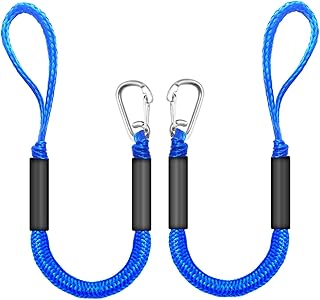 Check Price on Amazon →Bungee Dock Lines for Boats 2FT, Boat Tie Downs for Dock with Hooks, Elastic Dock Ties for Small Boat Jet Ski Kayak Mooring (2 Foot, 2-Pack, Blue)$23.99★★★★★ (154)
 -
 Check Price on Amazon →Dock Lines for Boats 1/2 Inch x 15ft – Double-Braid Nylon Boat Dock Lines, Pack of 4 – 12" Pre-Spliced Eye Loop, Marine Rope for Pontoon, Sailboat, Powerboat – Boat Rope Docking Set$30.99★★★★★ (7)
 -
 Check Price on Amazon →Boat Dock Fender Lines - 3/8" x 10ft with Marine Rope Pre-Spliced 5" Loop Double Braided Nylon Ropes Bumper Tie Mooring Line for Boats Docking Pontoon Boating Accessories - 4 Pack$22.90★★★★★ (32)
 -
 Check Price on Amazon →Boat Dock Lines Marine Rope - 1/2" x 15ft with Pre-Spliced 12" Loop Double Braided Nylon Ropes Bumper Tie Mooring Line for Boats Docking Pontoon Boating Accessories - 4 Pack Black$25.55★★★★★ (196)
How to Properly Tie Up a Boat at a Dock: Essential Knots
If you are learning how to tie boat to dock properly, the good news is that the process is straightforward once you understand a few core knots, line positions, and safety habits. We researched best practices used by experienced boaters, marina operators, and seamanship guides to put together this practical walkthrough. With the right dock lines, a few dependable knots, and careful setup, we can keep a boat secure, reduce hull damage, and make boarding safer in changing wind, wake, and tide conditions.
Key Takeaways
- Use at least three core lines: bow, stern, and spring lines.
- Learn three essential knots: cleat hitch, bowline, and round turn with two half hitches.
- Keep lines snug but not overly tight so the boat can move safely with wake and tide.
- Always use fenders before final tightening.
- Recheck lines after a few minutes, especially in wind, current, or tidal areas.
Essential Dock Lines and Gear

Before discussing knots, it helps to have the right equipment on board.
Core Docking Gear Checklist
- Bow line
- Stern line
- Forward spring line
- Aft spring line
- At least two fenders, preferably three or more for larger boats
- Chafe protection or reinforced line sleeves
- Boat hook for easier reach from deck
Buyer’s Guide: Dock Line and Fender Comparison
Below is a practical comparison of common products and gear types we recommend considering.
| Product Type | Best For | Key Benefits | Drawbacks | What We Recommend |
|---|---|---|---|---|
| Double-braided nylon dock line | Most recreational boats | Strong, shock-absorbing, easy to handle | Costs more than basic poly line | Best all-around choice for docking |
| Three-strand nylon line | Traditional setups, budget-minded boaters | Stretchy, affordable, strong | Can kink and is rougher on hands | Good value if properly maintained |
| Polypropylene line | Temporary utility use | Floats, inexpensive, lightweight | Poor UV resistance, less stretch, less ideal for docking | Not our first choice for permanent dock lines |
| Ribbed cylindrical fenders | Side-to-dock protection | Common, effective, easy to hang | Can roll out of position if poorly rigged | Great general-purpose fender style |
| Contoured or center-hole fenders | Tight slips and pilings | Stable placement, versatile rigging | Can cost more | Useful upgrade for frequent docking |
Pros and Cons by Product Type
Double-Braided Nylon Dock Line
Pros
- Excellent shock absorption
- Comfortable handling
- Resists abrasion better than many alternatives
- Holds knots reliably
Cons
- More expensive
- Can become stiff with age if poorly maintained
Three-Strand Nylon Line
Pros
- Affordable
- Good elasticity for wake and surge
- Widely available
Cons
- More prone to twisting and hockling
- Less user-friendly for beginners
Polypropylene Line
Pros
- Floats on the surface
- Budget-friendly
- Lightweight and easy to store
Cons
- Lower durability in sun exposure
- Less ideal stretch for secure docking
- Can feel slick and less secure in some knots
Cylindrical Fenders
Pros
- Reliable side protection
- Easy to reposition
- Available in many sizes
Cons
- Need correct height adjustment
- May shift in rough conditions
Contoured Fenders
Pros
- Better stability against flat surfaces and pilings
- Great for frequent dockers
- Flexible mounting options
Cons
- Higher price point
- Bulkier storage on smaller boats
Why Proper Dock Tying Matters
A poorly secured boat can surge into pilings, rub against the dock, strain cleats, or drift loose. Proper tie-up technique does more than keep the boat in place. It also helps:
- Protect gelcoat and topsides
- Reduce stress on cleats and hardware
- Improve boarding safety
- Prevent line chafe
- Handle changing water levels and passing wakes more effectively
Whether we are tying up for a quick fuel stop or overnight mooring, the same principles apply: controlled movement, balanced tension, and reliable knots.
The Essential Knots Every Boater Should Know

When tying a boat to a dock, we do not need dozens of knots. A few dependable ones cover most situations.
1. Cleat Hitch
The cleat hitch is the most important dock knot because most marinas and docks use cleats.
Best use: Securing a dock line to a dock cleat or boat cleat.
Why it matters: It is fast, secure, and easy to release when tied correctly.
How to tie it:
- Wrap the line once around the base of the cleat.
- Cross the line over the cleat horns in a figure-eight pattern.
- Finish with a locking half hitch under the final turn.
- Pull snug without stacking too many wraps.
2. Bowline
The bowline creates a fixed loop that does not tighten under load.
Best use: Making a loop for a piling, ring, or temporary attachment point.
Why it matters: It is dependable and easier to untie after strain than many loop knots.
How to tie it:
- Form a small loop in the standing part of the line.
- Pass the bitter end up through the loop.
- Take it around the standing line.
- Bring it back down through the original loop.
- Tighten neatly.
3. Round Turn with Two Half Hitches
This knot is useful when securing to a post, ring, or piling where extra grip helps.
Best use: Temporary or secondary tie points.
Why it matters: The round turn absorbs load before the hitches lock the line.
How to tie it:
- Wrap the line fully around the post or ring twice.
- Tie one half hitch around the standing part.
- Tie a second half hitch below it.
- Dress the knot tightly.
Understanding Dock Line Positions
Knots are only part of the system. The line arrangement controls how the boat moves.
Bow Line
Runs from the bow forward to the dock. It helps prevent the bow from drifting away.
Stern Line
Runs from the stern aft to the dock. It helps control stern movement.
Spring Lines
Spring lines prevent forward and backward surging.
- Forward spring line: Runs from the stern forward to the dock.
- Aft spring line: Runs from the bow aft to the dock.
For many docking situations, spring lines make the biggest difference in keeping the boat centered and stable.
How to Tie a Boat to a Dock Properly
Follow these steps for a secure and practical setup.
1. Approach the Dock Slowly
Bring the boat alongside at idle speed and account for wind and current.
Safety note: Never try to stop the boat with hands, feet, or a leg between the hull and dock.
2. Set Fenders Before Final Contact
Place fenders at likely contact points, usually around the widest part of the hull and near bow or stern as needed.
Safety note: Adjust fender height so they protect the hull, not ride too high above the dock edge.
3. Secure a Temporary Control Line
Get one line on first, usually a midship or spring line, to gain control of the boat while the rest are attached.
Safety note: Step onto the dock only when it is safe and stable. Do not jump across gaps.
4. Tie the Bow Line
Lead the bow line to a dock cleat and secure it with a cleat hitch. Keep enough tension to prevent drift without over-tightening.
5. Tie the Stern Line
Lead the stern line aft to a dock cleat and secure it. This balances the boat fore and aft.
6. Add Spring Lines
Attach at least one spring line, and ideally both a forward and aft spring line for overnight or exposed dockage.
Safety note: Spring lines should limit surge but still allow minor natural movement with wake and tide.
7. Adjust Line Length and Angles
Check that the boat sits parallel to the dock with even spacing. Fine-tune each line so no single line carries all the load.
8. Recheck Cleats, Chafe Points, and Fender Placement
Inspect where lines cross chocks, rub rails, or dock edges.
Safety note: If the boat will sit for hours or overnight, use chafe guards where needed.
9. Allow for Tide and Water Level Changes
In tidal areas, avoid tying lines so tightly that the boat cannot rise and fall safely.
10. Inspect Again After a Few Minutes
After wake, wind, or current settles the boat into position, retighten or ease lines as needed.
Common Mistakes to Avoid
Over-Tightening Lines
A boat needs controlled movement, not rigid restraint. Tight lines can strain cleats and create dangerous loads.
Skipping Spring Lines
Bow and stern lines alone often allow too much fore-and-aft movement.
Using the Wrong Line Material
Dock lines should absorb shock. Nylon is usually the best choice because it stretches under load.
Poor Fender Placement
Even perfect knots will not prevent hull scuffs if fenders are too high, too low, or too few.
Wrapping Hands Around a Loaded Line
Always handle lines carefully and keep fingers clear of cleats and pinch points.
Tips for Overnight or Rough-Weather Docking
If the boat will remain at the dock for an extended period, we recommend a more conservative setup.
Double Up Critical Lines
Use backup bow or stern lines in exposed slips.
Add Extra Fenders
More contact protection is better when wind or wake increases.
Use Chafe Protection
A line rubbing all night can wear faster than many boaters expect.
Check Weather and Tide Range
A secure setup in calm daylight may not be enough after wind shifts or a strong overnight current change.
FAQ
What is the best knot for tying a boat to a dock?
The cleat hitch is the most important and most commonly used knot for docking because it is secure, quick, and easy to untie when properly tied.
How many lines do I need to tie up a boat safely?
At minimum, use a bow line and stern line. For better control, especially for longer stays, add one or two spring lines.
Should dock lines be tight or loose?
They should be snug, not rigid. The goal is to limit excessive movement while still allowing the boat to respond safely to wake, wind, and tide.
What type of rope is best for dock lines?
Double-braided nylon is our top recommendation for most boaters because it offers a strong combination of stretch, durability, and easy handling.
Do I always need fenders when docking?
Yes, in most situations. Fenders are essential for protecting the hull from dock contact, especially during changing conditions or when other boats create wake.
Get your free Get Our Free Boat Gear Checklist
The essential marine gear list every boater should have before hitting the water.
Final Thoughts
Learning how to secure a boat at the dock starts with a simple system: quality dock lines, proper fender placement, and a few essential knots tied correctly every time. If we focus on the cleat hitch, bowline, and round turn with two half hitches, we can handle most everyday docking situations with confidence. Add spring lines, watch for chafe, and always allow for movement from tide and wake. That is the foundation of safe, reliable seamanship at the dock.