How to Set Up a Fishing Rod and Reel for Beginners

Salem Hassan founded Travelcamp RV and brings 30+ years of hands-on RV, marine, and powersports retail experience to every review.
✎ Reviewed by Salem Hassan — Founder, Travelcamp RV · 30+ years in RV, marine, and powersports retail
Why trust us
TopBoatGear articles are researched by the Searchshop Editorial team using manufacturer specs, marine industry sources, and feedback from hands-on boaters. Our standard is saltwater first — if a product is not rated or proven for marine environments, we say so. We may earn a commission on qualifying purchases; it does not change what we recommend. If a product fails in saltwater, the article changes.
🛠 What you'll need
-
 Check Price on Amazon →Collapsible Telescopic Fishing Rod and Reel Combo Push Button Small Fishing Pole Kit Beginner Youth Boys Fishing Starter Set Tackle$33.24★★★★☆ (43)
 -
 Check Price on Amazon →PLUSINNO Fishing Rod and Reel Combo, Telescopic Fishing Pole Kit with Spinning Reel, Tackle Box, Fishing Lures and Travel Carrying Bag, Fishing Gear Gifts for Men$42.99★★★★☆ (1,893)
 -
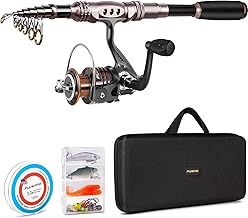 Check Price on Amazon →PLUSINNO Fishing Rod and Reel Combos Carbon Fiber Telescopic Fishing Pole with Reel Combo Sea Saltwater Freshwater Kit Fishing Rod Kit$40.58★★★★☆ (1,554)
 -
 Check Price on Amazon →Zebco Slingshot Spincast Reel and Fishing Rod Combo, 2-Piece Fishing Pole, Right-Hand Retrieve, Pre-Spooled with 10-Pound Zebco Line$22.99★★★★☆ (4,274)
How to Set Up a Fishing Rod and Reel for Beginners
If you’re searching for how to set up fishing rod beginner style, you’re in the right place. Getting your first rod and reel ready can feel confusing at first, but the process is much simpler when we break it into clear steps. In this guide, we’ll show you how to assemble your rod, attach the reel, spool line correctly, and rig a basic hook setup so you can fish safely and confidently.
Key Takeaways
- Start with a medium or medium-light spinning combo for the easiest beginner setup.
- Match your line size to your reel and rod rating.
- Thread line through every guide before tying on terminal tackle.
- Set your drag before fishing so the line can release under pressure.
- Always use safety glasses and keep hooks covered while rigging.
Comparison Table: Beginner Rod and Reel Options

| Product Type | Best For | Typical Length/Size | Pros | Cons |
|---|---|---|---|---|
| Spinning Combo | Most beginners, general freshwater fishing | 6'6"-7' rod / 2000-3000 reel | Easy to cast, versatile, widely available | Can twist line if spooled poorly |
| Spincast Combo | Kids and casual first-timers | 5'6"-6'6" rod / push-button reel | Very simple to use, low learning curve | Less casting distance and accuracy |
| Baitcasting Combo | Beginners willing to practice more | 6'6"-7' rod / low-profile reel | Better lure control, strong for heavier fish | Harder to learn, backlash risk |
1. Spinning Combo
Pros
- Easiest option for most beginners
- Good for light to medium lures
- Works with many fishing techniques
Cons
- Line twist can develop over time
- Open spool design needs careful line management
2. Spincast Combo
Pros
- Push-button operation is beginner-friendly
- Great for children or occasional anglers
- Minimal setup complexity
Cons
- Usually lower performance than spinning gear
- Limited line capacity and casting range
3. Baitcasting Combo
Pros
- Strong control for heavier lures
- More precise casting once learned
- Popular for bass fishing
Cons
- Steeper learning curve
- Backlashes can frustrate beginners
What We Recommend
For most readers, we recommend starting with a spinning combo. It offers the best balance of ease, versatility, and value. If you are buying your first setup, look for a rod labeled medium power with fast action and pair it with monofilament line in the 6-10 lb range for freshwater use.
Why a Simple Setup Matters for Beginners
A beginner setup should be easy to cast, forgiving to use, and versatile enough for ponds, lakes, and light inshore fishing. We researched common first-time mistakes, and most problems come from three issues: using line that is too heavy, skipping rod guides while threading line, or setting the drag too tight.
For most new anglers, a spinning rod and reel combo is the best place to start. It is easier to learn than a baitcasting setup and works well with live bait, bobbers, and basic lures.
What You Need Before You Start

Before setting up your rod and reel, gather these basics:
- Fishing rod
- Matching reel
- Fishing line
- Scissors or line cutters
- Hook or lure
- Bobber, sinker, and swivel if needed
- Soft cloth or towel
- Safety glasses
Best Beginner Rod and Reel Type
We recommend a 6'6" to 7' medium spinning rod paired with a 2500-size spinning reel for all-around freshwater use. This setup is manageable for beginners and flexible enough for panfish, bass, trout, and light catfish fishing.
Buyer’s Guide: Choosing the Right Beginner Setup
If you have not bought your gear yet, this quick comparison can help narrow down the best style.
How to Set Up a Fishing Rod and Reel for Beginners
Follow these steps in order. If this is your first setup, take your time. A careful setup now prevents tangles and lost fish later.
Step 1: Assemble the Rod
If your rod comes in two pieces, connect them first.
- Line up the guides so they form a straight path from handle to tip.
- Push the sections together firmly but gently.
- Twist slightly only if the manufacturer allows it.
- Check again that all guides are aligned.
Safety note: Keep the rod tip away from ceilings, walls, and other people. Rod tips are easy to damage and can snap under side pressure.
Step 2: Attach the Reel to the Reel Seat
- Locate the reel seat above the handle.
- Unscrew the locking rings enough to fit the reel foot.
- Place the reel foot into the front and rear seat slots.
- Tighten the reel seat until snug.
- Wiggle the reel gently to confirm it does not move.
Safety note: Do not overtighten. Too much force can crack lower-cost reel seats or strip threads.
Step 3: Identify the Reel Type and Open It Correctly
For a spinning reel:
- Hold the rod with the reel hanging beneath it.
- Find the bail, the metal arm around the spool.
- Flip the bail open before threading or tying line.
For a spincast reel, line exits through the front nose cone. For a baitcaster, line comes off the spool at the top. Beginners using spinning gear should focus on bail position because forgetting this is one of the most common setup mistakes.
Step 4: Spool the Fishing Line Onto the Reel
This step matters more than most beginners realize.
- Run the line through the first guide closest to the reel.
- Open the bail.
- Tie the line to the spool using an arbor knot.
- Close the bail.
- Place the filler spool label-up or as directed by the line manufacturer.
- Apply light tension to the line with a soft cloth.
- Turn the reel handle slowly and evenly.
- Fill the spool until the line sits about 1/8 inch below the spool lip.
How to Tie an Arbor Knot
- Wrap line around the reel spool once.
- Tie an overhand knot around the standing line.
- Tie another overhand knot at the tag end.
- Pull the standing line so the knot tightens against the spool.
- Trim the tag end.
Safety note: Use a cloth when applying line tension to avoid line cuts, especially with braided line.
Step 5: Thread the Line Through All Rod Guides
- Start at the guide nearest the reel.
- Pass the line through each guide one by one.
- Finish at the rod tip.
- Double-check that no guide was skipped.
A skipped guide will ruin casting performance and can stress the rod badly.
Safety note: Work in a clear area with good lighting so the hook or lure is not swinging around while threading line.
Step 6: Tie on a Hook, Lure, or Basic Terminal Rig
A simple beginner rig is a hook with a bobber and split shot sinker.
- Tie on a small hook using an improved clinch knot or Palomar knot.
- Attach a bobber 1-3 feet above the hook.
- Pinch one small split shot sinker 6-12 inches above the hook if needed.
- Add bait or leave the hook ready for later.
Simple Improved Clinch Knot
- Pass the line through the hook eye.
- Wrap the tag end around the standing line 5-7 times.
- Pass the tag end through the first loop near the eye.
- Pull slowly to tighten.
- Wet the knot before cinching fully.
- Trim the tag end.
Safety note: Keep hooks capped or held with pliers while tying. A slipping hook can puncture fingers quickly.
Step 7: Set the Drag
The drag controls how easily line pulls off the reel when a fish runs.
- Tighten the drag knob gradually.
- Pull line from the reel by hand.
- Adjust until the line releases with firm, smooth pressure.
- Avoid setting it so tight that the line cannot move.
As a simple rule, the drag should be tight enough to control the fish but loose enough to protect the line from snapping.
Step 8: Check the Setup Before Your First Cast
Run through this quick checklist:
- Reel is secure
- Line is spooled evenly
- Line passes through every guide
- Knot is trimmed and tight
- Drag is set
- Hook is secured until ready to fish
Common Beginner Mistakes to Avoid
Overfilling the Reel
Too much line causes loops, wind knots, and tangles. Leave a small gap below the spool lip.
Using Line That Is Too Heavy
Match line to the rod and reel ratings. Heavy line reduces casting distance and can affect lure action.
Forgetting to Open the Bail Before Tying Line to the Spool
This forces you to cut and redo the setup. Open the bail first, then tie.
Skipping a Rod Guide
Always inspect the line path from reel to rod tip before casting.
Drag Set Too Tight
A locked-down drag often leads to broken line or damaged tackle.
Basic Line Recommendations for Beginners
If you are unsure what line to buy, start here:
- Monofilament, 6-8 lb: Great for panfish, trout, and general pond fishing
- Monofilament, 8-10 lb: Good all-purpose choice for bass and mixed freshwater species
- Braided line, 10-15 lb: Strong and sensitive, but slightly less beginner-friendly unless paired with a mono or fluorocarbon leader
We researched beginner-friendly options, and monofilament remains the easiest line to learn with because it is affordable, forgiving, and easy to manage.
Maintenance Tips After Setup
A little care extends the life of your gear.
After Each Trip
- Wipe down the rod and reel
- Check guides for cracks or chips
- Retie if the knot looks frayed
- Loosen drag slightly before storage
For Saltwater Use
- Rinse lightly with fresh water
- Dry completely before storing
- Inspect metal parts for corrosion
Safety note: Never store a rigged rod where exposed hooks can snag clothing, skin, or boat upholstery.
Frequently Asked Questions
1. What is the best fishing rod and reel setup for a beginner?
A 6'6" to 7' medium spinning rod with a 2500-size spinning reel is the best all-around beginner setup for freshwater fishing.
2. What line should a beginner use?
We recommend 6-10 lb monofilament for most beginners. It is easy to spool, cast, and retie.
3. How full should I fill my spinning reel spool?
Fill it until the line sits about 1/8 inch below the spool lip. Overfilling causes tangles.
4. How tight should the drag be on a beginner reel?
Set it so line pulls out with steady pressure. It should not be locked tight.
5. Is a spinning reel better than a baitcaster for beginners?
Yes, for most new anglers. Spinning reels are easier to learn and less likely to create frustrating tangles.
Get your free Get Our Free Boat Gear Checklist
The essential marine gear list every boater should have before hitting the water.
Final Thoughts
Learning how to rig your first setup is one of the most useful fishing skills you can build early on. If you keep it simple, choose the right line, and follow the steps carefully, your rod and reel will perform much better from the start. For most beginners, we recommend a basic spinning combo with monofilament line and a simple bobber-and-hook rig. It is affordable, versatile, and easy to learn.
Once you’ve set up your gear a few times, the process becomes second nature. Start simple, stay safe around hooks and rod tips, and make a habit of checking your line and drag before every trip.