
The Best Boat Fenders for Every Slip, Dock, and Hull Type
 By Lance Greiner — General Manager, Boater's World · Former Platform GM, Travelcamp RV· June 12, 2026· 1 min read
Lance Greiner is a career marine and automotive retail professional with more than 15 years of dealership management experience. He currently serves as General Manager at Boater's World in Florida, overseeing full mar…
Why trust us
Every article on TopBoatGear is independently researched by the Searchshop Editorial team using manufacturer documentation, independent marine industry sources, and verified owner reviews from boaters across the US. We earn a small commission on qualifying purchases through affiliate links, which never influences our recommendations.
The Rankings


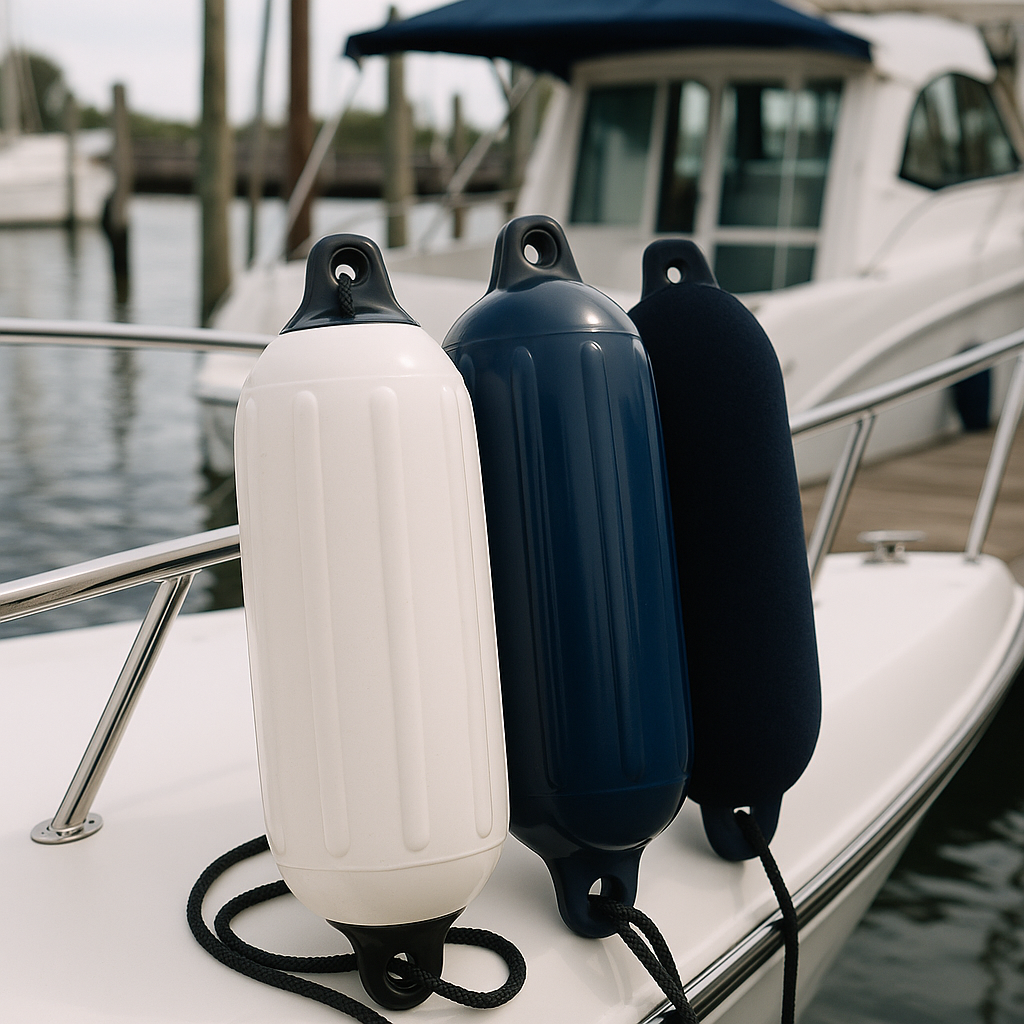
Taylor Made cylindrical fenders are on more boats in the US than any other brand. The vinyl is thick enough to absorb real dock contact without creasing, the center hole accepts standard 3/8-inch line, and they're available in white, black, and blue to match any hull. Buy in pairs — one fender per 10 feet of boat length is the rule of thumb.
| Size | 3.5" x 20" |
| Type | Cylindrical |
| Material | Vinyl |

Polyform's A-series round fenders have the highest air-retention in the market — they stay firm 5 seasons without reinflation while most competitors go soft in 1–2 years. The tie-off loop at the tip is recessed rather than molded proud, which means it doesn't abrade the dock when the boat swings. Standard in Norwegian fishing harbors for 60 years.
| Size | 9.5" x 12.5" |
| Type | Round (A-series) |
| Material | High-density vinyl |

Flat dock bumpers mount to the dock face rather than hanging from the boat. The correct solution for fixed-height floating docks, covered slips, and any situation where you want protection independent of fender hanging position. Taylor Made's Dock Pro uses closed-cell foam that doesn't compress permanently like rubber competitors.
| Size | 24" x 2" x 3" |
| Type | Flat dock bumper |
| Mount | Screw-mount to dock |

The HTM series is the commercial-grade fender used on workboats, yachts, and vessels above 40 feet. The 7.5-inch diameter absorbs significantly more force than standard 3.5-inch fenders, and the vinyl is thick enough to withstand repeated pile and dock contact without developing surface cracks.
| Size | 7.5" x 29" |
| Type | Heavy cylindrical |
| Class | 40+ foot vessels |

Inflatable fenders store flat in a duffel bag and inflate in 30 seconds with any marine or bicycle pump. The correct spare fender for cruising boats that anchor out and occasionally need a fender for an unfamiliar dock. Not a primary fender — the valve quality isn't good enough for permanent installation — but invaluable as a spare aboard a cruising boat.
| Size | 8.5" round |
| Type | Inflatable |
| Deflated | Stores flat |
Sizing Fenders for Your Hull
The general rule is 1 inch of fender diameter per 4 feet of boat length — so a 20-foot boat needs 5-inch diameter fenders, a 40-foot boat needs 10-inch fenders. Undersize fenders bottom out against the dock and provide no protection. Round fenders need one size larger than cylindrical equivalents because they present a smaller contact surface. Always err larger: an oversized fender protects better and doesn't look dramatically wrong.
Hanging Height and Placement

Hang fenders so they sit at the widest point of the hull, typically at or just below the rub rail. For finger docks, hang one fender at each piling and one between. For side-tie situations, 3 fenders on a 20-24 foot boat spaced evenly bow to stern. Adjust hanging height before every docking — tides, wave height, and dock freeboard change the required position constantly.
Fender Line Setup
Use 3/8-inch polyester braid for fenders on most recreational boats — it doesn't stretch, holds knots well, and lasts 10+ years. Tie a clove hitch through the fender eye with a securing half-hitch — it won't slip but can be adjusted without a knife. Pre-set fender length before you arrive at the dock; adjusting fender height while maneuvering to dock is a common, avoidable mistake.
Fender Storage and Maintenance
Rinse fenders with fresh water after every saltwater outing. Salt crystals embedded in the vinyl surface cause abrasion against the hull over time. Store fenders in a mesh bag or fender bag rather than loose in the bilge — fenders that roll around during a run develop flat spots and abrade the hull gelcoat they're supposed to protect. Inspect air valve cores annually and replace them ($2) rather than living with a slow leak.