
The Best Dock Cleats, Dock Lines, and Boarding Accessories
 By Lance Greiner — General Manager, Boater's World · Former Platform GM, Travelcamp RV· June 12, 2026· 1 min read
Lance Greiner is a career marine and automotive retail professional with more than 15 years of dealership management experience. He currently serves as General Manager at Boater's World in Florida, overseeing full mar…
Why trust us
Every article on TopBoatGear is independently researched by the Searchshop Editorial team using manufacturer documentation, independent marine industry sources, and verified owner reviews from boaters across the US. We earn a small commission on qualifying purchases through affiliate links, which never influences our recommendations.
The Rankings


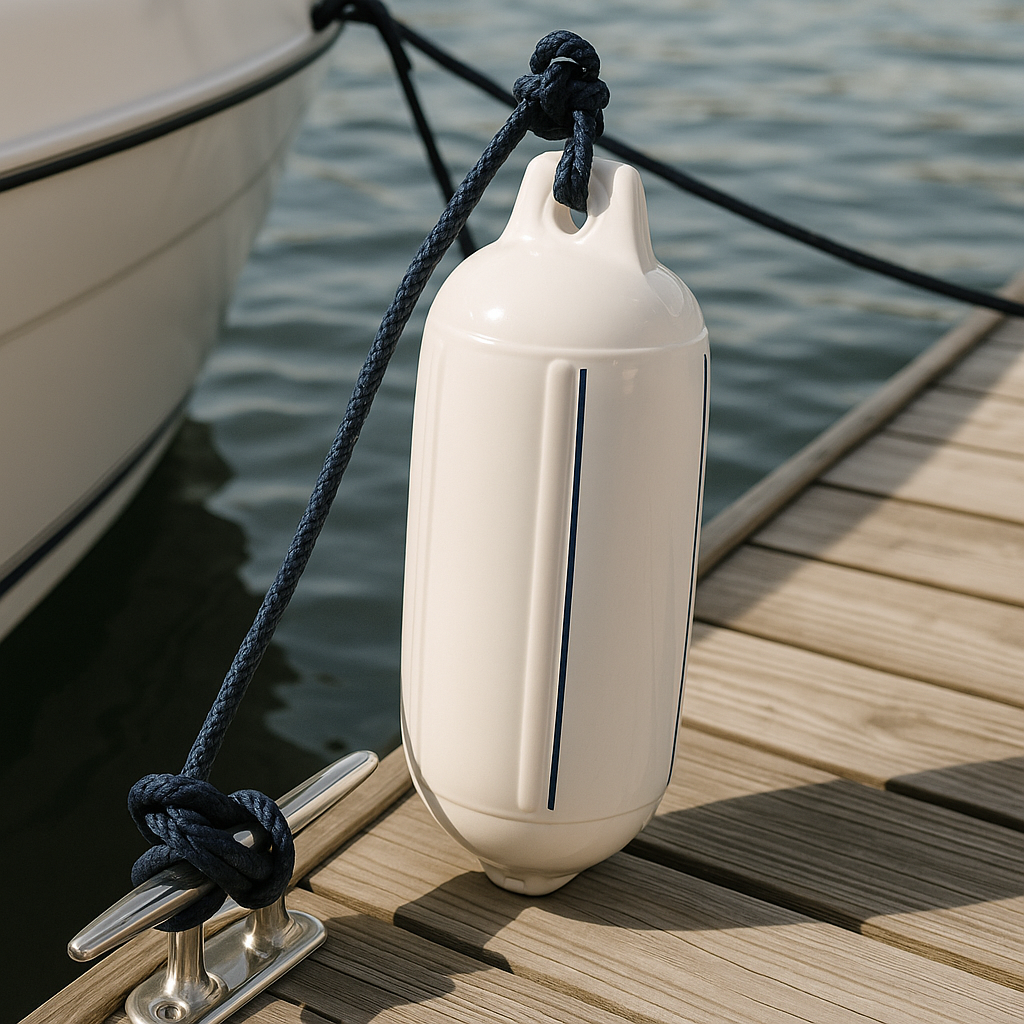
316 stainless dock cleats are the only cleats worth installing in a saltwater environment. 304 stainless and zinc-plated cleats rust visibly within 2 seasons in Florida humidity — the rust streaks stain docks and dock boxes permanently. Whitecap's 6-inch 316 cleat is sized correctly for boats up to 25 feet and the through-bolt pattern is standard.
| Size | 6 inch |
| Material | 316 stainless steel |
| Mount | Through-bolt or lag |
Re-boarding a boat from the water after swimming or a fall overboard requires a ladder that deploys quickly, one-handed, from the water — not from the boat. Garelick's EEz-In design folds flat against the transom and deploys by pulling a single rope from the water. Steps are wide, flat, and anti-slip even when covered in barnacles after a season.
| Steps | 3-step |
| Capacity | 350 lb |
| Mount | Bracket or pontoon tube |

Flip cleats spring up for line securing and fold flat to eliminate stubbed toes when not in use. The glass-filled nylon construction won't corrode, and the mechanism survives saltwater exposure well. The correct cleat for frequently-walked deck areas where a permanent horned cleat is a tripping hazard.
| Material | Glass-filled nylon |
| Feature | Spring-loaded flip |
| Use | Quick-release |

Moving coolers, dive gear, and provisions from the parking lot to the dock is back-breaking without a cart. Seachoice's marine dock cart has pneumatic wheels that handle dock grating, crushed shell, and sand ramps without bogging. The aluminum frame doesn't rust. Folds flat for storage aboard larger vessels.
| Capacity | 300 lb |
| Wheels | Pneumatic |
| Frame | Aluminum |

A correctly installed bow eye serves as both trailer bow hook and dock bow line attachment — two functions in one fitting. Chrome-plated bronze from Perko doesn't corrode and provides the strongest weld-free bow eye available for boats under 30 feet. Install with a backing plate on any fiberglass hull.
| Material | Chrome bronze |
| Application | Bow tie-off / trailer |
| Load Rating | 700 lb |
Dock Line Materials and Sizing
Nylon three-strand stretches 20–30%, which absorbs the shock of surge and wakes at the dock — use it for spring lines, bow lines, and stern lines in any tidal area. Double-braid nylon is slightly stiffer but holds knots better and lasts longer. Polypropylene dock lines float but degrade in UV within 2–3 seasons and are too stiff for good knot-holding. Sizing: 3/8 inch for boats up to 25 feet, 1/2 inch for 25–40 feet, 5/8 inch above 40 feet.
Cleat Sizing by Boat Length

A cleat should be 1/16 of the boat's length in inches — a 24-foot boat needs a 4-inch cleat minimum, a 6-inch cleat for primary dock lines. Using undersized cleats fails catastrophically in storm surge or when a wake throws a heavy boat hard against a line. Through-bolted cleats with backing plates are mandatory for boats over 25 feet — lag-screwed cleats will pull out under storm conditions.
Dock Box Selection
Dock boxes protect gear from sun, rain, and theft at marina slips. High-density polyethylene (HDPE) boxes from Suncast, Taylor Made, and Rubbermaid Marine outlast fiberglass equivalents in UV exposure and resist saltwater without coating. Look for piano-hinge lids (not individual hinges that break), hasp and padlock compatibility, and non-slip feet. Size for the amount of gear you permanently dock — overcrowded boxes seal poorly.
Boarding Access Safety
USCG accident data consistently shows that re-boarding from the water (man overboard recovery) is harder than expected. Every powered boat over 16 feet should have a boarding ladder that: deploys from inside the water with one hand, has steps starting within 18 inches of the waterline, and supports 400+ lb. A standard fixed transom ladder that folds up out of the water is inadequate — it cannot be deployed by someone in the water.