Best Inflatable Stand-Up Paddleboards for Every Skill Level (2026)

Salem Hassan founded Travelcamp RV and brings 30+ years of hands-on RV, marine, and powersports retail experience to every review.
✎ Reviewed by Salem Hassan — Founder, Travelcamp RV · 30+ years in RV, marine, and powersports retail
Why trust us
TopBoatGear articles are researched by the Searchshop Editorial team using manufacturer specs, marine industry sources, and feedback from hands-on boaters. Our standard is saltwater first — if a product is not rated or proven for marine environments, we say so. We may earn a commission on qualifying purchases; it does not change what we recommend. If a product fails in saltwater, the article changes.
How We Evaluated
We researched the top options, comparing them across key factors including performance, value, ease of use, and reliability. Our recommendations are based on editorial evaluation of verified specifications, owner-reported real-world performance, and domain expertise.
Best Inflatable Stand-Up Paddleboards for Every Skill Level
If you’re shopping for the best inflatable sup paddleboard, you’ve probably noticed how crowded the market has become. Some boards are built for stable beginner sessions on calm lakes, while others are designed for longer touring days, fitness paddling, or family use. We researched the most popular inflatable SUP categories and the features that matter most so you can choose a board that fits your skill level, budget, and paddling goals.
Inflatable stand-up paddleboards have come a long way. Today’s quality iSUPs are lighter, tougher, and more rigid than older models, making them a practical choice for boaters, travelers, and anyone short on storage space.
Key Takeaways
- The best inflatable SUP paddleboard for most buyers is an all-around shape around 10'6" to 11' long and 32" to 34" wide.
- Beginners should prioritize width, deck comfort, and easy inflation over speed-focused shapes.
- Touring paddlers benefit from longer boards with better glide and more cargo space.
- Families and larger riders should look closely at weight capacity, board thickness, and deck size.
- Safety matters: always use a leash, wear a PFD where required, and match your board to the water conditions.
All Picks & Comparison
| # | Product | Best For | Price | Rating | ||
|---|---|---|---|---|---|---|
| #1 |  |
SOLAVERO 10'6" Inflatable Paddle Board for Adults, Stand Up Paddle Board with Premium SUP Accessories,Anti-Slip EVA Deck for Youth & Adults of All Skill Levels |
— | $179.99 | (4) | Check Price on Amazon → |
| #2 |  |
11 ft Inflatable Stand Up Paddle Board with Accessories, Extra Wide Paddle Board for Adults & Youth, Heavy Duty Inflatable SUP for 2 Person, 11'35"/11'34"/11'33" |
— | $199.49 | (110) | Check Price on Amazon → |
| #3 | 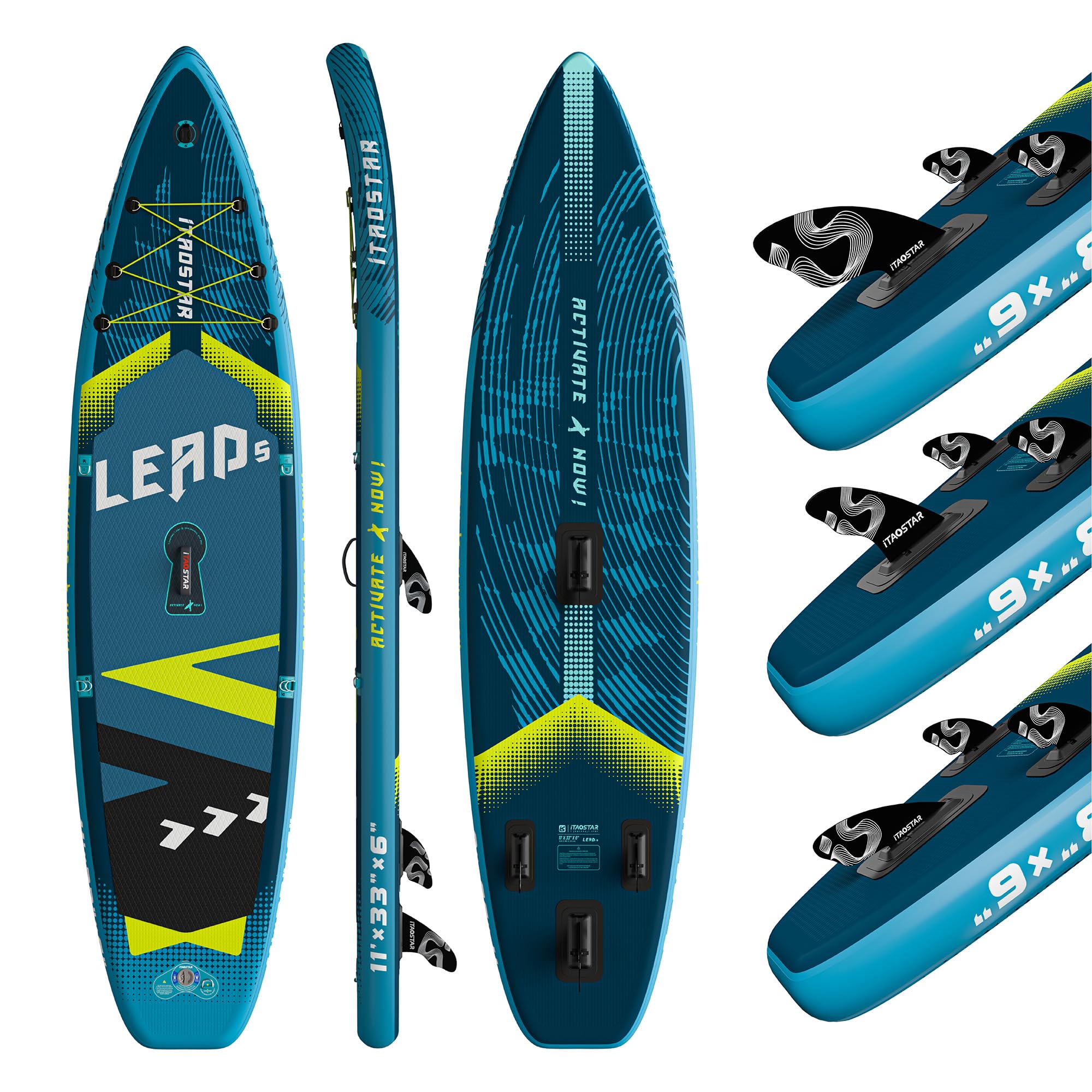 |
iTAOSTAR Lead 12' × 35"/11' × 33" Stand Up Paddle Board, Inflatable SUP Board with 5 Fins Stable Design fo Youth, All Skill Levels, Lakes, Oceans |
— | $199.99 | (203) | Check Price on Amazon → |
| #4 |  |
FunWater Stand Up Paddle Board Ultra-Light Inflatable Paddleboard with SUP Accessories for Adults & Youth of All Skill Levels |
— | $159.99 | (2,637) | Check Price on Amazon → |
Comparison Table: Best Inflatable SUP Paddleboard Picks
Below is a quick comparison of the board types and who they suit best. Since availability changes often across brands and retailers, we focused on the specs and design profiles you should look for when comparing current models.
| Product Category / Pick | Best For | Typical Size | Weight Capacity | Key Strength | Main Tradeoff |
|---|---|---|---|---|---|
| All-Around 10'6" iSUP | Most paddlers | 10'6" x 32"-33" x 6" | 240-320 lbs | Best mix of stability and versatility | Not the fastest over distance |
| Beginner Wide-Body iSUP | First-time users | 10'6"-11' x 33"-34" x 6" | 275-350 lbs | Extra stability and confidence | Slower, less agile |
| Touring 11'6"-12'6" iSUP | Distance paddling | 11'6"-12'6" x 30"-32" x 6" | 275-375 lbs | Better glide and tracking | Less beginner-friendly |
| SUP Yoga / Fitness iSUP | Balance workouts | 10'8"-11' x 34"-36" x 6" | 300-380 lbs | Wide, stable deck space | Bulkier on the water |
| Family / Tandem-Capable iSUP | Kids, pets, shared use | 11'6"-12' x 34"-36" x 6" | 350-500 lbs | High capacity and room | Heavier to carry and inflate |
| Budget Starter Package iSUP | Value-conscious buyers | 10'6" x 32"-33" x 6" | 220-300 lbs | Lower upfront cost | Usually weaker accessories |
Why Choose an Inflatable SUP?

For many paddlers, an inflatable board is simply more practical than a hard board. It packs down into a car trunk, closet, RV compartment, or boat locker, and it’s generally easier to carry to the launch point. Quality inflatable boards also offer a softer deck underfoot and can handle the bumps and scrapes of everyday use better than many people expect.
We recommend inflatable SUPs for:
- Beginners who want a forgiving platform
- Boat owners who need compact storage
- Travelers and campers
- Families sharing one board
- Casual fitness paddlers
- Anyone without roof-rack space for a hard board
That said, not every inflatable SUP is equal. Construction quality, dimensions, fin setup, included accessories, and intended use all make a big difference.
Our Top Picks by Rider Type
1. Best Overall: All-Around 10'6" Inflatable SUP
If you want one board that can handle casual lake paddles, coastal inlets, light fitness sessions, and occasional family use, this is the sweet spot. An all-around 10'6" board with a width around 32" to 33" is the most versatile choice for most buyers.
Why we recommend it
This shape balances stability, maneuverability, and ease of use. It’s beginner-friendly without feeling overly barge-like, and it usually comes in complete packages with paddle, pump, leash, backpack, and removable fin.
Best features to look for
- 6-inch thickness for rigidity and buoyancy
- Dense drop-stitch core and reinforced rails
- EVA traction pad with crocodile or diamond groove texture
- Center carry handle plus front and rear grab handles
- Front bungee storage
- 15 to 18 PSI recommended pressure
Pros
- Excellent all-around performance
- Stable enough for beginners
- Easy to turn and transport
- Widely available across price points
- Good resale and broad appeal
Cons
- Not ideal for long-distance speed
- Can feel crowded for larger paddlers with gear
- Budget versions may flex more under heavier riders
2. Best for Beginners: Wide-Body Stable Inflatable SUP
A wide-body beginner board is the best inflatable SUP paddleboard option for paddlers who want maximum confidence from day one. If balance is your biggest concern, more width is usually your friend.
Why we recommend it
Boards in the 33" to 34" width range feel noticeably more planted underfoot. That extra stability helps new paddlers focus on stroke technique, turning, and getting comfortable standing up.
Best features to look for
- Width of at least 33 inches
- Soft, grippy full-length deck pad
- Weight capacity comfortably above your actual weight
- Simple single-fin or 2+1 fin setup
- Lightweight package for easier carrying
Pros
- Very forgiving and confidence-building
- Great for calm lakes and slow rivers
- Often suitable for kids or pets on board
- Easier platform for learning step-back turns
Cons
- Slower than narrower shapes
- More affected by wind
- Less efficient for longer paddles
3. Best for Touring: 11'6" to 12'6" Touring Inflatable SUP
If your goal is covering distance efficiently, a touring iSUP is worth the upgrade. These boards are longer and usually narrower, which helps them glide farther per stroke and track straighter.
Why we recommend it
Touring boards reward paddlers who already have basic balance and want better efficiency on open lakes, bays, and slow-moving waterways. They’re also a strong fit for fitness paddlers carrying dry bags or extra gear.
Best features to look for
- Length between 11'6" and 12'6"
- Width around 30" to 32"
- Pointed or displacement-style nose
- Front and rear cargo bungees
- Stiffer construction with carbon or rail reinforcement if available
Pros
- Better glide and straight-line tracking
- More efficient over long distances
- Usually offers more cargo options
- Feels more performance-oriented
Cons
- Less stable for complete beginners
- Larger footprint for rolling and packing
- Often more expensive than all-around models
4. Best for SUP Yoga and Fitness: Extra-Wide Deck iSUP
SUP yoga and on-water workouts call for a different design priority: deck space and stability. These boards are usually among the widest inflatable SUPs on the market.
Why we recommend it
A wider board gives you more confidence moving around on the deck, shifting positions, and holding poses. It’s also a comfortable option for casual paddlers who simply prefer a steady platform.
Best features to look for
- Width between 34" and 36"
- Large, full deck traction pad
- Soft EVA foam with good comfort under knees and feet
- High capacity for stability under dynamic movement
- Multiple carry handles that don’t interfere with deck use
Pros
- Excellent stability for yoga and fitness
- Comfortable deck for kneeling and stretching
- Good option for larger paddlers
- Often doubles as a family-friendly board
Cons
- Slower and less sporty feel
- More effort in windy conditions
- Heavier and bulkier than narrower boards
5. Best for Families: High-Capacity Multi-Use Inflatable SUP
For paddlers bringing a child, a dog, or extra gear, a family-oriented board makes a lot of sense. These boards focus on carrying capacity and usable deck area.
Why we recommend it
A board with a higher weight rating and a longer, wider deck gives families more flexibility. It’s especially useful for dock play, beach days, and short recreational paddles where versatility matters more than speed.
Best features to look for
- Capacity of 350 lbs or more
- Length of 11' or more
- Wide tail and stable outline
- Multiple grab handles
- Durable rails and reinforced nose/tail construction
Pros
- Room for kids, pets, or gear
- Stable for shared use
- Versatile for relaxed recreational paddling
- Great for vacation homes and group outings
Cons
- Heavier to carry solo
- Takes longer to inflate
- Less nimble than standard all-around boards
6. Best Budget Pick: Entry-Level Starter iSUP Package
A budget board can still be a smart buy if you’re realistic about your needs. For occasional summer use on calm water, a starter package may offer solid value.
Why we recommend it
Many first-time paddlers don’t need premium touring performance. They need a stable board, a usable paddle, and accessories that get them on the water without overspending.
Best features to look for
- Complete package with pump, leash, paddle, and bag
- At least 32 inches of width
- Published pressure rating of 15 PSI or higher
- Decent deck pad coverage
- Clear warranty support from the brand
Pros
- Lowest barrier to entry
- Good for occasional recreational use
- Often sold as all-in-one kits
- Useful for learning what features matter to you
Cons
- Accessories may be basic or heavy
- Less rigid than premium constructions
- Durability and warranty support can vary widely
How to Choose the Best Inflatable SUP Paddleboard
Board Size and Stability
For most adults, the right starting point is a board around 10'6" to 11' long and 32" to 34" wide. Wider boards feel more stable, while longer boards glide better. If you’re brand new, don’t chase speed first. Stability will help you progress faster.
Weight Capacity
Always check the board’s real-world carrying ability, not just the maximum listed number. We recommend choosing a board with a capacity comfortably above your body weight, especially if you’ll carry a cooler, dry bag, child, or pet.
Construction Quality
Look for:
- Drop-stitch core
- Multi-layer PVC or reinforced rails
- Heat-welded seams if available
- Recommended pressure around 15 to 18 PSI
Better construction means better rigidity, better paddling efficiency, and longer lifespan.
Fin Setup and Tracking
A single center fin is simple and effective for most recreational paddlers. A 2+1 setup can offer more grip and tracking, but it may add setup time. Touring boards often benefit most from a larger center fin.
Included Accessories
Some packages look affordable until you realize the pump is weak, the paddle is heavy, or the bag is uncomfortable. We recommend paying attention to the full package, not just the board itself.
Useful accessories include:
- Dual-action hand pump
- Adjustable paddle
- Coiled leash for flatwater use
- Backpack with padded straps
- Repair kit
- Waterproof phone pouch or deck bag
Portability and Storage
One of the biggest advantages of an inflatable board is compact storage. But not all iSUP packages are equally portable. Heavier boards, oversized family models, and bulky bags can make transport harder than expected.
Who Should Buy Which Type?
Beginners
Choose a wide all-around board with a comfortable deck pad and easy setup. Stability matters more than speed.
Intermediate Paddlers
If you already have decent balance and want to paddle farther, move toward a longer all-around or touring shape.
Larger Riders
Look for 6-inch thickness, higher weight capacity, and at least 33 inches of width unless you specifically want performance over stability.
Travelers and Boaters
Prioritize packability, total kit weight, and durable construction. A versatile 10'6" all-around board is usually the best fit.
Fitness and Yoga Users
Choose deck space and width first. A broad, stable platform will be much more enjoyable than a narrow performance shape.
How to Inflate and Paddle an Inflatable SUP Safely
Getting started is straightforward, but a few steps make a big difference in both performance and safety.
Step-by-Step Setup and Launch
Choose a safe launch area. Pick calm, shallow water away from heavy boat traffic, strong current, or surf if you’re a beginner.
Unroll the board on a clear surface. Avoid sharp rocks, shells, hooks, or rough concrete that could damage the PVC.
Check the valve position. Make sure the inflation valve pin is set correctly so air doesn’t escape when you remove the pump hose.
Inflate to the recommended PSI. Use the manufacturer’s pressure range, usually around 12 to 18 PSI. Underinflation reduces rigidity and control.
Install the fin or fins securely. Confirm they are locked in place before launching.
Attach your leash. Connect it to the designated leash point at the tail of the board.
Secure gear under bungees. Keep loose items to a minimum and use dry bags for valuables.
Start on your knees. Paddle from a kneeling position first to get comfortable with balance and board response.
Stand up one foot at a time. Place your feet near the center handle, shoulder-width apart, and rise slowly while keeping your eyes on the horizon.
Use short, controlled strokes. Keep your knees slightly bent and your core engaged as you build confidence.
Safety Notes
- Wear a PFD where required and strongly consider one everywhere else. Regulations vary by location, but safety should come first.
- Use the right leash for the conditions. A standard leash works for flatwater; moving water may require different safety considerations.
- Check wind and weather before launching. Inflatable SUPs are light and can be difficult to control in strong wind.
- Avoid offshore winds if you’re inexperienced. They can carry you away from shore faster than expected.
- Do not exceed the board’s practical carrying weight. Overloading affects stability and tracking.
- Stay visible around boats. Bright clothing, a whistle, and conservative route choices improve safety.
Common Mistakes to Avoid
Buying Too Narrow Too Soon
Performance-oriented boards can look appealing, but many first-time buyers enjoy paddling much more on a stable platform.
Ignoring Accessory Quality
A poor paddle can make a decent board feel disappointing. If your budget allows, upgrading the paddle is often one of the best improvements.
Underinflating the Board
A soft board flexes more, tracks worse, and feels less stable. Always use a pump with a gauge and reach the recommended pressure.
Choosing by Maximum Weight Limit Alone
A board rated to 350 lbs may not perform well near that upper limit. Leave margin for comfort and efficiency.
Using the Wrong Board for Conditions
A wide yoga board is great on calm water but not ideal for long-distance efficiency. Match the board to where and how you actually paddle.
Are Inflatable SUPs Durable Enough?
For most recreational paddlers, yes. Modern inflatable boards are made from tough PVC layers over a drop-stitch core, and many hold up very well with normal care. We researched common owner concerns, and the biggest durability factors were not usually the board design itself but storage habits, dragging the board across rough surfaces, prolonged UV exposure, and poor inflation practices.
To extend board life:
- Rinse with fresh water after saltwater use
- Let it dry before long-term storage
- Store out of direct sun when possible
- Avoid folding the exact same way every time
- Keep it away from sharp tools and hot vehicle interiors for long periods
Final Recommendation
If you want the best inflatable SUP paddleboard for general use, we recommend starting with an all-around 10'6" model from a reputable brand, ideally with 32" to 33" of width, 6" thickness, and a complete accessory package. That setup works for the widest range of paddlers and conditions.
If you’re brand new, lean toward extra stability. If you plan to paddle farther, upgrade to a touring shape. If family use, yoga, or carrying capacity matters most, choose width and volume over speed-focused design.
The right iSUP is the one you’ll actually enjoy using often. Focus on honest use cases, not marketing hype, and you’ll end up with a board that delivers seasons of fun on the water.
Frequently Asked Questions
What size inflatable SUP is best for beginners?
For most adult beginners, a board around 10'6" to 11' long and 32" to 34" wide is the best place to start. That range offers a strong balance of stability, control, and versatility.
How much should I spend on the best inflatable SUP paddleboard?
For a decent recreational package, expect entry-level to mid-range pricing. Budget boards can work for occasional use, but spending more often gets you better rigidity, lighter accessories, and stronger long-term durability.
Are inflatable paddleboards good for ocean use?
They can be, especially in calm bays, inlets, and nearshore flatwater. Beginners should avoid rough surf, strong current, and offshore winds. Match the board and your skill level to the conditions.
What PSI should an inflatable SUP be inflated to?
Most inflatable SUPs perform best around 12 to 18 PSI, with many quality boards landing around 15 PSI or more. Always follow the manufacturer’s recommendation printed on the board or in the manual.
Can one inflatable SUP work for the whole family?
Yes, if you choose a high-capacity, stable all-around or family-focused board. Look for a generous deck area, width of at least 33" to 34", and a carrying capacity that leaves room for kids, pets, or gear.
Get your free Get Our Free Boat Gear Checklist
The essential marine gear list every boater should have before hitting the water.