
The Best Marine Cleaning Products for Fiberglass, Vinyl, and Metal
 By Lance Greiner — General Manager, Boater's World · Former Platform GM, Travelcamp RV· June 12, 2026· 1 min read
Lance Greiner is a career marine and automotive retail professional with more than 15 years of dealership management experience. He currently serves as General Manager at Boater's World in Florida, overseeing full mar…
Why trust us
Every article on TopBoatGear is independently researched by the Searchshop Editorial team using manufacturer documentation, independent marine industry sources, and verified owner reviews from boaters across the US. We earn a small commission on qualifying purchases through affiliate links, which never influences our recommendations.
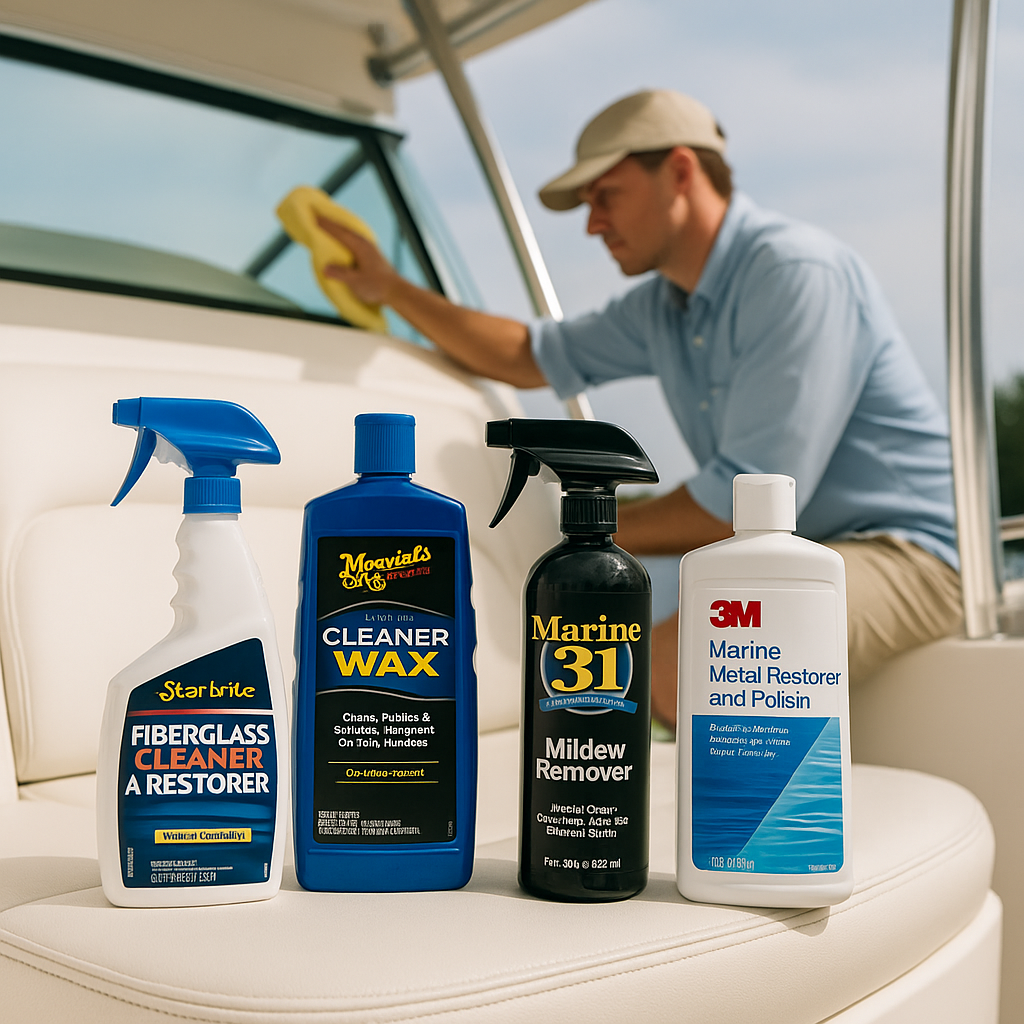
The Rankings


Star Brite is the Florida marine industry's daily-use boat wash. Diluted 10:1 it cleans effectively on a cool hull, removes road grime from trailer use, and leaves no streaking when rinsed promptly. Concentrate format means a 32oz bottle lasts an entire season for weekly washdowns on most trailered boats.
| Type | Multi-surface hull cleaner |
| Dilution | 10:1 |
| Safe on | Fiberglass, vinyl, metal |

On & Off is the Florida boater's secret weapon for waterline scum, rust streaks, and tannin staining from river and tidal water. Oxalic acid formulation works in 3–5 minutes on fiberglass — spray, let sit, agitate with a sponge, rinse. Never use on aluminum hull components — it etches the surface. Keep away from antifouling bottom paint.
| Type | Acid-based stain cleaner |
| Removes | Rust, waterline stains, growth |
| Caution | Do not use on aluminum |

303 is the best UV protectant available for marine surfaces. Annual testing by Consumer Reports and marine detailing professionals consistently ranks it above Armor All for UV protection and durability. Apply to cushion vinyl, dash vinyl, rubber seals, and plastic trim after every cleaning. Prevents the chalking and cracking that ends vinyl life prematurely in Florida sun.
| Type | UV protectant |
| Safe on | Vinyl, rubber, plastic, gelcoat |
| Reapplication | Monthly |

Bilge cleaning matters not just for smell but for fire safety — oil-soaked bilge insulation is a genuine fire hazard. Sudbury's concentrate is biodegradable and coast guard approved for overboard discharge after dilution, which simplifies bilge pump-out. Works on fuel stains, oil mist, and hydraulic fluid residue that accumulates around engines.
| Type | Bilge degreaser concentrate |
| Dilution | Variable |
| Biodegradable | Yes |

Teak grays within months in UV-intensive environments and standard household cleaners bleach it to an unnatural white. Star Brite's two-part system — cleaner removes the gray oxidized surface, brightener restores the natural blond color — is the approach used by professional yacht detailers. Sand after cleaning while teak is still damp for best results.
| Parts | 2-part (cleaner + brightener) |
| Coverage | 100 sq ft |
| Result | Natural blond color |
The Florida Saltwater Cleaning Schedule
After every outing: rinse with fresh water from bow to stern, paying attention to cleats, hatches, and through-hull areas where salt crystallizes. Every 2 weeks: full washdown with diluted boat soap, wipe down vinyl with vinyl cleaner/conditioner. Monthly: 303 protectant on all vinyl, plastic, and rubber surfaces. Quarterly: hull cleaning, waterline stain treatment, teak maintenance if applicable. Annual: full wax or polymer sealant application.
Products You Should Never Use on a Boat

Bleach damages gelcoat, fades vinyl, and kills the oxidizing agents in antifouling bottom paint. Dish soap strips protective wax coatings and degrades vinyl plasticizers with repeated use. Acetone and MEK dissolve gelcoat and fiberglass resin — never use them for cleaning. Acid cleaners (including On & Off) should never contact aluminum, LPU/Awlgrip paint finishes, antifouling bottom paint, or stainless steel with pitting corrosion.
The Right Brush and Pad for Every Surface
Medium-bristle nylon brush for fiberglass hull sides. Soft natural bristle or microfiber pad for gelcoat and painted surfaces. Stiff natural bristle scrub brush for teak and traction surfaces (non-skid). Medium nylon pad for metal polishing. Heavy nylon scrub brush for bilge cleaning. Using the wrong abrasiveness on gelcoat creates micro-scratches that collect future staining and reduce the effectiveness of wax coatings.
Waterline Stain Causes and Prevention
Waterline scum is a combination of algae, tannins, diesel exhaust, and oxidized mineral deposits that form a tide line on any hull sitting in water. Cleaning it weekly is far easier than letting it build for a season. Commercial marinas with high diesel traffic create the worst scum lines. Prevention: wax the boot stripe (waterline area) more frequently than the hull, and rinse the waterline after every trip with the hull brush before staining sets.