
The Best Marine Metal Polishes for Stainless Steel, Aluminum, and Chrome
 By Lance Greiner — General Manager, Boater's World · Former Platform GM, Travelcamp RV· June 12, 2026· 1 min read
Lance Greiner is a career marine and automotive retail professional with more than 15 years of dealership management experience. He currently serves as General Manager at Boater's World in Florida, overseeing full mar…
Why trust us
Every article on TopBoatGear is independently researched by the Searchshop Editorial team using manufacturer documentation, independent marine industry sources, and verified owner reviews from boaters across the US. We earn a small commission on qualifying purchases through affiliate links, which never influences our recommendations.
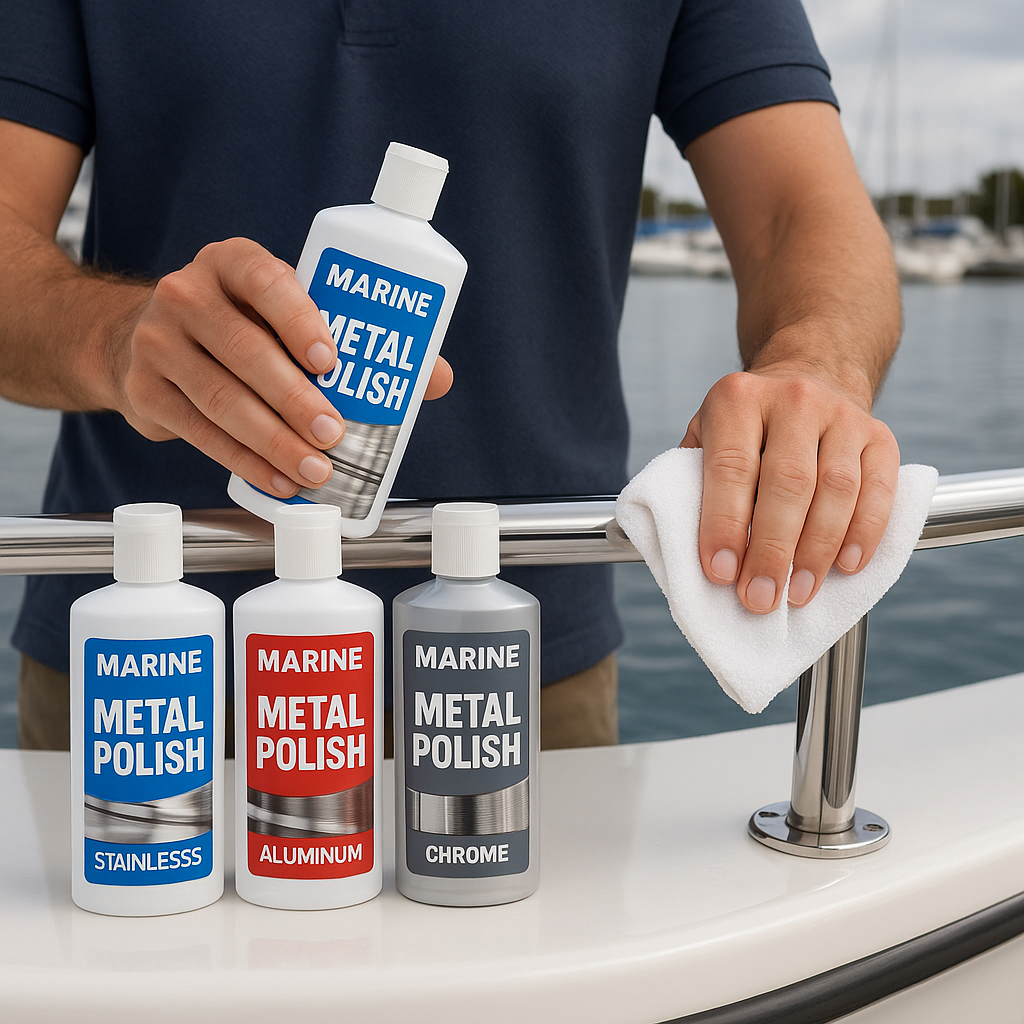
The Rankings


Star Brite's PTFE-blend polish removes salt fog haze from 316 stainless railings and leaves a PTFE (Teflon) barrier that slows future rust from forming. Two-step in one — clean and protect in a single application. The standard polish for stainless railings, cleats, anchor roller, and windlass hardware on Florida boats.
| Surfaces | Stainless, chrome, fiberglass |
| Feature | PTFE protective film |
| Type | Polish + sealant combo |

Oxidized aluminum pontoon tubes and aluminum hulls develop a white haze that no general metal polish removes effectively. Shurhold's brightener uses dilute phosphoric acid to dissolve the oxide layer and restore the reflective surface. Safe on clear-coat anodized aluminum; test on painted surfaces in an inconspicuous area first.
| Surfaces | Aluminum, anodized aluminum |
| Type | Phosphoric acid-based |
| Safe on | Painted aluminum with caution |

Flitz is the choice for boats with mixed metals aboard — it works safely on stainless, chrome bronze fittings, aluminum windshields, and bronze through-hull hardware without requiring a different product for each surface. Non-acid formulation means no compatibility concerns. Widely used by professional yacht brightwork detailers.
| Surfaces | Stainless, aluminum, chrome, brass, copper |
| Type | Non-acid cream polish |
| Feature | No scratch micro-abrasives |

Meguiar's spray compound works with a DA polisher to remove heavier oxidation from stainless railings and chrome trim faster than hand application allows. On a boat with 50+ feet of stainless railing, hand polishing takes 3 hours — with a DA polisher and this compound it takes 45 minutes and produces a better result.
| Type | Spray compound |
| Surfaces | Fiberglass, stainless, chrome |
| Use | Machine or hand |

Bronze through-hull fittings, bronze winches, and brass cleats develop green patina within weeks in saltwater. BoatLife's bronze-specific polish removes the patina without leaving acidic residue in the grooves and casting features that accelerate future oxidation. Apply quarterly on any bronze fittings below the waterline that see regular inspection.
| Surfaces | Bronze, brass, copper |
| Type | Cream polish |
| Feature | Anti-tarnish protection |
316 vs 304 Stainless: Why Grade Matters
304 stainless is the most common grade in consumer hardware and will rust in a saltwater environment within 1–3 years. 316 stainless adds molybdenum to the alloy, which dramatically improves chloride corrosion resistance. Marine-grade hardware should always be 316 stainless — railings, cleats, hinges, and deck hardware. If a stainless fitting is rusting on your boat, it's almost certainly 304, not 316. Polish buys time but doesn't fix the grade issue.
Electrolytic Corrosion: When Polish Doesn't Help

If metal fittings appear pitted, black, or have a chalky white powder deposit rather than simple surface rust, you may have an electrolysis problem rather than a surface oxidation issue. Electrolytic corrosion from stray electrical currents or dissimilar metal contact (bronze next to aluminum) eats metal from the inside out — polish cannot address it. Test with a zinc anode: if the zinc depletes unusually fast, address your wiring and bonding system first.
Polishing Cadence by Metal Type
Stainless railings: twice per season in saltwater environments (spring and fall). Chrome hardware: every 2 months in tropical climates. Aluminum hull and pontoon tubes: once per season with a dedicated aluminum brightener. Bronze through-hulls: quarterly inspection and polish during routine haul-out maintenance. Don't over-polish — micro-abrasives in polish remove a tiny layer of metal each application, and over-polishing thins chrome plating and eventually exposes base metal.
Machine vs Hand Polishing
A dual-action (DA) polisher reduces hand-polishing time by 60–70% and produces a more consistent finish than hand application, especially on curved surfaces. Random-orbit action prevents the swirl marks that rotary polishers create on mirror-polished stainless. A 6-inch DA with a soft foam pad and a quality marine compound is the fastest legitimate path to gleaming stainless on any boat with more than 20 feet of railing.