
The Best Marine Rope for Mooring, Anchoring, Docking, and Rigging
 By Lance Greiner — General Manager, Boater's World · Former Platform GM, Travelcamp RV· June 12, 2026· 1 min read
Lance Greiner is a career marine and automotive retail professional with more than 15 years of dealership management experience. He currently serves as General Manager at Boater's World in Florida, overseeing full mar…
Why trust us
Every article on TopBoatGear is independently researched by the Searchshop Editorial team using manufacturer documentation, independent marine industry sources, and verified owner reviews from boaters across the US. We earn a small commission on qualifying purchases through affiliate links, which never influences our recommendations.
The Rankings


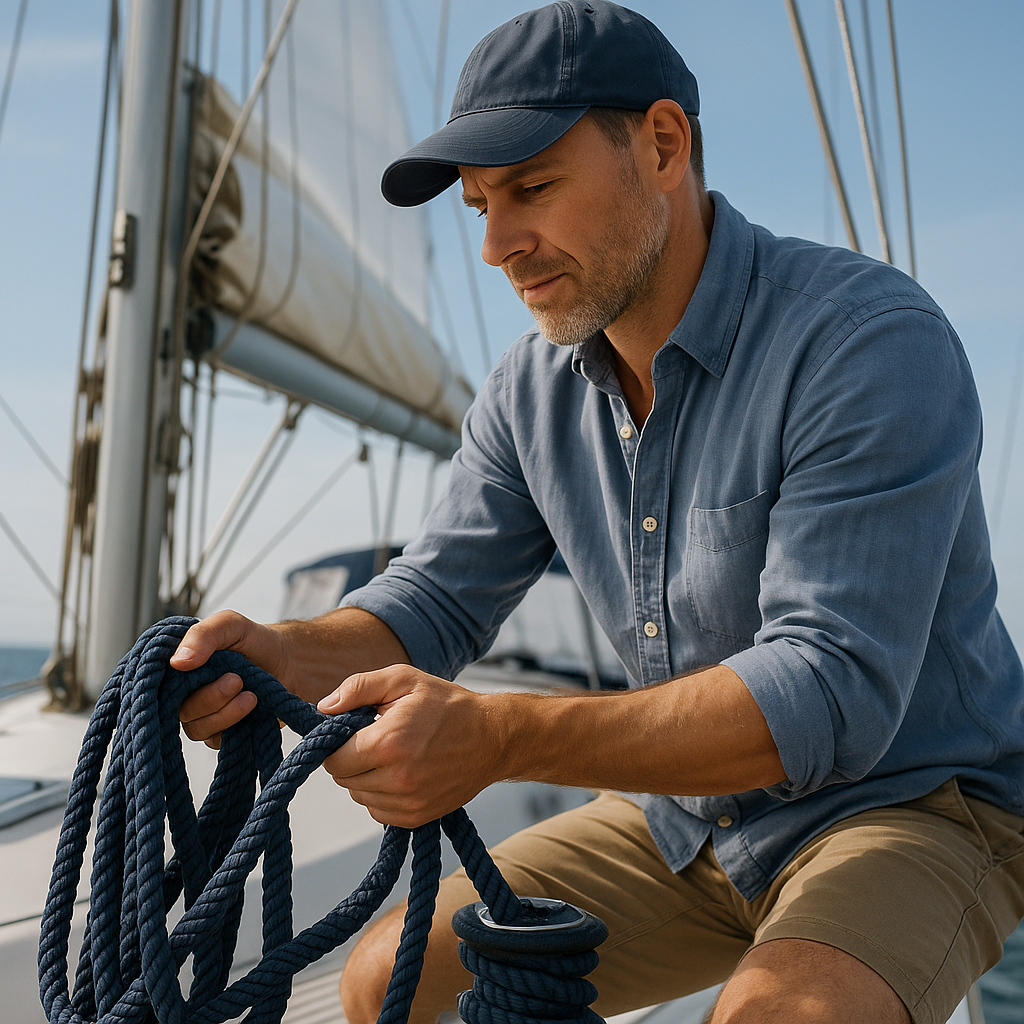
Three-strand nylon is still the correct material for dock lines after 70 years because 18% elongation absorbs surge and wake shock that would fatigue or snap low-stretch lines. New England Ropes uses a consistent twist that splices cleanly and holds a figure-eight stopper knot better than cheap imports. Buy in bulk — these last 10+ years on a covered slip.
| Material | Nylon 3-strand |
| Diameter | 1/2 inch x 25 feet |
| Elongation | 18% at 30% break |

Anchor rodes use double-braid nylon (more abrasion resistant than three-strand at the bow roller) with a galvanized chain leader. The chain sinks the catenary into the bottom, improving holding angle and providing chafe protection where the rode contacts bottom. Samson's XLS is the industry standard for anchoring in mild to moderate conditions in sand and mud.
| Material | Double braid nylon |
| Size | 3/8" x 100 feet |
| With chain | 15-foot chain leader |

Polyester double-braid is the correct material for halyards, sheets, and most running rigging on both sailboats and powerboats with outriggers, riggers, or davit lines. Near-zero stretch means halyards hold sail shape and sheets transmit sail trim without elongation delay. Far superior to nylon for rigging — nylon running rigging is a sign of an uninformed installation.
| Material | Polyester double braid |
| Diameter | 3/8 inch x 100 feet |
| Stretch | < 1% at working load |

Dyneema (UHMWPE) SK78 is the strongest rope fiber per diameter available — a quarter-inch Dyneema line exceeds the breaking strength of a half-inch nylon line at half the weight. Used for halyards on performance sailboats, standing rigging replacements, and any application where weight aloft is critical. Requires stainless thimbles — Dyneema cuts through stainless wire splices.
| Material | SK78 Dyneema core + polyester cover |
| Diameter | 1/4 inch |
| Breaking strength | 6,200 lb |

The most versatile rope aboard: mooring pennants, tow lines, outrigger rigging, fender lines, flag halyards, and dozens of miscellaneous jobs. Polyester is UV-stable, moderately strong, and affordable enough to use liberally without concern. Color-coded reels help identify line sizes. Keep 150 feet of this aboard and you can rig most improvised solutions.
| Material | Polyester braid |
| Length | 3/8" x 150 feet |
| Color coded | Yes |
Nylon vs Polyester vs Dyneema — Choosing Correctly
Nylon: high elongation (18–25%) makes it ideal for dock lines and anchor rodes where shock absorption is critical. UV-degrades in 3–5 years without treatment. Never use nylon for halyards or any application requiring low stretch — the elongation allows sails to sag and sheets to feel mushy. Polyester: minimal stretch (2–4%), UV-stable, the correct material for most rigging, sheets, and running line. Dyneema/Spectra: ultra-high strength, near-zero stretch, excellent for halyards — but splices differently and requires specific hardware; not suitable for dock lines or anchor rodes.
Breaking Strength vs Safe Working Load

The safe working load (SWL) of any marine rope is typically 1/5th to 1/10th of its published breaking strength. A 3/8-inch nylon dock line with a 4,800-pound break strength has an SWL of 480–960 pounds — adequate for a 25-foot boat on a normal day. In storm conditions with surge, dynamic loads can momentarily exceed 3–4x the static load. Size dock lines at 1/10th break strength for the expected static load, then verify the breaking strength is adequate for the dynamic scenario.
Inspecting Rope for Retirement
Rope should be retired when: it has core damage visible through the cover, it has heat glazing or stiffness from chemical exposure, it has been shock-loaded beyond SWL (anchor bridle that stopped a running boat), or it shows UV-induced brittleness (fibers break when bent sharply). White powdering on nylon surface is early UV degradation. Running a hand down the line while applying slight tension reveals stiff or flat sections indicating internal damage. When in doubt, retire it — the cost of new line is trivial compared to the cost of line failure.
Splicing vs Knots: When Each Is Appropriate
A well-made eye splice retains 90–95% of the rope's breaking strength. A bowline retains 65–75%. A round turn and two half-hitches retains 70%. For permanent installations (anchor rode shackle connection, dock line thimble), always splice. Spliced eyes with stainless thimbles are the professional standard for any line that sees regular cyclic loading. Knots are appropriate for temporary connections, securing to cleats, and situations where the end needs to be untied quickly.