
The Best Marine Toilets for Boats of Every Size
 By Lance Greiner — General Manager, Boater's World · Former Platform GM, Travelcamp RV· June 12, 2026· 1 min read
Lance Greiner is a career marine and automotive retail professional with more than 15 years of dealership management experience. He currently serves as General Manager at Boater's World in Florida, overseeing full mar…
Why trust us
Every article on TopBoatGear is independently researched by the Searchshop Editorial team using manufacturer documentation, independent marine industry sources, and verified owner reviews from boaters across the US. We earn a small commission on qualifying purchases through affiliate links, which never influences our recommendations.
The Rankings


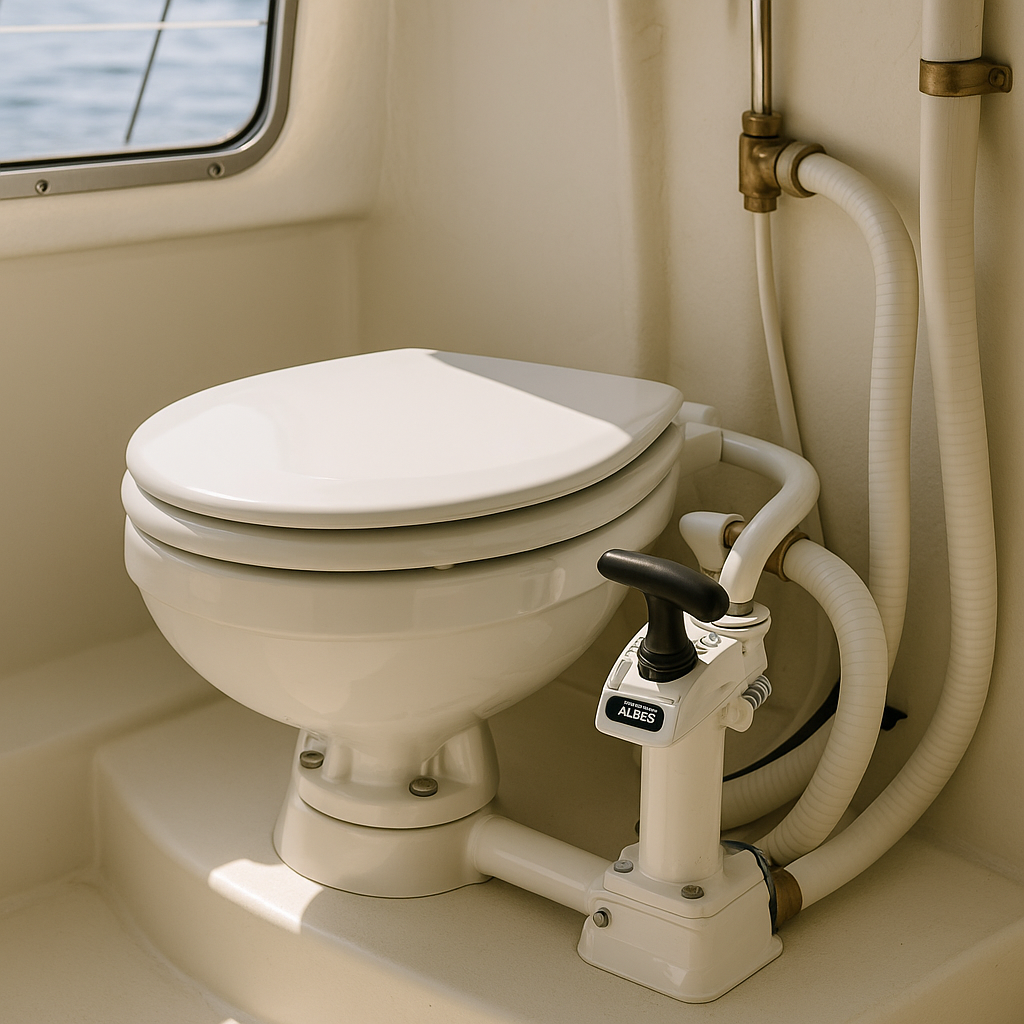
Jabsco's 29090 is the standard manual marine head installed on more American boats than any competitor. It's repairable with a $35 rebuild kit that every Jabsco dealer keeps in stock, flushes reliably on two pumps once adjusted correctly, and has been documented to run 20+ years in saltwater service without replacement. The definition of marine reliability.
| Type | Manual flush |
| Bowl size | Standard |
| Intake | Raw water |

Jabsco's Quiet Flush eliminates the pump-handle requirement and significantly reduces the operating noise that makes electric heads irritating on overnight passages. Runs on 12V and draws 3.5A during flush — negligible for any boat with a proper battery bank. The correct upgrade for boats used for overnight or weekend cruising where guests use the head.
| Type | Electric flush |
| Noise | Quiet-flush motor |
| Compatibility | Standard 1.5" discharge |

Macerating heads grind waste before discharge, allowing the use of 3/4-inch flexible discharge hose (vs 1.5-inch rigid) which routes more easily through tight spaces aboard smaller boats. The PHII's cutter is accessible without removing the toilet for cleaning. Standard choice for boats under 26 feet with limited space for plumbing runs.
| Type | Manual with macerator |
| Output | 3/4" discharge |
| USCG | Compliant |

For day boats, small cruisers, and fishing boats without through-hulls, a portable toilet requires no plumbing, no through-hulls, and no holding tank. The 565E's electric pump flush provides far better flushing than manual lever portables. Empties at any marina pumpout station with a standard dump hose connection.
| Type | Portable / self-contained |
| Capacity | 5.5 gallon |
| No plumbing | Required |

Vacuum flush systems use 1/10th the water of conventional heads — critical for boats with small holding tanks or infrequent pumpout access. The VacuFlush's porcelain bowl and residential-style seat eliminate the compromises of conventional marine heads. Requires a separate vacuum generator unit and dedicated venting but delivers a residential bathroom experience aboard.
| Type | Vacuum flush |
| Water use | 1 pint per flush |
| System | Requires vacuum generator |
USCG Regulations and Type I, II, III MSD Compliance
Any boat with an installed toilet must have a marine sanitation device (MSD) that meets USCG standards. Type I MSDs treat waste before overboard discharge (restricted to inland and coastal waters under 3 miles from shore). Type II treat to higher standards. Type III devices retain all waste for pumpout — required in no-discharge zones including all Florida state waters. If you're in Florida waters, every toilet must discharge to a holding tank, full stop.
Holding Tank Sizing and Venting

Size holding tanks at minimum 5 gallons per person per day of planned use without pumpout. Florida law prohibits any overboard discharge within 3 miles of the coast — size accordingly for your cruising habits. Holding tanks require a vent line to prevent vacuum lock during pumpout; vent lines should run to a carbon filter (not directly overboard) to manage odor at the dock. Cheap or old holding tanks degrade over time and leach odors through their walls — replace any tank that smells at the dock even with the vent filter functional.
Through-Hull and Seacock Requirements
Every head installation requires an intake through-hull (for raw water) and a discharge through-hull. USCG regulations require a seacock on every through-hull at or below the waterline — not just a valve, but a proper bronze or Marelon seacock with a handle that can be closed by hand in under 3 seconds. Inspect seacocks quarterly — bronze seacocks that haven't been exercised in years can seize in the open position, which is a sinking risk if the hose fails.
Odor Management: The Real Issue
Marine head odor comes from two sources: degraded discharge hose that has absorbed waste gases through the wall, and holding tanks that vent inadequately. Sanitation hose hardens and becomes permeable within 5–7 years — replace it on schedule regardless of whether it's leaking. Type A1 sanitation hose (marked USCG Type A1 on the hose wall) has a lower permeability rating than generic marine sanitation hose. The difference between a boat that smells and one that doesn't is almost always hose age and holding tank vent filter condition.