
The Best Freshwater Pressure Pumps and Water Systems for Cruising Boats
 By Lance Greiner — General Manager, Boater's World · Former Platform GM, Travelcamp RV· June 12, 2026· 1 min read
Lance Greiner is a career marine and automotive retail professional with more than 15 years of dealership management experience. He currently serves as General Manager at Boater's World in Florida, overseeing full mar…
Why trust us
Every article on TopBoatGear is independently researched by the Searchshop Editorial team using manufacturer documentation, independent marine industry sources, and verified owner reviews from boaters across the US. We earn a small commission on qualifying purchases through affiliate links, which never influences our recommendations.
The Rankings


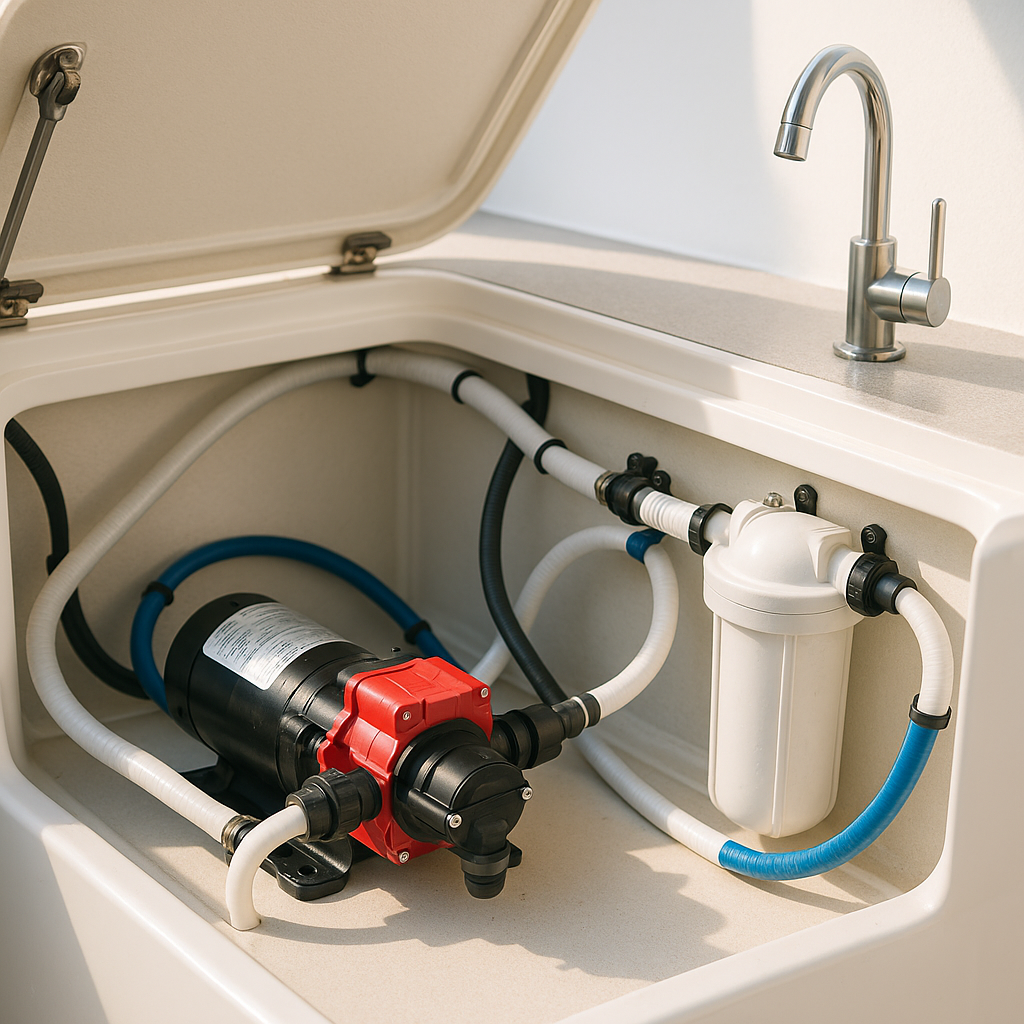
Shurflo's 4008 is installed on more cruising boats than any other freshwater pump worldwide. The 3.0 GPM flow rate provides adequate pressure for simultaneous galley and head use on boats up to 38 feet, and the self-priming design means it restarts after the tank runs dry without losing prime. Replaceable pump head means you can rebuild it for $25 rather than replacing a $79 pump.
| Flow rate | 3.0 GPM |
| Pressure | 55 PSI |
| Voltage | 12V DC |

Flojet's quad-piston design produces four smaller pressure pulses per revolution rather than one large pulse, which dramatically reduces the on/off cycling noise that makes single-diaphragm pumps disruptive at night. The standard upgrade for liveaboards and cruisers who are tired of being woken by pump cycling during early-morning passages.
| Flow rate | 2.9 GPM |
| Noise | Quad-piston design |
| Pressure | 50 PSI |

An accumulator tank stores a small pressurized water volume that satisfies short demands (hand rinse, quick faucet use) without cycling the pump. The result: the pump runs only during sustained use (dish washing, shower), significantly extending pump life and reducing electrical load. A $34 accumulator adds 2–3 years of life to any demand pump — the best investment in your freshwater system.
| Volume | 0.5 gallon |
| Compatible | All demand pumps |
| Function | Pressure buffer |

For boats without shore power or engine heat exchanger connections, a propane on-demand heater provides hot water at anchor without running a generator. The Camplux ME25 mounts in a vented locker and produces adequate hot water for a shower or dishwashing in 30 seconds. Pairs with a 1-pound propane bottle for a weekend or a 20-pound tank for extended cruising.
| Type | Propane on-demand |
| Output | 1.5 GPM at 77°F rise |
| Ignition | Piezo / battery |

For larger boats with two heads, galley, and shower running simultaneously, the PAR 36950 at 4.3 GPM provides adequate flow without pressure drop. The integrated filter screen prevents particulate from reaching the diaphragm — extending service intervals significantly. The professional install standard for passage-making cruisers and liveaboards who want residential pressure at all fixtures.
| Flow rate | 4.3 GPM |
| Pressure | 60 PSI |
| Use case | Multiple simultaneous users |
Freshwater System Sizing
Tank capacity: 1.5–2 gallons per person per day for conservative cruising (drinking, cooking, minimal dishwashing). 3–4 gallons per person per day if the system includes a shower. A couple on a 2-week passage with a shower needs 100–120 gallons minimum. Pump sizing: 3 GPM is adequate for single-head, single-sink systems. 4+ GPM is required for simultaneous head and galley use on boats over 35 feet.
Hot Water System Options

Engine-heated tank: uses a heat exchanger on the engine raw water circuit to heat the tank when underway — free hot water after 15 minutes of motoring. Shore power element: heats the tank overnight at a slip — provides residential hot water in port. Propane on-demand: heats water as needed with no tank — best for anchored-out cruisers. Combination units (engine heat + shore power element) are the most versatile but most expensive. Sailboats that spend most time at anchor use propane; powerboats that motor frequently use engine heat.
Winterizing Your Freshwater System
In freezing climates: drain all water from tanks, pumps, lines, and water heaters. Use compressed air through each faucet and fixture to evacuate remaining water. Add non-toxic pink RV antifreeze (propylene glycol, not automotive antifreeze) through the entire system by pumping it from a 1-gallon jug through the pump into every line until it appears at each fixture. Pumps are the most vulnerable component — a pump left with water in the diaphragm and cracked in a freeze costs $89 to replace.
Common Freshwater System Problems
Pump runs continuously without shutting off: pressure switch failure or leak in the system. Pump short-cycles (on/off rapidly): failed accumulator tank bladder — replace the tank. Low pressure at faucets with new pump: pump is cavitating due to an air leak on the suction side, or the filter screen is clogged. Brown water from faucets: tank hasn't been sanitized in over a year, or hose material is degrading. Flush the entire system with a 1:100 bleach solution, hold for 30 minutes, then flush completely with fresh water.