How to Fix a Marine Toilet That Won't Flush

Alana Azzouz is a Senior Editor at Searchshop Media Network with over a decade of experience in consumer content quality and editorial standards. She has reviewed thousands of product guides, buying articles, and comp…
✎ Reviewed by Alana Azzouz — Senior Editor
Why trust us
TopBoatGear articles are researched by the Searchshop Editorial team using manufacturer specs, marine industry sources, and owner feedback. Our goal is simple: when a boater searches for gear, the recommendations they read online should match what a knowledgeable dealer or experienced owner would actually suggest. We may earn a commission on qualifying affiliate purchases; it doesn't influence what we recommend — if a product changes or a better option comes along, the article changes too.
How to Fix a Marine Toilet That Won't Flush
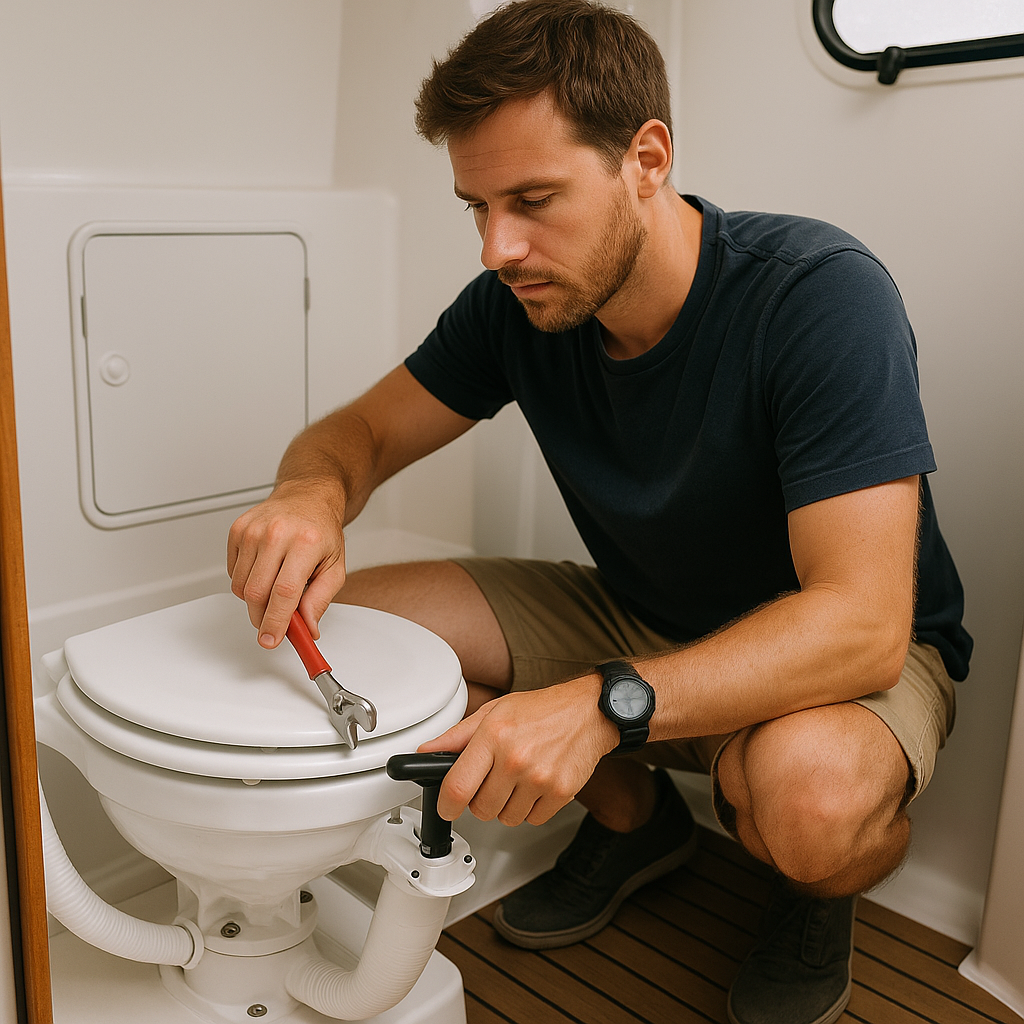
If we are searching for how to fix marine toilet problems, chances are we are dealing with a clog, a bad pump, or a blocked intake or discharge line. A marine head is simple in theory, but when it stops flushing, the cause can be mechanical, electrical, or plumbing-related. The good news is that we can usually diagnose the issue with a few tools, some patience, and a clean step-by-step process.
In this guide, we will cover the most common reasons a marine toilet will not flush, how to troubleshoot safely, and which replacement parts are worth keeping onboard.
Replacement Parts Buyers Guide

Keeping a few common service parts onboard can turn a major inconvenience into a quick repair. Below is a simple comparison of the parts most often needed when a marine toilet will not flush.
| Part | Best For | Signs It Has Failed | Typical Difficulty | Budget Range |
|---|---|---|---|---|
| Joker valve | Discharge backflow or weak flush | Waste returns to bowl, poor evacuation | Easy | Low |
| Pump rebuild kit | Manual toilet performance issues | Stiff handle, weak suction, leaks | Moderate | Low to medium |
| Complete pump assembly | Older manual heads | Repeated pump failures, cracked housing | Moderate | Medium |
| Intake strainer | Water supply protection | No water entering, visible debris | Easy | Low |
| Sanitation hose | Severe clogs or odor issues | Slow discharge, scale, permeation odor | Moderate to hard | Medium to high |
| Macerator/motor assembly | Electric toilet failure | Motor hums, jams, or will not run | Moderate | Medium to high |
When we buy replacement parts, it is important to match the toilet brand and model exactly. Marine toilet components are not universal as often as we would like, especially pumps, valves, and motor assemblies.
What Causes a Marine Toilet to Stop Flushing?
Before we start taking anything apart, it helps to narrow down the likely cause. Most marine toilets fail to flush for one of these reasons:
- The intake seacock is closed
- The toilet pump is dry, worn, or jammed
- The joker valve is stuck or damaged
- The discharge hose is clogged with waste or scale
- The holding tank vent is blocked
- The electric flush motor or fuse has failed
- There is not enough water entering the bowl
Manual and electric heads fail in different ways, but the troubleshooting path is similar. We begin with the simplest checks first and move toward the more involved repairs.
Tools and Supplies We May Need

It is easier to work quickly if we gather everything before opening the system.
- Rubber gloves
- Absorbent rags or paper towels
- Bucket
- Screwdrivers
- Adjustable wrench or pliers
- Hose clamps
- Replacement joker valve
- Marine toilet pump kit
- White vinegar or descaling solution
- Silicone grease approved for marine sanitation systems
- Multimeter for electric toilets
How to Fix a Marine Toilet That Won't Flush
1. Check the Seacocks and Tank Level
First, we confirm that the intake and discharge seacocks are in the correct position. A closed intake seacock means no flush water enters the bowl. A closed discharge line can stop waste from moving out.
We should also check the holding tank level. If the tank is full, the toilet may seem clogged even though the toilet itself is fine. If possible, we verify the tank vent is clear too, since a blocked vent can create back pressure and poor flushing.
2. Identify Whether the Problem Is Water In, Water Out, or No Power
Next, we isolate the symptom:
- If the bowl does not fill, the issue is likely on the intake side.
- If the bowl fills but will not empty, the issue is likely on the discharge side.
- If an electric head does nothing at all, we may have a power problem.
This quick distinction saves time and prevents unnecessary disassembly.
3. Inspect for an Intake Blockage
If no water enters the bowl, we inspect the intake hose, strainer, and pump. Marine growth, debris, or scale can block the line.
We close the intake seacock before loosening any hose. Then we inspect the strainer for weeds, shells, or sludge. If it is dirty, we clean it thoroughly and reassemble it. We also check the hose for kinks or collapse.
On a manual toilet, a dry or worn pump may not prime. In that case, adding a little water to the bowl and working the handle can help us determine whether the pump still has suction.
4. Examine the Pump Assembly
A failed pump is one of the most common reasons a marine toilet will not flush. In manual heads, seals, O-rings, pistons, and valves wear out over time. In electric models, the macerator or motor may jam or fail.
For a manual toilet, we remove the pump top according to the manufacturer’s instructions and inspect:
- Cracked or hardened seals
- Debris in the valve chamber
- Corrosion on metal fasteners
- A stiff or damaged piston
If the pump feels rough, leaks, or will not move water, a rebuild kit is often the best fix. Replacing the whole pump assembly can also make sense on older toilets.
5. Check the Joker Valve
The joker valve is a small but critical part in the discharge side of many marine toilets. It is designed to let waste pass one way while preventing backflow. When it hardens, warps, or gets clogged, flushing becomes weak or impossible.
We close the discharge seacock, place rags under the hose connection, and remove the valve housing carefully. If the joker valve is misshapen, brittle, or packed with debris, we replace it. This is a low-cost part and a smart first repair if the toilet has been struggling for a while.
6. Clear the Discharge Hose or Bowl Outlet Clog
If the bowl fills but drains slowly or not at all, we likely have a clog in the discharge line or at the toilet outlet. This often happens when too much paper is used or when mineral scale narrows the hose interior.
We disconnect the hose only after closing the seacock and preparing for spills. Then we inspect the hose and outlet elbow for blockage. A flexible brush, warm water, or manufacturer-approved descaler can help break up buildup.
If the sanitation hose is heavily scaled, brittle, or permanently restricted, replacement is often more effective than cleaning.
7. Test Electrical Components on Electric Heads
If we have an electric marine toilet and pressing the flush switch does nothing, we check power before assuming the motor is bad.
We inspect:
- The breaker or fuse
- Battery voltage
- Wiring connections for corrosion
- The flush switch
- The motor terminals with a multimeter
If power reaches the motor but it does not run, the motor or macerator may be seized. If there is no power at the motor, the problem is likely upstream in the switch, fuse, wiring, or control panel.
8. Reassemble, Lubricate, and Test
Once we complete the repair, we reassemble the toilet with fresh clamps or gaskets as needed. We use only lubricants safe for marine sanitation systems. Then we reopen the seacocks, restore power if needed, and test the flush cycle.
We run several flushes with clean water and watch for:
- Smooth pump action
- Strong bowl evacuation
- No leaks at hose connections
- No backflow into the bowl
If everything works normally, we clean the area and note the repair in our maintenance log.
When We Should Replace Instead of Repair
Sometimes the smartest answer is not another patch. We should consider full replacement if:
- The toilet body is cracked
- Multiple parts have failed at once
- The unit is very old and parts are hard to find
- The sanitation hose system is badly scaled throughout
- We are fighting recurring odor and leak problems
A new marine head can save time, reduce future maintenance, and improve onboard comfort, especially on frequently used boats.
Preventive Tips to Avoid Future Flush Problems
Once we restore the toilet, a few habits can help keep it reliable.
- Use only rapid-dissolving marine or RV-safe toilet paper if recommended by the manufacturer
- Flush plenty of water through the system
- Do not allow guests to put wipes, paper towels, or hygiene products in the head
- Rinse with fresh water when practical
- Descale the system regularly in hard-water or saltwater environments
- Replace joker valves and pump seals on a schedule instead of waiting for failure
Preventive maintenance is usually cheaper and far less unpleasant than emergency repairs at the dock or underway.
FAQ
Why does my marine toilet pump but not empty?
If it pumps but does not empty, we are usually dealing with a discharge-side problem. The most common causes are a clogged hose, a blocked outlet elbow, a failed joker valve, or a full holding tank.
Can we use household toilet cleaner in a marine toilet?
No. Many household cleaners damage seals, valves, and hose materials. We should use products labeled safe for marine sanitation systems.
How often should we replace a joker valve?
A joker valve is often replaced every one to three years, depending on use and water conditions. Heavy use or saltwater operation may shorten its life.
What if the electric marine toilet has power but still will not flush?
If power reaches the motor but nothing happens, the motor or macerator may be jammed or failed. We should also inspect for blockage in the discharge path before replacing expensive electrical parts.
Is a marine toilet clog usually in the toilet or the hose?
It can be either, but many stubborn problems occur in the discharge hose or outlet fitting where scale and waste narrow the passage over time.
Get your free Get Our Free Boat Gear Checklist
The essential marine gear list every boater should have before hitting the water.
Final Thoughts
Learning how to fix marine toilet issues starts with staying calm and troubleshooting in order. We check seacocks, tank level, water flow, pump condition, joker valve health, hose clogs, and electrical power where applicable. In many cases, the fix is a simple part replacement rather than a complete toilet swap.
For boat owners, the best strategy is to keep a few key spare parts onboard and service the head before a minor symptom turns into a major mess. A reliable marine toilet is not glamorous, but it is one of the most important comfort systems on any boat.