How to Winterize Your Boat: Complete Step-by-Step Guide

Alana Azzouz is a Senior Editor at Searchshop Media Network with over a decade of experience in consumer content quality and editorial standards. She has reviewed thousands of product guides, buying articles, and comp…
✎ Reviewed by Alana Azzouz — Senior Editor
Why trust us
TopBoatGear articles are researched by the Searchshop Editorial team using manufacturer specs, marine industry sources, and owner feedback. Our goal is simple: when a boater searches for gear, the recommendations they read online should match what a knowledgeable dealer or experienced owner would actually suggest. We may earn a commission on qualifying affiliate purchases; it doesn't influence what we recommend — if a product changes or a better option comes along, the article changes too.
Why Winterizing Matters

If you're wondering how to winterize a boat, the short answer is this: protect every system that can freeze, corrode, drain, crack, or grow mold during storage. We recommend treating winterization as preventive maintenance, not just end-of-season cleanup. Done right, it saves you from split hoses, stale fuel, dead batteries, seized pumps, and a long list of spring surprises.
At TopBoatGear, we approach winterizing the same way we test gear: methodically, system by system, with a checklist. Whether you have an outboard fishing boat, sterndrive runabout, pontoon, or small cruiser, the core process is similar.
Materials Needed
Before we start, gather everything in one place. That makes the job faster and reduces the chance of skipping a step.
Basic winterizing supplies
- Fuel stabilizer
- Marine engine oil and oil filter
- Gear lube or lower-unit oil
- Fogging oil
- Marine antifreeze rated for potable water or engine winterizing as needed
- Grease gun with marine grease
- Battery charger or maintainer
- Hose adapter or flushing muffs for applicable engines
- Basic hand tools: screwdrivers, socket set, pliers, wrench set
- Oil extractor or drain pan
- Shop rags and absorbent pads
- Replacement fuel/water separator filter
- Corrosion inhibitor spray
- Soap, boat wash, and soft brushes
- Vinyl or fiberglass protectant
- Moisture absorbers for storage
- Boat cover or shrink-wrap setup
Optional but useful
- Torque wrench
- Portable air compressor
- Wet/dry vacuum
- Dehumidifier for enclosed storage areas
- Spare drain plugs and hose clamps
Safety Tips Before You Begin

Winterizing involves fuel, batteries, chemicals, and moving parts, so safety comes first.
- Work in a well-ventilated area, especially when running the engine or using fuel treatments.
- Disconnect battery power before servicing electrical components.
- Never run an engine without proper cooling water supply if the manufacturer requires it.
- Use only marine-safe antifreeze and follow engine-specific instructions.
- Collect used oil and gear lube for proper disposal. Never dump fluids on the ground.
- Check your owner's manual for model-specific procedures before draining or fogging anything.
Step-by-Step: How to Winterize Your Boat
1. Wash, Inspect, and Empty the Boat
Start with a full cleanup. Dirt, salt, fish residue, and leaves hold moisture and accelerate corrosion and mildew.
What we do
- Wash the hull, deck, and cockpit thoroughly.
- Remove all gear, life jackets, electronics, food, and tackle.
- Open lockers and storage compartments.
- Inspect for cracks, loose hardware, worn hoses, and water intrusion.
- Clean the bilge and make sure it is as dry as possible.
Why it matters
A clean, dry boat is much less likely to develop mold, odors, and hidden corrosion over winter. This is also the best time to spot issues you can fix before spring.
2. Stabilize the Fuel System
Fuel degrades during storage. Ethanol-blended fuel can absorb moisture, separate, and leave deposits in carburetors, injectors, and lines.
What we recommend
- Fill the tank to about 90 to 95 percent full unless your manufacturer says otherwise.
- Add the correct amount of marine fuel stabilizer.
- Run the engine 10 to 15 minutes so treated fuel reaches the full system.
- Replace the fuel/water separator if it's due or if you found water in the old filter.
Practical tip
We prefer not to leave a partially filled tank sitting all winter. A nearly full tank reduces condensation, but leave a little room for expansion.
3. Change the Engine Oil and Filter
Used oil contains acids, moisture, and contaminants that should not sit in the engine for months.
Steps
- Warm the engine slightly so the oil flows more easily.
- Shut it down and extract or drain the oil.
- Replace the oil filter.
- Refill with the marine-grade oil specified by the manufacturer.
- Check the level after letting it settle.
Why now instead of spring?
We recommend changing oil before storage, not after. Clean oil protects internal engine components during the off-season.
4. Fog the Engine if Required
Fogging coats internal engine parts to help prevent rust and corrosion during storage.
For carbureted engines and some outboards
- Follow the engine manual for the correct fogging method.
- Spray fogging oil into the intake while the engine is running if specified.
- Continue until the engine begins to smoke heavily or stalls, depending on procedure.
Important note
Not every modern fuel-injected engine uses the same fogging process. Some newer engines have specific storage modes or different recommendations. We always check the manual first.
5. Drain and Protect the Cooling System
This is one of the most critical parts of learning how to winterize a boat. Any trapped water can freeze and crack components.
Outboard motors
- Keep the engine in the full down position to allow water to drain.
- Flush with fresh water using muffs or the built-in flush port if applicable.
- Let it drain completely.
Sterndrive and inboard engines
- Drain all block drains, manifolds, coolers, and hoses according to the manual.
- Probe drain openings carefully if sediment may be blocking them.
- After draining, introduce the correct marine antifreeze if your engine procedure calls for it.
Common mistake to avoid
Do not assume water has drained just because you opened one plug. We have seen sediment block passages and leave enough water behind to cause expensive freeze damage.
6. Service the Lower Unit or Drive
Gear lube condition tells you a lot about the health of your lower unit or sterndrive.
Steps
- Drain the lower-unit or drive gear lube.
- Inspect the old fluid.
- Refill with fresh lube from the bottom up, as specified.
- Replace seals or washers on drain/fill screws if needed.
What to look for
- Milky fluid: water intrusion
- Metal shavings: internal wear
- Burnt smell: overheating or degraded lubricant
If you find any of these, address them before storage if possible. Waiting until spring can make repairs harder and more expensive.
7. Protect the Battery and Electrical System
Batteries left discharged over winter often fail early.
What we do
- Turn off the battery switch.
- Disconnect the negative terminal first, then the positive.
- Clean terminals and coat them with corrosion protection.
- Remove the battery if storing in a harsh climate or unheated location, if recommended.
- Put the battery on a smart maintainer, not a constant trickle charger.
Extra electrical checks
- Inspect wiring for chafe or corrosion
- Remove portable electronics
- Check bilge pump operation before storage
- Verify shore power is disconnected if not needed
8. Winterize Freshwater, Head, and Livewell Systems
If your boat has plumbing, every line and pump needs attention.
Freshwater system
- Drain the freshwater tank completely.
- Run pumps until lines are mostly empty.
- Bypass the water heater if equipped.
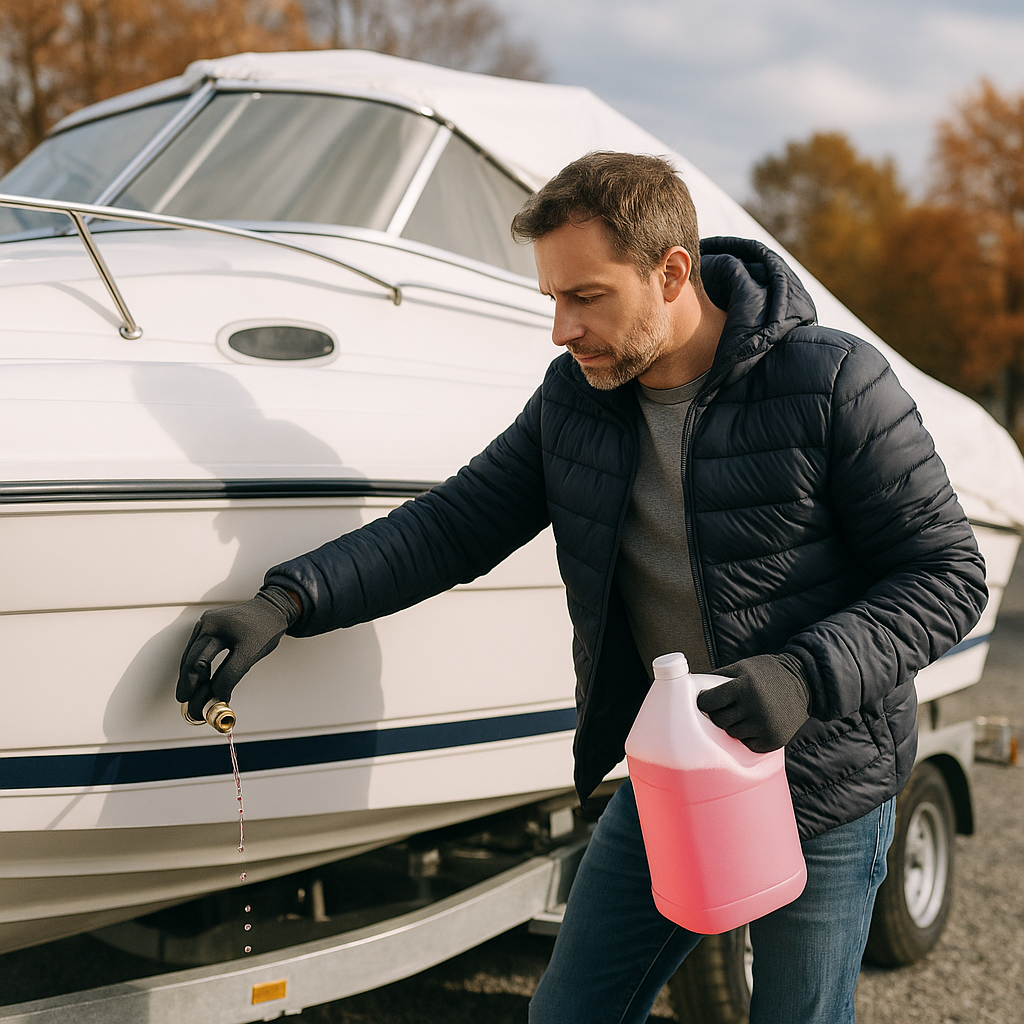
- Pump marine antifreeze through faucets, showers, and washdown outlets until pink fluid appears.
Head and holding tank
- Pump out the holding tank fully.
- Flush with fresh water if appropriate.
- Add marine antifreeze to the head, lines, and pump.
Livewells and washdowns
- Drain tanks and hoses.
- Run pumps briefly to clear water.
- Add antifreeze if the system design traps water.
9. Grease, Lubricate, and Protect Moving Parts
Winter is hard on exposed metal and pivot points.
Areas we lubricate
- Steering linkages
- Throttle and shift linkages
- Trailer coupler and jack
- Winch gears and strap hook points
- Hinges, latches, and seat hardware
- Prop shaft, if removing the prop for inspection
Bonus tip
Remove the prop and check for fishing line around the shaft. Hidden line can damage seals and let water into the lower unit.
10. Prepare the Interior for Storage
A sealed-up boat with trapped moisture becomes a mold factory.
Steps
- Clean upholstery, carpet, and storage bins.
- Remove anything that can freeze, spoil, or attract rodents.
- Prop cushions up for airflow if possible.
- Leave lockers cracked open in secure storage.
- Place moisture absorbers inside the cabin or compartments.
Rodent prevention
We recommend checking for entry points around cables, vents, and covers. Mice can do serious damage to wiring and upholstery over one winter.
11. Cover and Store the Boat Properly
A good cover is your final layer of protection.
Best practices
- Use a well-fitted cover or professional shrink wrap.
- Support the cover so water and snow do not pool.
- Allow ventilation to reduce condensation.
- Store the boat with the bow slightly elevated so water drains aft.
- Make sure the drain plug is removed if your storage setup calls for it.
Indoor vs. outdoor storage
- Indoor storage: better protection from UV, snow, and debris
- Outdoor covered storage: cost-effective, but cover quality matters more
- Shrink wrap: excellent weather protection, but proper venting is essential
Who It's For
This winterizing process is best for:
- Owners of outboard, sterndrive, pontoon, and small inboard boats
- DIY boaters comfortable with basic maintenance
- Anyone storing a boat in freezing or damp winter conditions
- Owners who want to reduce spring repair costs and extend component life
If your boat has a generator, diesel system, complex HVAC, or large cruiser systems, we recommend using this guide as a checklist and confirming model-specific procedures with a service manual or marine technician.
Common Winterizing Mistakes to Avoid
Even experienced owners miss things. These are the errors we see most often:
- Skipping fuel stabilizer
- Leaving water trapped in the block or plumbing
- Forgetting the livewell, washdown, or transom shower
- Storing the battery without a maintainer
- Covering the boat too tightly without ventilation
- Leaving wet life jackets, ropes, or carpet inside
- Ignoring lower-unit fluid inspection
Final Checklist Before You Walk Away
Before storage is complete, confirm:
- Fuel is stabilized and circulated
- Oil and filter are changed
- Cooling system is drained or protected
- Lower-unit fluid is fresh
- Battery is disconnected or on a maintainer
- Plumbing systems are drained and winterized
- Interior is dry and clean
- Cover is secure and ventilated
A printed checklist taped near your storage area makes spring commissioning much easier.
FAQ
1. When should we winterize a boat?
We recommend winterizing before the first hard freeze and ideally right after your last trip of the season. The longer old fuel and moisture sit in the boat, the more problems they can cause.
2. Can we winterize a boat ourselves?
Yes, many owners can handle basic winterization themselves, especially on outboards and smaller boats. The key is following the owner's manual and not guessing on engine-specific cooling or fogging procedures.
3. Do we need antifreeze if we fully drain the system?
Sometimes no, sometimes yes. Some engines and plumbing systems can be safely protected by complete draining, while others should also be filled or flushed with marine antifreeze. Always follow manufacturer guidance.
4. Should we store the fuel tank full or empty?
For most gasoline boats, we recommend storing it about 90 to 95 percent full with stabilizer to reduce condensation while allowing for expansion. Check your manual for any exceptions.
5. What happens if we skip winterizing?
The biggest risks are cracked engine components, damaged pumps and hoses, stale fuel issues, battery failure, corrosion, mold, and costly spring repairs. A few hours of winterizing is almost always cheaper than fixing freeze damage.
Get your free Get Our Free Boat Gear Checklist
The essential marine gear list every boater should have before hitting the water.