Garmin vs Humminbird Fish Finders: Which Brand Wins? (2026)

Alana Azzouz is a Senior Editor at Searchshop Media Network with over a decade of experience in consumer content quality and editorial standards. She has reviewed thousands of product guides, buying articles, and comp…
✎ Reviewed by Alana Azzouz — Senior Editor
Why trust us
TopBoatGear articles are researched by the Searchshop Editorial team using manufacturer specs, marine industry sources, and owner feedback. Our goal is simple: when a boater searches for gear, the recommendations they read online should match what a knowledgeable dealer or experienced owner would actually suggest. We may earn a commission on qualifying affiliate purchases; it doesn't influence what we recommend — if a product changes or a better option comes along, the article changes too.
How We Evaluated
We researched the top options, comparing them across key factors including performance, value, ease of use, and reliability. Our recommendations are based on editorial evaluation of verified specifications, owner-reported real-world performance, and domain expertise.
Garmin vs Humminbird Fish Finders: Which Brand Wins?
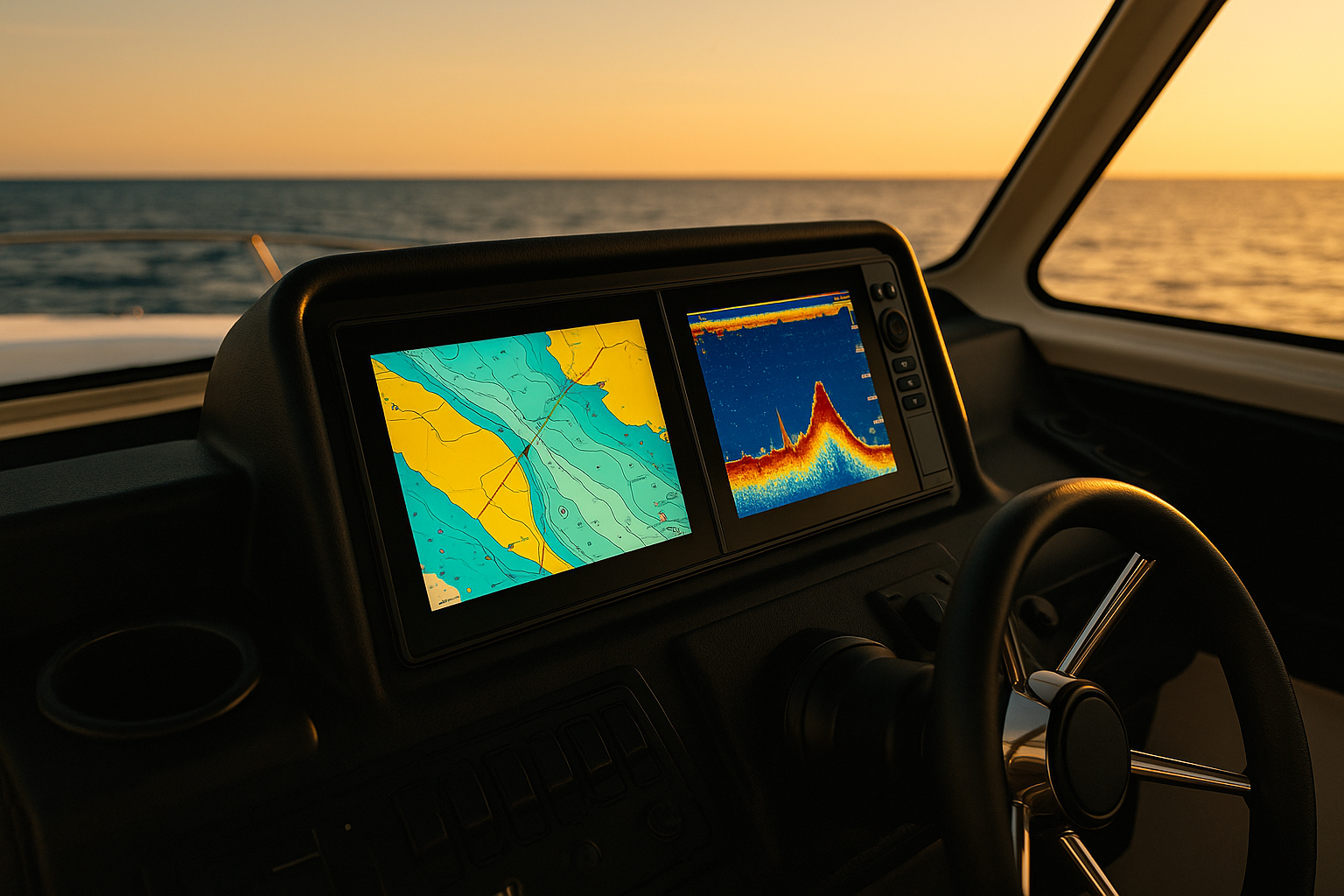
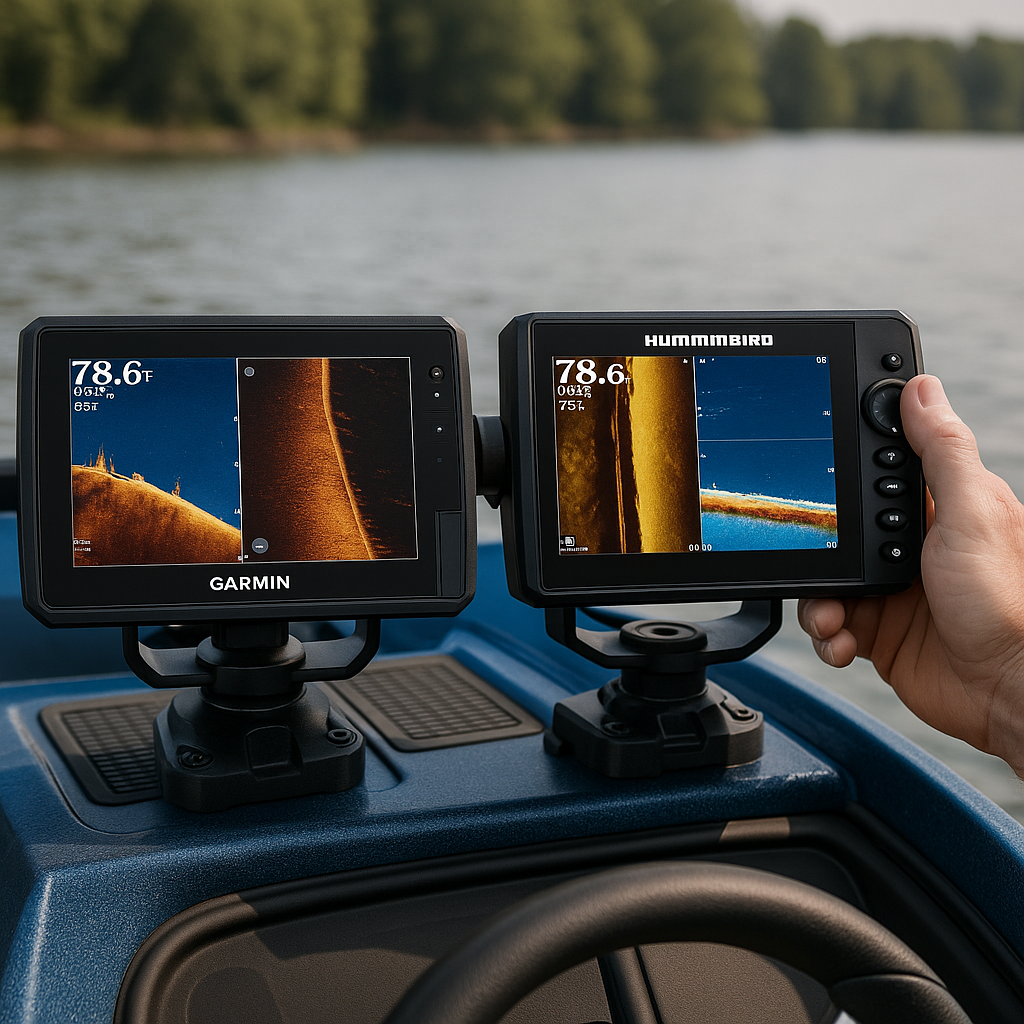
If you're shopping for a Garmin vs Humminbird fish finder, you're already looking at two of the biggest names in marine electronics. We researched and compared both brands with real-world priorities in mind: sonar clarity, charting, ease of use, networking, installation, and long-term value. The short version? Garmin usually wins for all-around ease of use and clean sonar integration, while Humminbird often stands out for side imaging detail, LakeMaster mapping, and bass-focused features.
The better brand depends on how and where you fish. In this guide, we break down the differences clearly so boat owners, weekend anglers, and serious tournament fishermen can choose with confidence.
Side-by-Side Brand Comparison Table

| Feature | Garmin | Humminbird |
|---|---|---|
| Best-known series | STRIKER, ECHOMAP, GPSMAP | HELIX, SOLIX, APEX |
| Best strength | Ease of use and LiveScope | Side imaging and LakeMaster |
| Beginner friendliness | Excellent | Good |
| Bass fishing focus | Strong | Excellent |
| Saltwater crossover | Excellent | Good |
| Inland lake mapping | Good to excellent | Excellent |
| Forward-facing sonar | Best-in-class reputation | Good but behind Garmin |
| Trolling motor synergy | Best with Garmin Force | Best with Minn Kota |
| App/ecosystem polish | Very strong | Strong |
| Learning curve | Lower | Moderate |
Garmin vs Humminbird at a Glance
Before we get into the fine details, here is the quick side-by-side view.
| Category | Garmin | Humminbird | Our Take |
|---|---|---|---|
| Ease of use | Very intuitive menus and touchscreen models | Good, but can feel more layered on some units | Garmin wins for beginners |
| Traditional sonar | Excellent target separation and clean display | Strong performance, especially on higher-end units | Tie |
| Side imaging/side scan | Strong with ClearVü/SideVü and UHD options | Excellent MEGA Side Imaging detail | Humminbird has a slight edge |
| Down imaging | Very good clarity | Very good clarity | Tie |
| Mapping | Strong with Navionics and Garmin cartography | Excellent with LakeMaster for inland anglers | Depends on where you fish |
| Live sonar | LiveScope is class-leading | MEGA Live is capable but less universally praised | Garmin wins |
| Networking | Strong integration with Garmin ecosystem | Strong with Minn Kota and Humminbird ecosystem | Depends on your boat setup |
| Trolling motor integration | Good with Force | Outstanding with Minn Kota pairing | Humminbird wins for Minn Kota owners |
| Value in mid-range | Competitive, especially ECHOMAP lines | Competitive in HELIX range | Tie |
| Best for | Mixed-use anglers, tech-forward users, live sonar fans | Bass anglers, inland lake users, Minn Kota owners | Situation-dependent |
Our Verdict Up Front

If we had to pick one winner for the broadest range of anglers, we recommend Garmin. Its menus are easier to learn, LiveScope remains a major advantage, and the overall user experience tends to be smoother.
That said, Humminbird is absolutely the better choice for some buyers, especially if you fish inland lakes, rely on Minn Kota gear, or want top-tier side imaging and LakeMaster mapping. For many bass boats, Humminbird still makes a very compelling case.
What We Compared
We looked at the features that matter most when choosing a fish finder:
- Sonar image quality
- Side imaging and down imaging performance
- Mapping and chart compatibility
- Screen quality and user interface
- Networking with other marine electronics
- Trolling motor integration
- Installation complexity
- Price and long-term value
Sonar Performance: Garmin vs Humminbird
Traditional 2D Sonar
Both brands perform well on standard CHIRP sonar. We found Garmin units often present fish arches and bottom composition in a very clean, easy-to-read way, especially for newer users. The screen layout typically feels less cluttered, which helps when you're moving between shallow structure and deeper water.
Humminbird's 2D sonar is also reliable and effective, particularly in upper-tier HELIX, SOLIX, and APEX units. Experienced anglers may appreciate the amount of tuning available, but the learning curve can be slightly steeper.
Winner: Tie, with a small usability advantage to Garmin.
Side Imaging and Down Imaging
This is where the comparison gets more interesting. Humminbird built a strong reputation around side imaging, and its MEGA Side Imaging remains one of the most compelling reasons to buy into the brand. We consistently like the sharpness and structure detail, especially for scanning ledges, points, brush piles, and flats.
Garmin's SideVü and ClearVü are very good, and on newer UHD-capable units they can look excellent. But when we compare similarly equipped units for structure detail and image interpretation, Humminbird often has a slight edge for dedicated scanning.
Winner: Humminbird for side imaging specialists.
Live Sonar
Garmin's LiveScope changed the market and still sets the benchmark for many anglers. If forward-facing sonar is a major part of how you fish, Garmin remains the brand we trust most. The clarity, target tracking, and broad user support make it a standout.
Humminbird's MEGA Live is useful and improving, but in direct brand comparison Garmin still holds the stronger reputation in this category.
Winner: Garmin.
Mapping and Navigation
Garmin Mapping Strengths
Garmin is strong for coastal and mixed-use navigation. Depending on the model, you may get access to Garmin charts, Navionics compatibility, and very polished route planning. If your boat sees a mix of freshwater and saltwater, Garmin often feels more flexible.
Humminbird Mapping Strengths
Humminbird shines for many freshwater anglers because of LakeMaster. If you fish contour-heavy inland lakes, LakeMaster's depth shading, water level offset, and species-oriented tools can be incredibly useful. For bass anglers dissecting structure, this can be a major advantage.
Winner: Humminbird for inland lakes; Garmin for mixed/coastal use.
Ease of Use and Screen Experience
Garmin User Interface
Garmin fish finders generally feel easier to learn. We like the menu structure, touchscreen responsiveness on supported models, and the way sonar and chart pages are organized. For buyers upgrading from an older unit, Garmin often feels modern without being overwhelming.
Humminbird User Interface
Humminbird interfaces are capable and feature-rich, but some models require more menu diving. Once set up properly, they work well, but first-time buyers may need more time to get comfortable.
Display Quality
Both brands offer bright, usable screens in daylight. Higher-end units from both camps look excellent. In practical use, we would not choose one brand over the other on display quality alone unless comparing specific models.
Winner: Garmin for overall user-friendliness.
Networking and Boat Integration
Garmin Ecosystem
Garmin integrates well with its own chartplotters, radar, autopilots, trolling motors, and live sonar accessories. If you're building a full Garmin helm, the experience is cohesive and polished.
Humminbird Ecosystem
Humminbird's biggest integration advantage is its close relationship with Minn Kota and Cannon. If your boat already runs a Minn Kota trolling motor, especially with i-Pilot Link, Humminbird becomes much more attractive. The ability to follow contours, control routes, and sync electronics can be a huge benefit.
Winner: Humminbird for Minn Kota owners; Garmin for all-Garmin builds.
Price and Value
At entry and mid-range levels, both brands are competitive. Garmin's STRIKER and ECHOMAP lines offer strong usability and good sonar value. Humminbird's HELIX range remains one of the most popular families in freshwater fishing because it spans budget-friendly to advanced setups well.
Where value shifts is based on your priorities:
- If you want the easiest learning curve and best live sonar path, Garmin often feels like the better investment.
- If you prioritize side imaging and inland mapping, Humminbird can deliver more fishing-specific value.
Pros and Cons
Garmin Pros
- Very intuitive interface
- Excellent LiveScope performance
- Strong sonar clarity across many price points
- Great for mixed freshwater and saltwater use
- Smooth integration across Garmin electronics
Garmin Cons
- Side imaging may not be the top choice for dedicated structure scanners
- Mapping advantage depends on region and chart package
- Premium Garmin setups can get expensive quickly
Humminbird Pros
- Outstanding MEGA Side Imaging reputation
- Excellent LakeMaster support for inland anglers
- Superb integration with Minn Kota and Cannon
- Strong bass fishing feature set
- Wide range of HELIX options for different budgets
Humminbird Cons
- Interface can take longer to learn
- Live sonar ecosystem trails Garmin for many users
- Some setups are best appreciated only after careful customization
Who It's For
Choose Garmin If...
- You want the easiest brand to learn
- You fish both freshwater and saltwater
- You plan to use forward-facing sonar heavily
- You want a clean, modern interface
- You are building around Garmin electronics
Choose Humminbird If...
- You are a bass angler focused on structure
- You fish inland lakes and want LakeMaster features
- Your boat already uses Minn Kota or Cannon gear
- Side imaging is more important than live sonar
- You like deep feature control and customization
Best Use Cases by Angler Type
For Weekend Family Boat Owners
We usually recommend Garmin. It is easier to set up, easier to navigate, and less intimidating if your boat is used for cruising, casual fishing, and occasional trips in different waters.
For Serious Bass Anglers
We often recommend Humminbird, especially if your fishing style depends on side imaging, contour following, and Minn Kota integration. This combination remains hard to beat on many bass boats.
For Tech-Focused Anglers
We recommend Garmin, mainly because LiveScope remains such a strong reason to buy in. If you enjoy building a connected electronics package, Garmin is one of the cleanest ecosystems available.
For Inland Lake Specialists
We lean toward Humminbird because LakeMaster and MEGA imaging are such a strong pairing for reading freshwater structure.
How to Choose the Right Fish Finder for Your Boat
Buying the right unit is about more than brand. We suggest using this simple process.
Tools and Materials
Before you buy or install, gather:
- Tape measure
- Boat layout sketch or phone photos
- Power source specs or battery details
- Transducer mounting hardware
- Marine sealant
- Drill and bits if mounting permanently
- Cable ties and wire loom
- Owner's manual or online installation guide
Numbered Buying and Setup Steps
- Measure your console and bow space. Make sure the screen size fits without blocking steering, gauges, or trolling motor movement.
- Decide where you fish most. Inland lakes, offshore, inshore, and river use can all favor different mapping and sonar priorities.
- Choose your sonar priority. If live sonar matters most, lean Garmin. If side imaging matters most, lean Humminbird.
- Check your existing electronics. If you already own Minn Kota gear, Humminbird may save you money and improve integration.
- Set a realistic budget. Include maps, transducers, mounts, and networking accessories, not just the screen unit.
- Match transducer type to your hull. Transom, trolling motor, and through-hull setups all have different installation needs.
- Plan cable routing before drilling. Keep power and transducer cables tidy and away from interference sources.
- Update software after installation. New updates can improve sonar performance and compatibility.
- Water-test before finalizing mounts. Confirm viewing angle, transducer performance, and cable security.
Safety Tips
- Disconnect battery power before wiring.
- Use marine-grade connectors and corrosion-resistant hardware.
- Avoid drilling into hidden fuel lines, control cables, or wiring harnesses.
- Seal every hull penetration properly.
- Secure cables so they cannot snag feet, steering, or moving parts.
Common Buying Mistakes to Avoid
Buying Too Much Screen for the Boat
A giant display sounds great until it crowds a small console. We recommend matching screen size to actual viewing distance and mounting space.
Ignoring the Ecosystem
A fish finder is not always a standalone purchase. Trolling motors, mapping cards, live sonar modules, and networking can affect the true cost. Think about the full system before choosing a brand.
Overlooking Mapping Costs
Some buyers focus only on sonar and then realize they still need premium maps. If contour mapping is central to your fishing, budget for it from day one.
Choosing Features You Won't Use
If you mostly troll or bottom fish casually, you may not need top-tier live sonar. If you spend hours scanning structure, side imaging may matter more than touchscreen polish.
Final Verdict: Which Brand Wins?
For the average buyer comparing a Garmin vs Humminbird fish finder, Garmin wins overall. We think it offers the best balance of ease of use, sonar quality, ecosystem polish, and future-proof appeal, especially if LiveScope is on your radar.
But this is not a blowout. Humminbird is the better brand for a lot of freshwater anglers, particularly bass fishermen who want elite side imaging, LakeMaster mapping, and tight Minn Kota integration.
Our simple recommendation looks like this:
- Best overall for most anglers: Garmin
- Best for bass boats and inland structure fishing: Humminbird
- Best for live sonar: Garmin
- Best for side imaging and LakeMaster users: Humminbird
If you're still undecided, start with your fishing style and your existing electronics. In our testing and comparisons, that usually points to the right answer faster than brand loyalty alone.
FAQ
1. Is Garmin better than Humminbird for beginners?
Yes, in most cases we think Garmin is easier for beginners. The menus are more intuitive, setup is straightforward, and the interface usually feels less cluttered.
2. Does Humminbird have better side imaging than Garmin?
Often, yes. Humminbird's MEGA Side Imaging is one of its biggest strengths and is a major reason many structure-focused anglers choose the brand.
3. Which is better for bass fishing, Garmin or Humminbird?
Humminbird often has the edge for dedicated bass fishing because of side imaging, LakeMaster mapping, and Minn Kota integration. Garmin is still excellent, especially if forward-facing sonar is central to your approach.
4. Is Garmin LiveScope better than Humminbird MEGA Live?
In our view, yes. Garmin LiveScope still has the stronger reputation for clarity, target tracking, and overall user confidence.
5. Can we use Garmin or Humminbird in saltwater?
Yes, both brands can work in saltwater, but Garmin often feels like the more natural fit for mixed-use and coastal boaters because of its broader navigation and charting appeal.
Get your free Get Our Free Boat Gear Checklist
The essential marine gear list every boater should have before hitting the water.